The Ultimate Guide to Roasting a Whole Chicken: Crispy Skin, Juicy Meat
Roasting a whole chicken feels like a culinary rite of passage. It's the ultimate comfort food, the centerpiece of a Sunday dinner, and honestly, it's way easier than most people think. The problem? Too many recipes promise perfection but leave you with pale, rubbery skin or worse—dry, chalky breast meat. I've been there. After years of trial and error (and more than a few disappointing birds), I've nailed down a method that works every single time. Forget the fancy brines and complicated spatchcocking for a moment. Let's talk about the straightforward path to a glorious roast chicken.
Your Roasting Roadmap
The Foundation: Choosing Your Chicken
It all starts at the store. Walk past those watery, plastic-wrapped trays if you can. Look for air-chilled chicken. The standard industrial process involves dunking chickens in cold water, which they absorb—adding water weight you pay for and diluting flavor. Air-chilled birds are cooled with air, resulting in drier skin (a huge advantage for crispiness) and more concentrated taste. Brands like Bell & Evans or Mary's Chicken are widely available.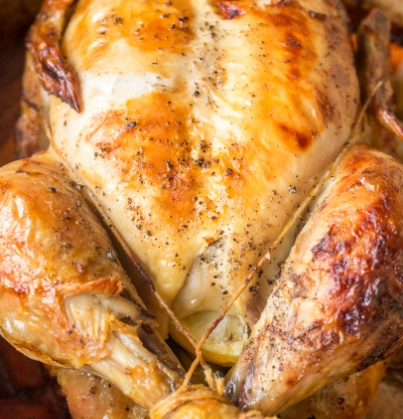
Size matters. A 3.5 to 4.5 pound bird is the sweet spot. It's large enough to feed a family with leftovers but small enough to cook evenly without the breast drying out before the thighs are done. Those massive 6-pound roasters? They're trouble for beginners.
A Quick Note on "Organic" and "Free-Range"
These labels are about farming practices, not necessarily flavor or texture. An organic bird might be better for your conscience, but an air-chilled conventional bird will often roast up crispier than a water-chilled organic one. For roasting, the chilling method is your first priority.
The Non-Negotiable Prep Steps
This is where most people rush. Don't.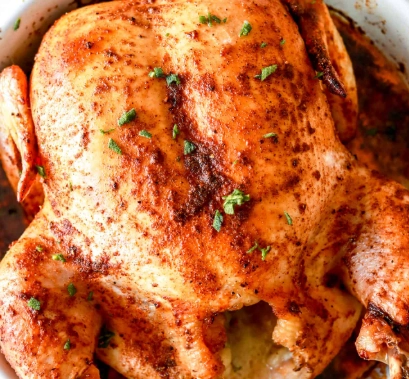
First, dry it thoroughly. I mean, really go at it with paper towels. Get the cavity, under the wings, everywhere. Any surface moisture will steam the skin instead of letting it brown and crisp. This is the single most important step for good skin.
Next, let it sit out. Take the chicken out of the fridge at least 45 minutes, up to an hour, before it goes in the oven. A cold chicken straight from the fridge will cook unevenly—the outside overcooks while the inside struggles to come up to temperature. Room temperature meat cooks more uniformly. The USDA advises keeping food out of the "danger zone" (40°F-140°F) for no more than 2 hours, so an hour on the counter is perfectly safe.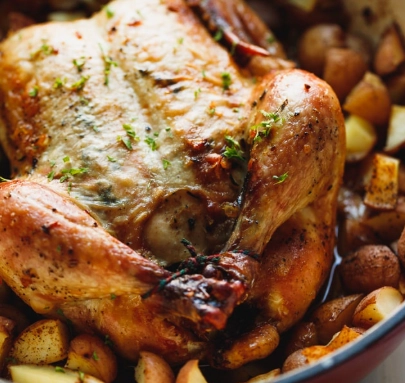
To Truss or Not to Truss?
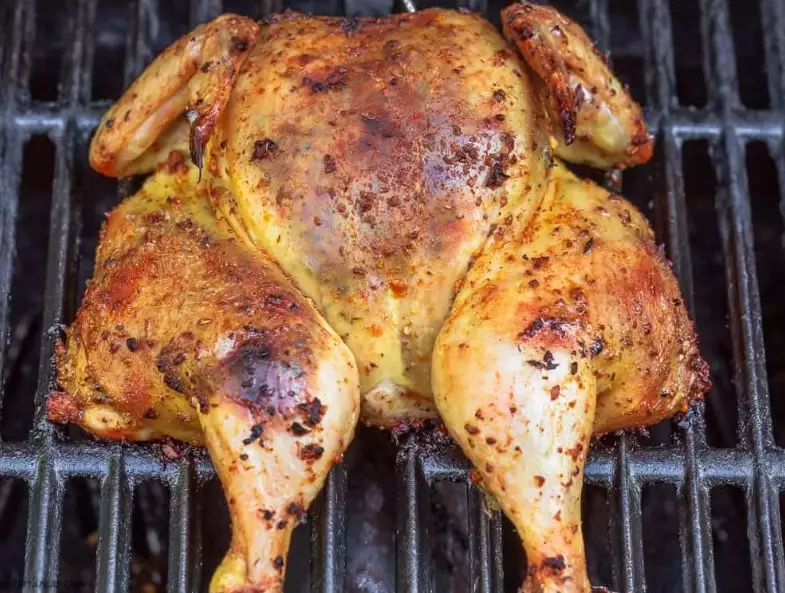
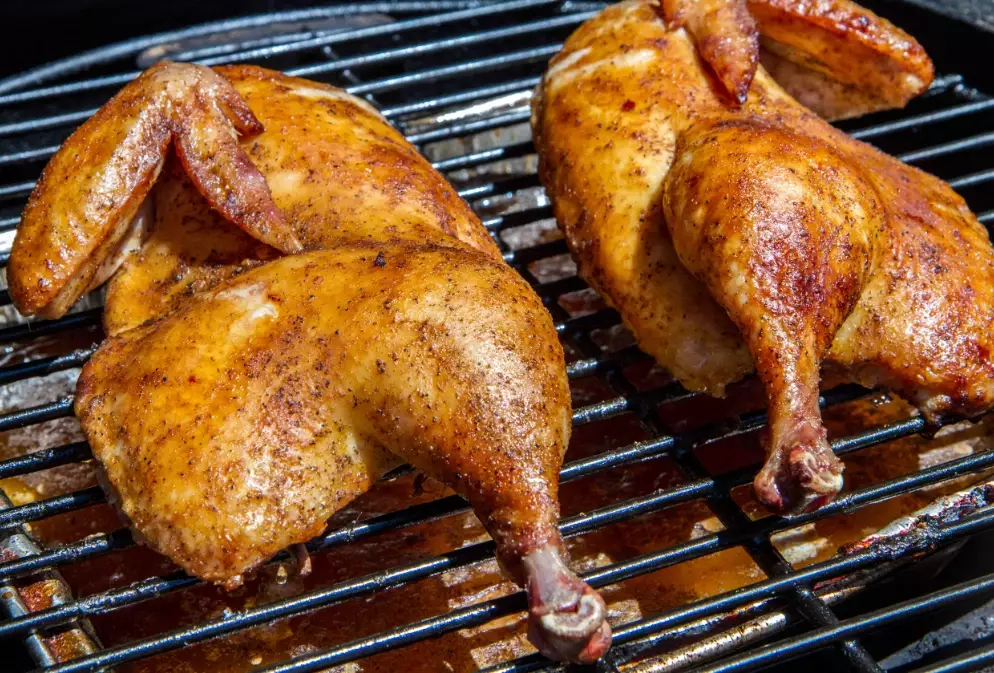
Trussing (tying the legs and wings close to the body) gives you a picturesque, compact bird. But it also creates nooks where steam gets trapped, leading to soggy skin in the armpits and between the legs. I stopped trussing years ago. Let the legs splay out. They'll cook at the same rate as the breast, and all the skin gets exposed to the hot air. For a visual guide on safe handling, the USDA's Food Safety site is a good resource.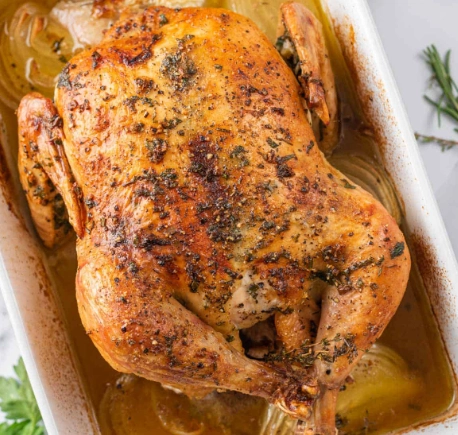
Seasoning: Beyond Salt and Pepper
Salt is non-negotiable. But when you salt makes a world of difference. Dry-brining—salting the bird heavily and letting it sit uncovered in the fridge for 8-24 hours—is a game-changer. The salt draws out moisture, which then dissolves the salt and gets reabsorbed, seasoning the meat deeply and drying the skin further. If you have time, do it.
For a same-day roast, just be generous. Season the cavity and every inch of the skin with kosher salt and black pepper. Get under the skin where you can, especially over the breast. Sliding your fingers between the skin and the meat to loosen it creates a pocket. Here's my secret: smear a couple tablespoons of very soft butter mixed with herbs (thyme, rosemary) under that skin. The butter bastes the breast from the inside as it melts.
For the outside, a light coating of oil (not butter—it burns) helps conduct heat. I use avocado oil for its high smoke point.
The Roasting Method That Never Fails
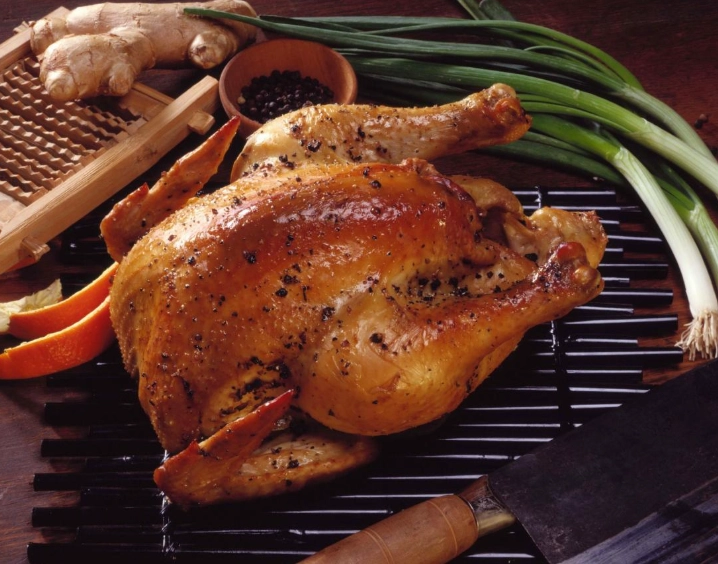
Preheat your oven to 425°F (220°C). Yes, that's hot. Place the chicken breast-side up on a rack set inside a rimmed baking sheet or roasting pan. The rack is crucial—it allows hot air to circulate all around the bird. Don't have a rack? Roughly chop some onions, carrots, and celery and use them as a nest. They'll flavor the drippings for gravy, too.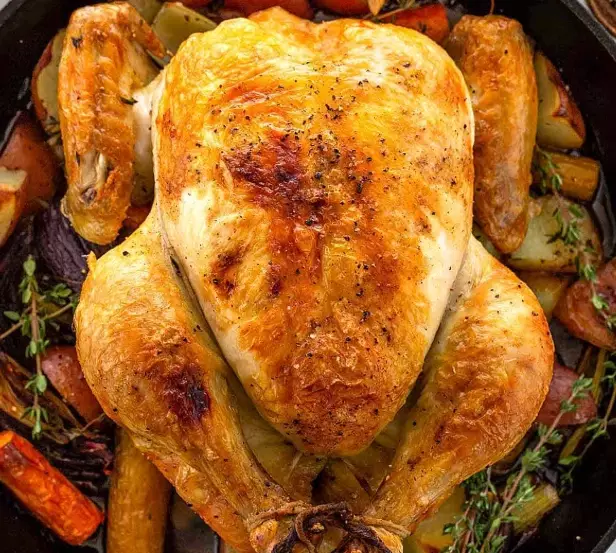
Roast at 425°F for 30 minutes. This initial blast of high heat renders fat and starts crisping the skin fast.
Then, without opening the door, reduce the oven temperature to 375°F (190°C). Roast until done. How long? Here's the truth nobody likes: it depends. Ovens vary. Chicken sizes vary. The old "20 minutes per pound" is a rough guide, but it's just a guide.
You must use a thermometer. A good digital instant-read thermometer is the best $25 you'll spend in the kitchen. According to the USDA, poultry is safe to eat at 165°F (74°C). Insert the probe into the thickest part of the thigh, avoiding the bone. When it hits 160°F, pull the chicken out. The temperature will carry over to 165°F as it rests. If the breast is done first, tent it with foil while the thighs finish.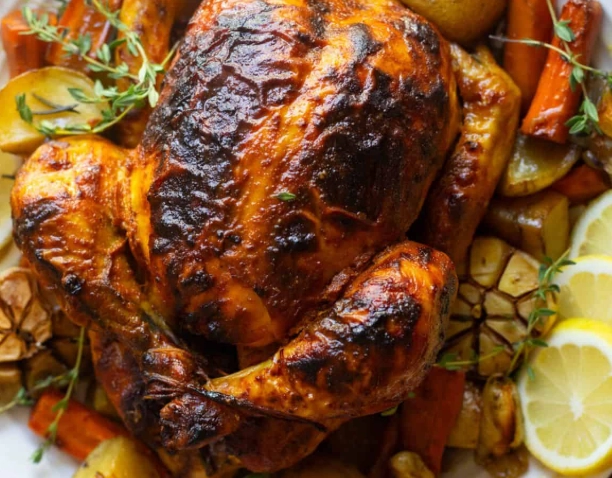
The Critical Rest and Carve
This is the step everyone wants to skip. Don't. When the chicken hits that perfect temperature, transfer it to a cutting board and let it rest for at least 15 minutes. 20 is even better.
Why? The muscle fibers are tight from the heat. If you cut immediately, all the precious juices trapped inside will flood onto the board, leaving you with dry meat. Resting allows the fibers to relax and reabsorb those juices. The chicken will also be easier to carve.
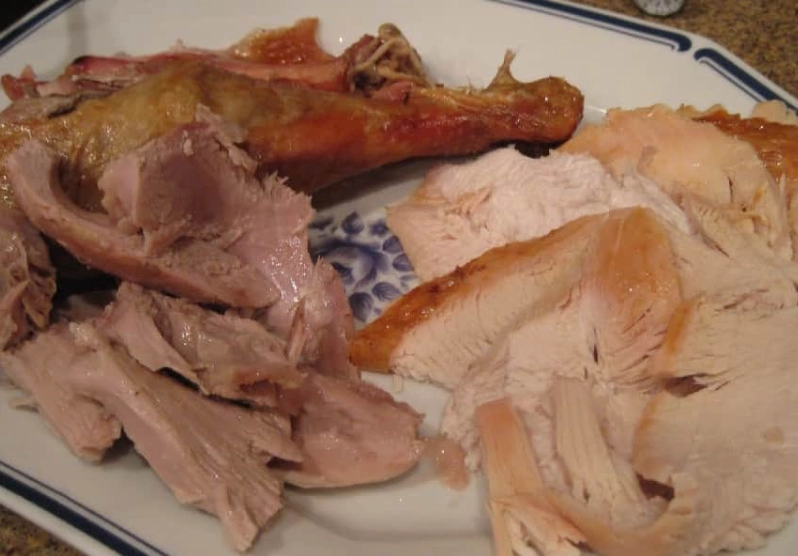
Carving isn't surgery. Remove the legs (thigh and drumstick together) by cutting through the skin and joint. Separate the thigh from the drumstick if you like. Remove the wings. Then, slice down either side of the breastbone and remove each whole breast. Slice the breast against the grain for serving.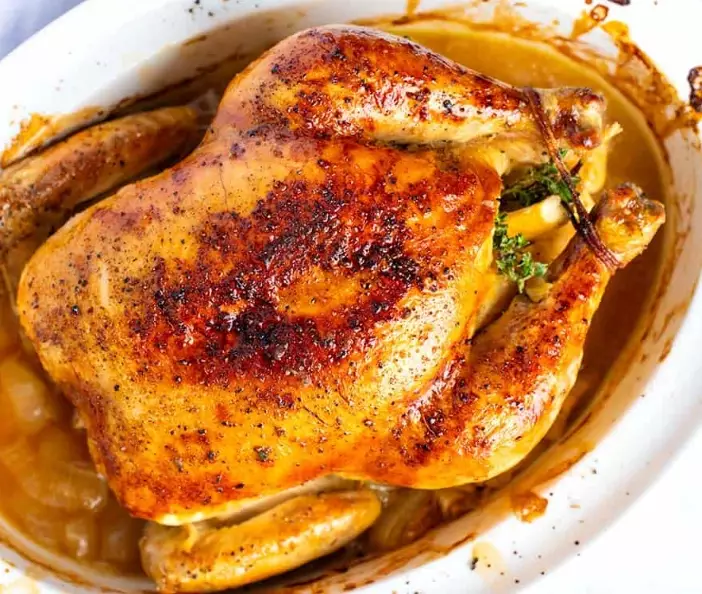
Your Roasting Questions Answered
How long does it take to roast a whole chicken?
Why is my roast chicken skin not crispy?
How do I know when the whole chicken is done?
Can I prepare a roast chicken ahead of time?
The carcass is gold. Don't throw it away. Toss it in a pot with some leftover onion and herbs, cover with water, and simmer for a few hours. Strain, and you've got the best chicken stock you've ever tasted, ready for soup or sauces.
Roasting a perfect chicken isn't about one magic trick. It's a series of small, intentional steps: choosing well, prepping with care, seasoning boldly, roasting with a smart temperature strategy, and resting patiently. Master this, and you've got a skill that impresses, comforts, and feeds you for a lifetime. Now, go preheat that oven.
Related Articles