The Perfect Temp for Cooking Roast Chicken: A Foolproof Guide
Let's cut to the chase. The single biggest mistake people make with roast chicken is ignoring the internal temperature. You can follow a recipe's time to the minute, baste it lovingly, use the fanciest butter – but if you pull it out at the wrong temp, you're gambling with dry breast meat or, worse, undercooked thighs. The magic number, the one you'll see everywhere, is 165°F (74°C). But that's just the starting point. The real secret lies in understanding that different parts of the bird have different ideal temperatures, and that carryover cooking is your best friend or your worst enemy.
What's Inside This Guide
- Why Internal Temperature is Your Most Important Metric
- The Ultimate Roast Chicken Temperature Guide
- How to Measure Temperature Accurately (And Avoid Common Mistakes)
- The Step-by-Step Guide to a Perfect Roast Chicken
- Troubleshooting Common Roast Chicken Problems
- Your Roast Chicken Temperature Questions, Answered
Why Internal Temperature is Your Most Important Metric
Recipes that say "roast a 4-pound chicken for 1 hour 20 minutes" are setting you up for failure. Why? Because ovens lie. Their thermostats are often off by 25 degrees or more. Your chicken might be colder than the recipe assumes. The shape of your roasting pan affects heat circulation. A thousand variables make time an unreliable guide.
Internal temperature doesn't lie. It tells you exactly what's happening inside the meat. The USDA recommends cooking all poultry to a minimum safe temperature of 165°F (74°C) to instantly destroy harmful bacteria like Salmonella. That's the non-negotiable floor for food safety.
But here's the expert nuance everyone misses: you don't have to cook the chicken to 165°F in the oven. Carryover cooking—the fact that heat continues to travel into the center of the meat after you take it out—will raise the temperature by 5 to 10 degrees while it rests. This is the key to juicy, not dry, white meat.
The Ultimate Roast Chicken Temperature Guide
Think of temperature as a tool for texture, not just safety. Here’s the breakdown every cook should have taped to their oven.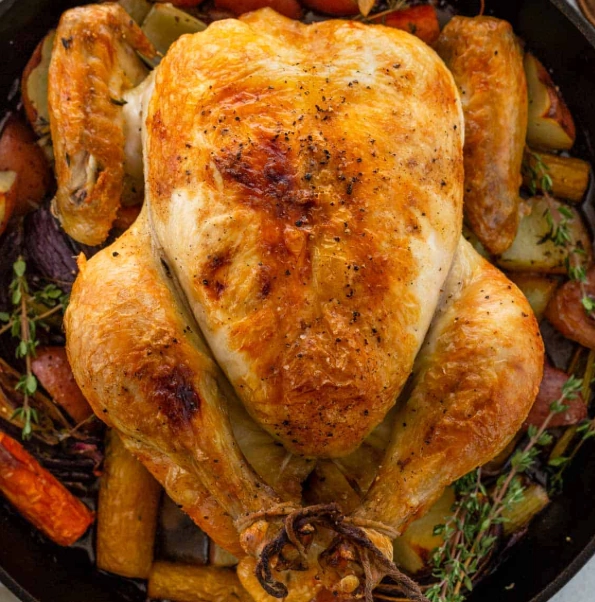
| Chicken Part | Minimum Safe Temp (USDA) | Ideal "Juicy" Temp (Pull from Oven) | Final Temp After Resting | Texture Goal |
|---|---|---|---|---|
| Breast (White Meat) | 165°F (74°C) | 155-160°F (68-71°C) | ~165°F (74°C) | Juicy, opaque, just firm |
| Thigh/Leg (Dark Meat) | 165°F (74°C) | 170-175°F (77-79°C) | ~180°F (82°C) | Tender, falling-off-the-bone |
| Wing | 165°F (74°C) | 165°F (74°C) | ~170°F (77°C) | Crispy skin, fully cooked |
| Stuffing (if used) | 165°F (74°C) | 165°F (74°C) | N/A | Must reach safe temp |
See the difference? If you wait for the thighs to hit 165°F in the oven, the breasts will be pushing 175°F and taste like sawdust. The strategy is to aim for the breast temperature, knowing the thighs will be perfect after resting.
The Crispy Skin Temperature Factor
A perfect roast chicken needs crispy skin. That happens at a high oven temperature—usually starting at 425°F (220°C) or above. But here’s the rub: high heat can overcook the exterior before the interior is done. My method? Start high (450°F/230°C) for 20-25 minutes to blister the skin, then reduce to 375°F (190°C) to gently cook the inside to the target temp. A digital probe thermometer with an alarm is invaluable here.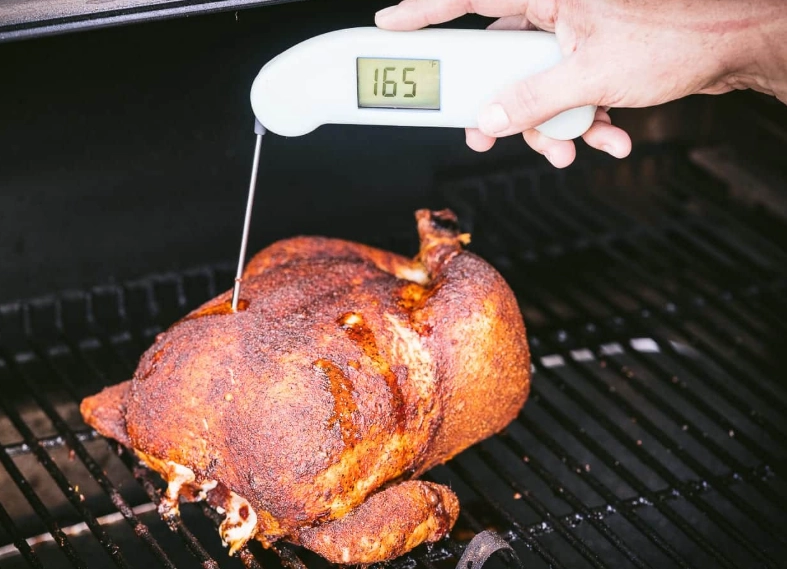
How to Measure Temperature Accurately (And Avoid Common Mistakes)
You need a good instant-read or leave-in probe thermometer. The $10 dial ones are often inaccurate. Invest in a digital one.
The #1 Mistake: Poking the thermometer in too far and hitting the bone. Bone conducts heat faster than meat, so a reading next to bone will be 5-10 degrees higher than the actual meat temperature. You'll pull the chicken out undercooked.
Here’s the right way:
- For the breast: Insert the probe into the thickest part, making sure the tip is centered in the meat, not touching the breastbone. Angle it horizontally if needed.
- For the thigh: Insert into the deepest part of the thigh, between the leg and body, avoiding the bone.
- Take multiple readings. Check both breasts and one thigh.
- Let the reading stabilize. Don't just glance at it.
I ruined three chickens before I learned the bone trick. Trust me, it matters.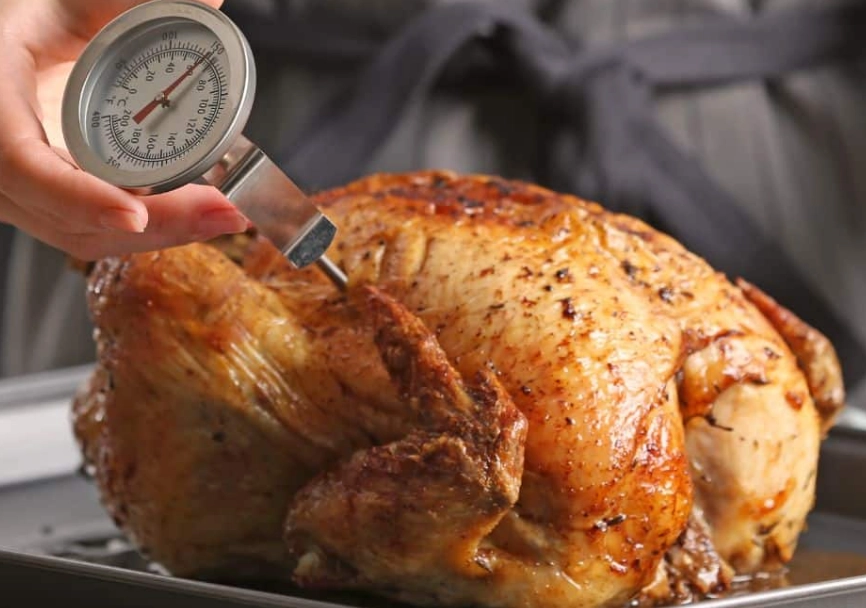
The Step-by-Step Guide to a Perfect Roast Chicken
Let's apply this temperature knowledge to a real scenario. This is my weekly routine.
1. Prep & Season (The Night Before, If Possible)
Pat the chicken (a 4-5 lb bird is ideal) completely dry with paper towels. Moisture is the enemy of crisp skin. Season generously inside and out with salt. If you have time, place it on a rack over a tray, uncovered, in the fridge overnight. This dry-brines the meat and dries the skin further for ultimate crispness.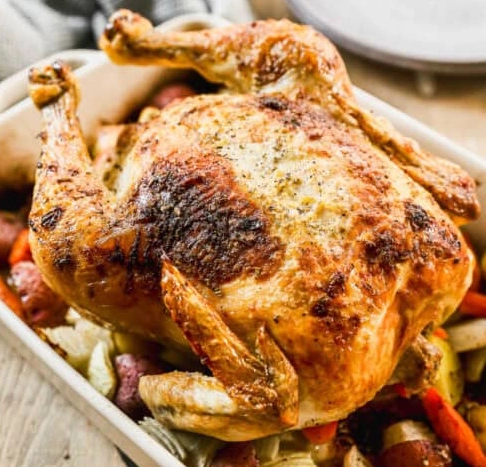
2. The Roasting Process
Take the chicken out an hour before cooking. Preheat your oven to 450°F (230°C). Truss the legs with twine, tuck the wingtips. Place the bird on a rack in a roasting pan. Insert a leave-in probe thermometer into the thickest part of a breast, avoiding bone. Set the alarm for 155°F (68°C).
Roast at 450°F for 20-25 minutes until the skin is starting to brown and blister. Without opening the door, reduce the oven temperature to 375°F (190°C). Let it roast until the alarm sounds.
3. The Critical Resting Period
When the breast hits 155-160°F, take the chicken out. Don't slice it. Transfer it to a cutting board and loosely tent it with foil. Let it rest for at least 15-20 minutes. This is non-negotiable. The juices redistribute, and the temperature will climb to that safe 165°F+ in the breast while the thighs continue to tenderize. Use this time to make gravy from the pan drippings.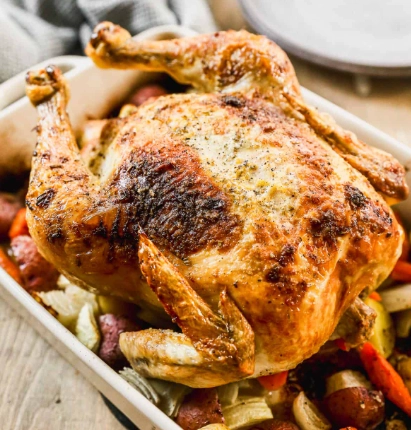
Troubleshooting Common Roast Chicken Problems
Problem: "My breast is dry, but the thighs are perfect."
Cause & Fix: You cooked to thigh temperature in the oven. Next time, pull the chicken when the breast reaches 155-160°F. The thighs will be safe and tender after resting.
Problem: "The skin is flabby, not crispy."
Cause & Fix: The skin wasn't dry enough, or the oven temp was too low. Pat the bird drier than you think necessary. Start with a blast of high heat (450°F+). Also, don't baste with liquid; it steams the skin. Basting with melted butter is okay, but do it in the first 10 minutes.
Problem: "The chicken is pink near the bone, even though the thermometer said 165°F."
Cause & Fix: You probably measured near the bone, getting a false high reading. The meat is safe if it reached 165°F for even a moment, but the pink can be unappetizing. To avoid this, ensure your thermometer tip is in pure meat. For dark meat, cooking to 175°F+ will eliminate any pinkness.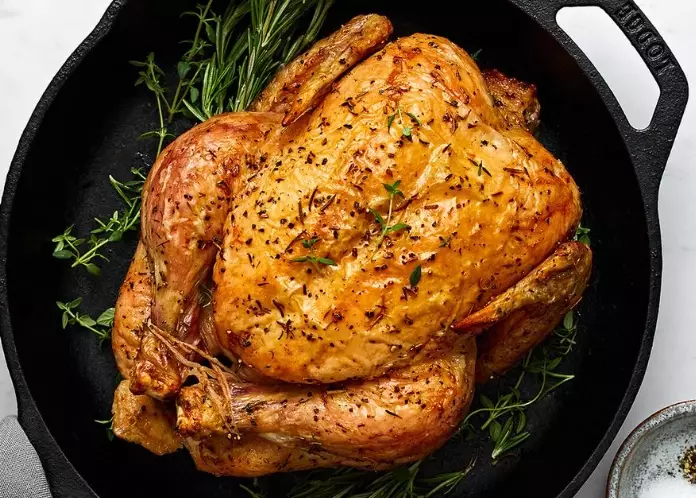
Your Roast Chicken Temperature Questions, Answered
Nine times out of ten, it's because the skin was wet when it went into the oven. Steam is the enemy of crispness. You need to create a pellicle—a dry surface. After patting dry, try the fridge-uncovered method overnight. Also, a little baking powder (1 tsp mixed with your salt) can help break down proteins and promote browning and crispness without affecting flavor.
Absolutely not. Those pop-up timers are notoriously unreliable. They usually pop at around 180-185°F, which guarantees your breast meat will be dry and stringy. They're a marketing gimmick, not a precision tool. Toss it in the trash and use a real thermometer.
Spatchcocking (removing the backbone and flattening the bird) is fantastic for even cooking. Because the bird is flat, the breast and thighs are more level in the oven, reducing the traditional doneness gap. Your temperature targets remain the same—aim for 155-160°F in the breast—but you'll likely get there faster, and the thighs will be closer to done at the same time. It often shaves 20-25% off the total cook time.
This is where it gets technical, like sous vide. According to pasteurization tables from food safety authorities, you can safely cook chicken to lower temperatures if you hold it there for a specific time. For example, holding chicken at 150°F (65.5°C) for just over 3 minutes achieves the same safety level as instantaneously reaching 165°F. At 155°F (68°C), it only needs about 50 seconds. This is the science behind perfectly juicy sous vide chicken breast cooked to 150°F. In a conventional oven, it's harder to control precisely, which is why the 165°F "instant kill" rule is the public guideline.
This is a common psychological hurdle. First, reassure them that slight pinkness in the meat or juices is often from myoglobin in younger birds or cooking methods, not necessarily undercooking. If they insist on pure white, focus on the dark meat. Cook until a thigh reads 175°F+ after resting. For the breast, you'll have to sacrifice a bit of juiciness and take it to a full 165°F in the oven. To compensate, brine the bird beforehand (soak in a 5% saltwater solution for 4-12 hours) to add moisture insurance. The brine helps the meat retain water even when cooked slightly higher.
Related Articles