Whole Chicken Wing Nutrition: Calories, Protein, and How to Cook Them Healthy
Let's talk about chicken wing nutrition. It's not just bar food. A whole chicken wing, when you break it down, is a surprisingly nuanced piece of protein. Most people get hung up on the fat content and write them off. I did too, for years. But after experimenting in the kitchen and digging into the data from sources like the USDA FoodData Central, I realized we've been looking at it all wrong. The real story isn't just about calories—it's about where those calories come from, how you cook them, and how they fit into your overall day. This guide will strip away the myths and give you the actionable facts.
What You'll Find Inside
The Real Nutrition Breakdown of a Whole Chicken Wing
First, let's get specific. We're talking about a raw, skin-on, bone-in whole wing. That's the standard. A single medium-sized wing (about 90 grams or 3.2 oz) provides roughly:
- ~210 calories
- ~18 grams of protein – That's a solid hit, comparable to a large egg.
- ~15 grams of fat (about 4.5g saturated)
- 0 grams of carbohydrates
See the macro split? It's a high-fat, high-protein, zero-carb food. The fat is where the fear comes from. But here's the non-consensus bit everyone misses: a significant portion of that fat is monounsaturated fat—the same "good" fat found in olive oil and avocados. The skin holds most of it, along with a good dose of collagen, which turns into gelatin when cooked, giving you that satisfying mouthfeel. If you're on a low-carb or keto diet, a plain cooked wing is practically a perfect food. The problem is never the wing itself; it's the gallon of fryer oil, the sugary glaze, or the blue cheese dressing avalanche that follows.
Drumette vs. Flat vs. Tip: What's the Actual Difference?
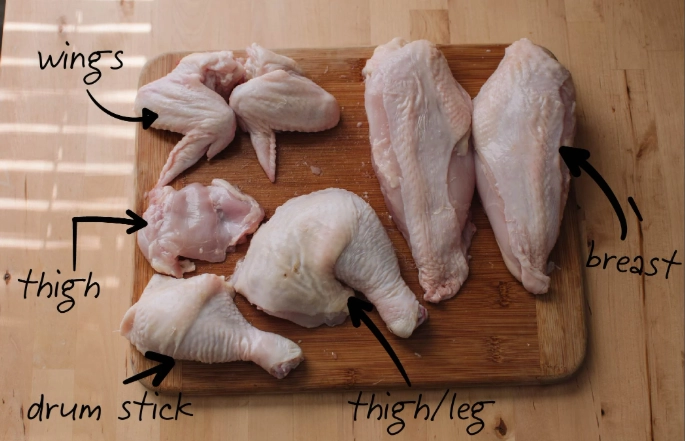
You buy them whole, but you eat them in parts. Nutritionally, they're siblings, not twins. The wing tip is mostly skin, bone, and cartilage, with little meat, so we often discard it or use it for stock. The real players are the drumette and the flat (or wingette).
Per equal weight of edible meat, the differences are subtle but interesting. The drumette, being the "mini drumstick," often has a slightly higher meat-to-bone ratio, which can mean a bit more protein per piece. The flat has more skin surface area relative to its meat, which might mean a slightly higher fat content if you eat all the skin. But honestly, in the context of a single serving, the variance is minimal. The bigger impact comes from how much of the crispy skin you actually consume.
| Part (Approx. 1 oz edible portion) | Calories | Protein | Total Fat | Key Note |
|---|---|---|---|---|
| Drumette (meat & skin) | ~70 | ~6g | ~5g | Easier to eat neatly, often perceived as more meaty. |
| Flat / Wingette (meat & skin) | ~75 | ~5.5g | ~5.5g | More skin surface area, prized for crispiness. |
| Skinless Meat (both parts) | ~45 | ~8g | ~1.5g | Dramatically cuts fat and calories, but also flavor and satiety. |
My personal take? I prefer flats. The ritual of pulling the bones apart to get that perfect bite of meat feels more involved, and I find myself eating slower. That matters.
How to Cook Chicken Wings for Maximum Health Benefits
This is where you take control. Ditch the assumption that wings must be deep-fried. I've tested every method, and some are clear winners for keeping nutrition in check while delivering on taste.
Baking: The Reliable Workhorse
Baking gets a bad rap for soggy skin. The trick nobody tells you? Dry the wings thoroughly with paper towels, then toss them with a tiny bit of baking powder (not baking soda!). About 1 teaspoon per pound. The baking powder alters the skin's pH, helping it crisp up like magic in a hot oven (425°F/220°C) on a wire rack. No oil needed. The result is a crispy, juicy wing with fat content identical to a raw wing—you're just rendering it out.
Air Frying: The Game Changer
An air fryer is just a powerful convection oven. But it works brilliantly for wings. It circulates hot air so efficiently that you get deep-fry-level crispiness with a fraction of the oil. I use maybe half a teaspoon of oil for a whole basket. The "healthy air fryer recipes" trend is huge for a reason—it works. Cook time is shorter, and cleanup is easier. For the home cook focused on health without sacrifice, this is my top recommendation.
Grilling: For the Smoky Flavor
Grilling is fantastic. The fat drips away, and you get that char. The risk is flare-ups from the dripping fat, which can cause excessive charring (and potentially harmful compounds). Use indirect heat. Start them over indirect heat to cook through, then finish over direct heat for crispness. No sugary sauce early on, or you'll have a burnt mess.
And what about boiling or steaming first? Some recipes call for it to render fat. I find it makes the skin rubbery and harder to get truly crisp later. I'd skip it.
How Whole Chicken Wings Fit Into Your Diet
So you have a plate of perfectly cooked, crispy baked wings. Now what? Context is everything.
As a Protein Source: Two or three wings can provide 30-50 grams of high-quality protein, which is excellent for muscle repair and satiety. Pair them with a large salad or a heap of roasted vegetables (broccoli, Brussels sprouts, carrots) to add fiber, vitamins, and volume. This creates a balanced, satisfying meal where the wings are the flavorful centerpiece, not the entire show.
As a Snack or Appetizer: This is the tricky part. It's easy to mindlessly polish off a dozen. If you're watching your intake, portion them out beforehand. A serving of 4-6 wings is reasonable. Skip the heavy dips. Try a Greek yogurt-based ranch or a simple herb-garlic yogurt sauce instead of full-fat blue cheese.
The biggest mistake I see? People eat wings with fries and soda, then blame the wings for "being unhealthy." It's the combo. Wings are a team player, not the problem player.
Your Burning Chicken Wing Nutrition Questions
Are chicken wing skins really that unhealthy to eat?
How many chicken wings should I eat for a high-protein, lower-calorie meal?
Can I eat chicken wings regularly if I'm trying to lose weight?
What's a common mistake people make when comparing wing nutrition to chicken breast?
Look, at the end of the day, whole chicken wing nutrition isn't a mystery. It's about understanding what you're actually eating—the good protein, the mixed-bag fats, the zero carbs—and then taking charge of the cooking process. Bake them, air fry them, grill them. Keep the sauces smart and the sides smarter. They can absolutely be part of a healthy, balanced diet. It's all in the preparation.
Related Articles