Whole Baked Chicken in Oven: The Ultimate Guide to Perfect Roasting
Let's talk about roasting a whole chicken. It sounds simple, right? You season a bird, put it in the oven, and wait. But if you've ever ended up with pale, rubbery skin, dry breast meat, and undercooked thighs, you know there's a gap between simple and perfectly executed. A truly great whole baked chicken in the oven is a thing of beauty—crispy, golden skin giving way to impossibly juicy meat, with minimal fuss. After years of trial and error (including some truly sad, dry birds), I've nailed down a method that works every single time. This isn't just another recipe; it's a system.
What You'll Learn Inside
How to Prepare Your Chicken for the Oven
Most recipes start with patting the chicken dry. That's good, but it's not enough. The single most impactful step you can take is untying the bird. Those legs are trussed tight for packaging, not for even cooking. A bound chicken creates a dense, insulated mass that steams the thighs while overcooking the breasts.
Untie it. Let the legs splay out. This allows hot air to circulate around the thighs, the densest part, so they cook at the same rate as the breast. If you want to go a step further, consider spatchcocking (removing the backbone and flattening the chicken). It's the gold standard for even cooking and crispy skin all over, and it cuts roasting time by about a third.
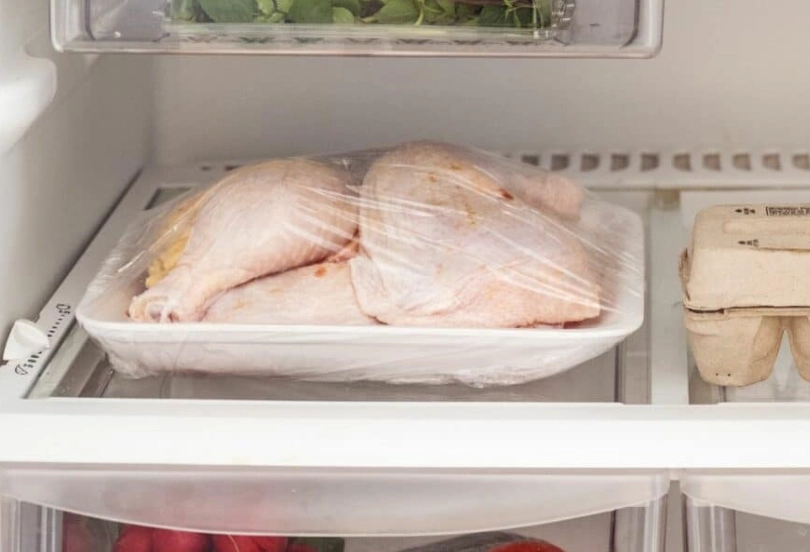
Pro Tip: After patting the chicken dry, place it on a wire rack set over a plate and leave it uncovered in your fridge for a few hours, or even overnight. This air-dries the skin surface, which is the real secret to achieving crackling-crisp skin, not just a hot oven.
Seasoning: Moving Beyond Salt and Pepper
Salt is non-negotiable. You need to season under the skin as well as on top. Gently slide your fingers between the skin and the breast meat to create pockets. Work some of your seasoning directly onto the meat. This flavors it from the inside out.
For the exterior, a dry rub is more effective than a wet marinade for crispy skin. A classic blend I swear by is: 2 tbsp kosher salt, 1 tsp black pepper, 1 tsp garlic powder, 1 tsp paprika (smoked or sweet), and 1/2 tsp dried thyme or rosemary. Rub this mix all over the skin and in the cavity.
Don't stuff the cavity with dense vegetables like potatoes—they block heat. Instead, add aromatics: a halved lemon, a few garlic cloves, and a bunch of herbs. They perfume the meat from the inside without hindering cooking.
The Great Temperature Battle: Low & Slow vs. High Heat
Here's where opinions diverge. The "low and slow" camp roasts at 325°F (163°C) for a longer time, promising juiciness. The "high heat" camp blasts it at 425°F (218°C) or higher for crispy skin.
I use a hybrid method that gives the best of both worlds. It's not a consensus view, but it works flawlessly.
My Hybrid Roasting Method
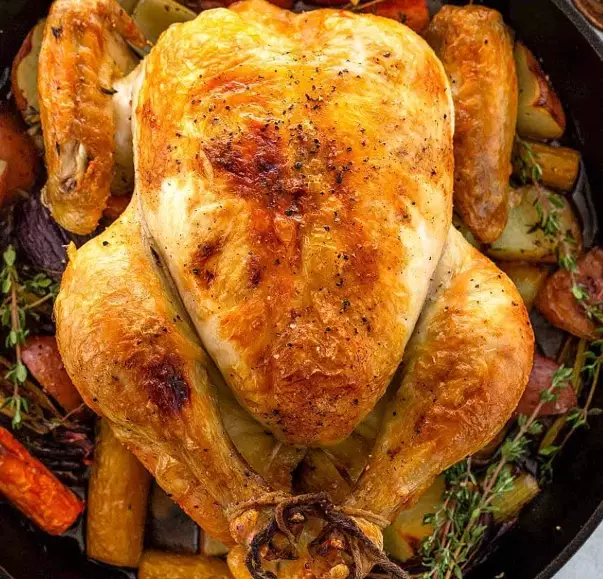
Start the chicken at a high temperature—450°F (232°C)—for the first 20-25 minutes. This initial blast renders fat, sets the skin, and starts the browning process. Then, without opening the door, reduce the heat to 375°F (190°C) for the remainder of the cooking time. This gentler heat allows the interior to cook through evenly without burning the exterior. The skin ends up deeply bronzed and shatteringly crisp, while the meat stays succulent.
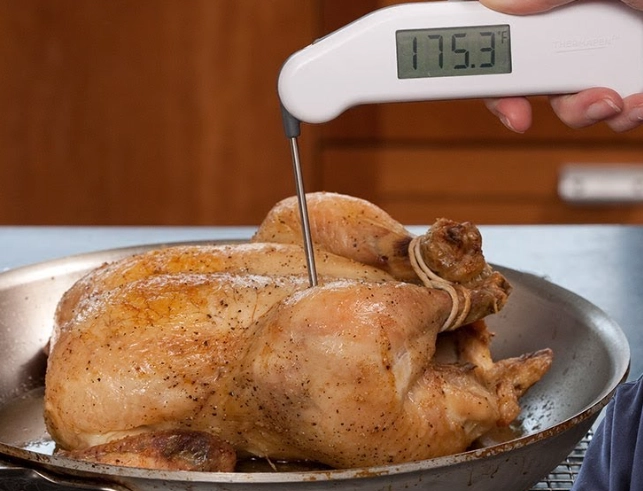
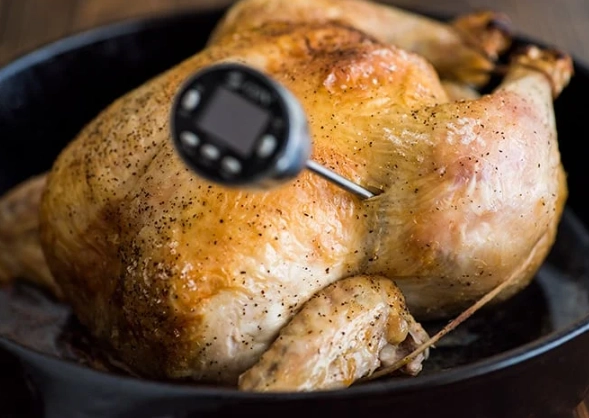
The One Tool You Need: An instant-read thermometer. Relying on time alone or "clear juices" is a gamble. The USDA recommends cooking poultry to a safe minimum internal temperature of 165°F (74°C). For the best texture, pull the chicken when the thickest part of the breast reads 155-160°F (68-71°C) and the thigh joint reads 170-175°F (77-79°C). Carryover cooking will raise it another 5-10 degrees.
The Step-by-Step Roasting Process
1. Prep: Remove giblets. Pat chicken completely dry with paper towels. Untie legs. Season liberally inside and out, under the skin where possible. Place aromatics in cavity.
2. Position: Place the chicken breast-side up on a wire rack set inside a rimmed baking sheet or roasting pan. This elevates it so heat circulates underneath.
3. Roast (Phase 1): Put the chicken in a preheated 450°F (232°C) oven on a middle rack. Roast for 20-25 minutes until the skin starts to blister and brown.
4. Roast (Phase 2): Reduce oven to 375°F (190°C). Do not open the door. Continue roasting until the internal temperatures are reached (see chart below).
5. Rest: This is critical. Transfer the chicken to a cutting board, tent loosely with foil, and let it rest for at least 15-20 minutes. This allows the juices, which have retreated to the center, to redistribute throughout the meat. Cutting too soon means all those juices end up on your board.
5 Common Mistakes That Ruin Your Roast Chicken
I've made most of these. Learn from my errors.
Not drying the skin. Wet skin steams. Steam = soggy skin. Pat it aggressively dry.
Roasting straight from the fridge. A cold chicken lowers the oven temp and cooks unevenly. Let it sit out for 30-45 minutes to take the chill off.
Basting too often. Every time you open the oven door, you lose heat and slow cooking. More importantly, you're adding moisture to the skin, preventing it from crisping. Baste once at most, or skip it entirely.
Ignoring the carryover cook. The chicken continues to cook after it leaves the oven. If you pull it at 165°F, it will soar to 175°F+ during the rest, leading to dry breast meat.
Skipping the rest. I know it's tempting. Don't. The rest is what ensures juiciness in every bite.
Oven Time Chart for Different Sized Chickens
This chart is a guideline for the hybrid method (450°F start, then 375°F). Always use a thermometer to confirm doneness.
| Chicken Weight (lbs) | Approx. Total Roasting Time | Target Internal Temp (Breast) |
|---|---|---|
| 3 - 3.5 lbs | 50 - 65 minutes | 155-160°F (68-71°C) |
| 4 - 4.5 lbs | 65 - 80 minutes | 155-160°F (68-71°C) |
| 5 - 5.5 lbs | 80 - 95 minutes | 155-160°F (68-71°C) |
| 6 - 7 lbs (Roaster) | 95 - 115 minutes | 155-160°F (68-71°C) |
Your Roasting Questions, Answered
The journey to a perfect whole baked chicken in the oven is about understanding the why behind each step. It's not magic; it's applied heat science. Start with a dry bird, season it well, manage your oven temperature smartly, and let it rest. Do those things, and you'll move beyond hoping for a good roast to knowing you'll get a great one, every single time. Now, go preheat that oven.
Related Articles