What Temperature to Fry Chicken: The Ultimate Guide to Crispy Perfection
Your Frying Roadmap
- Why Oil Temperature is Your Make-or-Break Variable
- The Official Frying Temperature & Time Chart
- Beyond the Number: The Tools and Oils That Matter
- The Step-by-Step Process: From Fridge to Crispy Heaven
- Answering Your Burning Questions (See What I Did There?)
- My Personal Hard-Earned Tips (The Stuff Recipe Cards Skip)
Let's be honest. We've all been there. You're standing over a pot of bubbling oil, chicken pieces ready to go, and that nagging question pops into your head: what temperature to fry chicken is actually correct? 365°F? 350°F? Maybe 375°F? You throw a piece in, and it either turns pale and soggy, soaking up oil like a sponge, or it burns black on the outside while staying terrifyingly raw inside. I've ruined more batches than I care to admit before I finally got it right.
The truth is, asking what temperature to fry chicken is like asking how long to bake a cake. It depends. It depends on the size of your chicken pieces, whether they have bones, if they're skin-on, and even what you battered them with. But after years of trial, error, and some genuinely disappointing dinners, I've nailed down a system that works every single time. This isn't just theory; it's the messy, practical truth from my kitchen to yours.
The Short Answer (For The Impatient Cook): For most home cooks frying standard cut bone-in, skin-on chicken pieces (like thighs, drumsticks, or breasts cut in half), the magic number is a steady 350°F (175°C). This is the sweet spot that cooks the chicken through while creating a crispy, golden-brown crust without burning.
But if you stop there, you're missing half the story. Knowing what temperature to fry chicken is only the first step. Holding that temperature, knowing when to adjust, and understanding the why behind it is what separates okay fried chicken from the kind people ask you to make again.
Why Oil Temperature is Your Make-or-Break Variable
Think of oil temperature as the conductor of your frying orchestra. Too low, and the music is a soggy, oily mess. Too high, and it's a chaotic, burnt scream. Getting it right creates harmony.
When you drop chicken into hot oil, two critical things happen simultaneously. First, the intense heat instantly sears the outside, sealing the surface. This seal is your golden ticket. It locks in the chicken's natural juices (good!) and, crucially, it prevents the oil from seeping deep into the food (very good!). That's how you avoid greasy chicken.
Second, the heat drives off moisture from the batter or breading, creating that irresistible crunch we all crave. The water turns to steam and puffs up the coating, creating little air pockets and a delicate, crispy texture.
So, what happens if you ignore the guidance on what temperature to fry chicken?
- Oil is too cold (<325°F / 160°C): The chicken just... sits there. It doesn't seal. Oil soaks right through the coating, resulting in a pale, greasy, and sad piece of chicken. The coating falls off. The inside takes forever to cook, drying out in the process. It's a total fail.
- Oil is too hot (>375°F / 190°C): The outside burns in the time it takes to say "fried chicken." You get a dark brown or black crust that tastes bitter, while the inside is dangerously undercooked. It's a health hazard and a taste disaster.
The goal is that perfect Maillard reaction (the browning process) and crust formation on the outside, timed perfectly with the gentle, thorough cooking of the meat on the inside. That's why hitting and maintaining the right temperature to fry chicken is non-negotiable.
The Official Frying Temperature & Time Chart
Here’s a breakdown. This table is my go-to reference, compiled from my notes and cross-checked with reliable sources like the USDA's food safety guidelines for cooking poultry. Bookmark this.
| Chicken Cut | Ideal Oil Temperature | Approximate Frying Time | Internal Temp Target* | Key Notes |
|---|---|---|---|---|
| Bone-in, Skin-on Thighs/Drumsticks | 345°F - 355°F (174°C - 179°C) | 12 - 15 minutes | 175°F (79°C) | The fat and connective tissue need time. Lower end of temp range is safer. |
| Bone-in, Skin-on Breast (halved) | 350°F - 360°F (177°C - 182°C) | 10 - 12 minutes | 165°F (74°C) | Breast meat dries out easily. Don't overcook. Monitor closely. |
| Boneless, Skinless Thighs | 360°F - 370°F (182°C - 188°C) | 5 - 7 minutes | 165°F (74°C) | Fries fast due to no bone. Higher temp ensures crispness before overcooking. |
| Boneless, Skinless Breast Strips/Tenders | 365°F - 375°F (185°C - 190°C) | 3 - 5 minutes | 165°F (74°C) | Very quick. Needs high heat for a snap-crisp coating on a lean cut. |
| Whole Wings (Drumette + Flat) | 350°F - 365°F (177°C - 185°C) | 10 - 12 minutes | 165°F (74°C) in meaty part | Two-stage fry can be amazing: lower temp to cook through, rest, then high temp to crisp. |
| Popcorn Chicken/Bite-Size | 370°F - 380°F (188°C - 193°C) | 2 - 4 minutes | Cook through (small pieces) | High heat is critical to prevent oil-logged little nuggets. |
*This is crucial. The USDA states that all poultry should reach a safe minimum internal temperature of 165°F (74°C) as measured with a food thermometer. For dark meat like thighs, many chefs prefer to go to 175°F (79°C) for better texture, as it's safe and renders fat more effectively. Always check!
My biggest early mistake? Not using a thermometer for the oil OR the chicken. I'd guess based on how the oil "looked." Terrible idea. A good deep-fry/candy thermometer is the best $15 you'll spend for your kitchen. It takes the guesswork out of knowing what temperature to fry chicken.
Beyond the Number: The Tools and Oils That Matter
Okay, so you know what temperature to fry chicken. Now, how do you actually get there and keep it there?
Choosing Your Thermostat (The Oil, Not Your Appliance)
The oil you choose has a "smoke point"—the temperature at which it starts to break down, smoke, and impart bad flavors. For frying chicken, you need an oil with a high smoke point, well above our target 350-375°F range.
Here’s my personal ranking, from best to "please don't use this":
- Peanut Oil: My champion. Smoke point around 450°F. It's neutral, doesn't transfer flavor, and fries up incredibly crisp. A bit pricier, but for special occasion fried chicken, it's worth it.
- Avocado Oil: Very high smoke point (over 500°F). Excellent choice, but it's expensive. Great if you're health-conscious and reusing oil many times.
- Canola or Vegetable Oil (soybean/corn blend): The workhorse. Smoke point around 400°F. Cheap, effective, neutral. This is what most restaurants use. It's perfectly fine. Just don't expect the subtle nuance of peanut oil.
- Sunflower or Safflower Oil: Great high smoke points, neutral flavor. Solid alternatives if you find them on sale.
Avoid: Olive oil (extra virgin or virgin), butter, flaxseed oil. Their smoke points are too low. You'll set off your smoke alarm and ruin the chicken's flavor. Save the good olive oil for dressing, not frying.
Essential Gear (No Fancy Gadgets Needed)
- A Heavy Pot: Dutch oven or deep, heavy-bottomed pot. Heavy metal holds heat steadily, so when you add cold chicken, the temperature doesn't plummet.
- A Deep-Fry/Candy Thermometer: I’m saying it again. Clip it to the side. Watch it. This is your guide to what temperature to fry chicken.
- Spider Skimmer or Tongs: For gently lowering and removing chicken.
- Wire Rack over a Sheet Pan: Do not drain on paper towels. Paper towels trap steam and make the bottom crust soggy. A wire rack allows air to circulate, keeping the entire piece crispy. This tip alone leveled up my fried chicken game.
The Step-by-Step Process: From Fridge to Crispy Heaven
Let's walk through it. This is the practical application of knowing what temperature to fry chicken.
Step 1: Prep & Patience. Dry your chicken pieces thoroughly with paper towels. Wet chicken = steam = soggy coating. Season your flour or batter well. Let the dredged chicken sit on a rack for 5-10 minutes. This lets the coating hydrate and adhere, so it doesn't slough off in the oil.
Step 2: Heat the Oil. Fill your pot no more than halfway with oil. Heat it over medium-high heat. Watch your thermometer. It will climb past your target. Why? Because when you add the cold chicken, the temperature will drop—a phenomenon called "temperature drop." Aim to start with oil about 15-25°F higher than your target. If I want 350°F, I heat to about 370°F.
Step 3: The Fry. Gently lower pieces in, don't drop them. Don't crowd the pot. Crowding causes a massive temperature drop and leads to steaming and oil absorption. Fry in batches. This is non-negotiable. Adjust the burner to maintain your target temperature (you'll likely need to nudge it up a bit after adding the chicken).
The chicken will sink, then float. That's normal. The sizzle should be active but not frantic. Set a timer based on the chart, but trust your eyes and thermometer more.
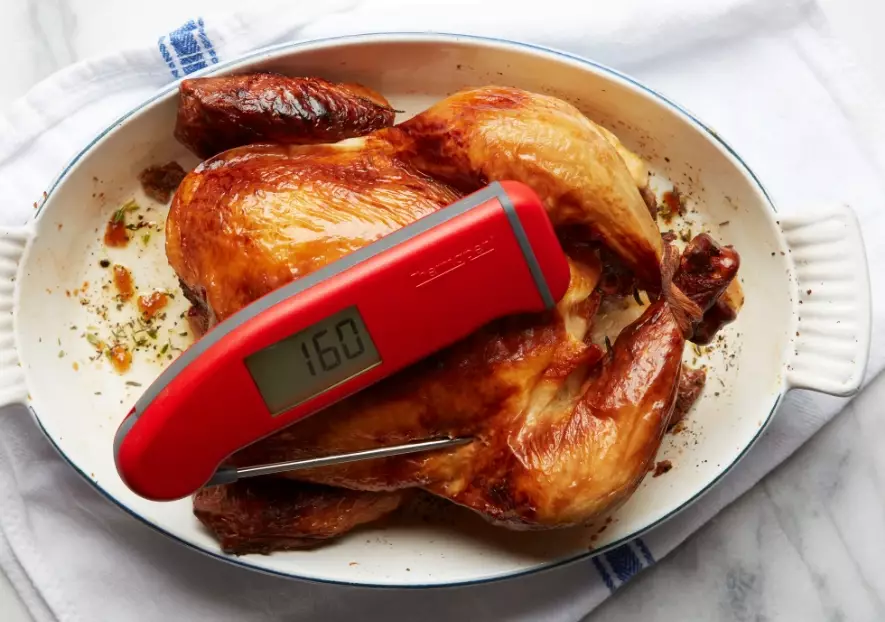
Step 4: The Double-Check. When the time is up and the coating is a deep golden brown, remove a piece and immediately check the internal temperature with an instant-read thermometer in the thickest part, avoiding bone. If it's at or above 165°F (175°F for thighs), it's done. If not, return it for another minute or two. This is the only foolproof way.
Step 5: Drain & Rest. Transfer to the wire rack. Sprinkle with a little salt immediately if needed. Let it rest for at least 5 minutes. This allows the juices to redistribute. Cutting into it immediately lets all the goodness run out.
Answering Your Burning Questions (See What I Did There?)
Here are the specific questions I get asked all the time, beyond the basic "what temperature to fry chicken."
How can I keep the oil temperature stable?
Use a heavy pot. Don't overcrowd. Fry in small batches. Use a thermometer and adjust the heat knob proactively. It's a dance, not a set-it-and-forget-it operation. If the temp drops to 330°F, gently increase the heat. If it shoots to 380°F, pull the pot off the heat for a moment.
Should I double-fry my chicken?
For extra, extra crispiness, yes! It's a game-changer for wings or smaller pieces. Fry once at a lower temperature (say, 300°F) to cook the chicken through completely. Let it rest and cool. Then, just before serving, fry again at a higher temperature (375°F+) for just 60-90 seconds to blister and crisp the coating. It's unbeatable.
Why is my fried chicken always dark on the outside but raw inside?
This is the classic sign your oil is way too hot. You're burning the coating before heat can penetrate to the center. Lower your oil temperature significantly. Also, make sure your pieces aren't too large or thick. Consider butterflying thicker breasts.
Can I reuse frying oil?
Yes, absolutely. Let it cool completely, then strain it through a fine-mesh sieve lined with a coffee filter or cheesecloth into a clean container. Store it in a cool, dark place. It's good for 2-3 more fries. You'll know it's gone bad if it smells off, looks dark and viscous, or smokes at a normal temperature. The Institute of Food Technologists has a great resource on frying oil quality if you want to dive deep into the science.
Is deep frying at home safe?
Respect the hot oil, and it's perfectly safe. Never leave it unattended. Keep kids and pets away. Have a lid nearby to smother a potential flare-up (slide it over the pot, don't drop it in!). Don't use water on a grease fire. A small fire extinguisher in the kitchen is never a bad idea.
My Personal Hard-Earned Tips (The Stuff Recipe Cards Skip)
- Season in Layers: Season the chicken itself with salt and pepper. Season your flour or dry dredge. Maybe even add a pinch of salt to your wet batter. Each layer builds flavor.
- The Buttermilk Soak Secret: Soaking chicken in buttermilk (even for just an hour) tenderizes it and helps the coating stick. A little hot sauce in the buttermilk is a pro move.
- Add Cornstarch: Replacing about 1/4 of your all-purpose flour with cornstarch makes for a noticeably lighter, crispier crust. It's a fantastic trick.
- Don't Trust Time Alone: My #1 rule. That chart is a guide. Your stove, your pot, the size of your chicken pieces—they all vary. The thermometer (for the oil and the meat) is your true guide. The USDA's safe temperature chart is the final authority on doneness.
Figuring out the perfect temperature to fry chicken isn't about memorizing a single number. It's about understanding the relationship between heat, time, and food. It's about controlling your environment with the right tools. Start with 350°F for your classic bone-in pieces. Use a thermometer. Don't crowd the pot. Drain on a rack.
Do those things, and you'll have solved the puzzle. The result? Fried chicken with a shatteringly crisp, golden-brown crust that gives way to juicy, flavorful, perfectly cooked meat. No more guesswork, no more disappointment. Just really, really good fried chicken.
Final Thought: The best temperature to fry chicken is the one you can control. Focus on stability, not just a number on a dial. A steady 350°F in a heavy pot will beat a fluctuating 375°F in a thin pot every single time. Control the heat, and you control your outcome.
Related Articles