The Perfect Temperature for Baking Whole Chicken (Juicy & Safe)
You've got a whole chicken, your oven is preheated, and now you're stuck. What temp to bake whole chicken? 350°F? 400°F? 450°F? The internet is full of conflicting advice, and it's enough to make you order pizza instead. Let's cut through the noise. The most reliable, all-purpose temperature for baking a whole chicken is 350°F (177°C). This moderate heat cooks the bird evenly, rendering fat for crispy skin while keeping the breast meat juicy. But that's just the headline. Stick with me, and I'll explain why this works, when you might choose a different temperature, and the crucial steps most recipes gloss over that make the difference between a triumph and a tragedy.
What You'll Learn in This Guide
Why Getting the Temperature Right is Crucial
Think of oven temperature as the conductor of your chicken-roasting orchestra. Too high, and the outer layers (skin, breast) are screaming soprano while the inner thighs are still humming a low, dangerous bass line (i.e., undercooked). Too low, and the whole process drags, drying out the meat before it's safely cooked through. The goal is synchronized cooking: skin crisping, fat rendering, and all parts reaching a safe internal temperature at roughly the same time.
The biggest mistake I see? People treat time as the master. "Bake for 20 minutes per pound." That's a rough guide, but it's useless if your oven runs hot or cold, or if you start with a fridge-cold bird versus one at room temperature. Temperature is your true guide, both the oven's and the chicken's internal temperature.
The Golden Standard: 350°F Explained
For a standard 4 to 5-pound roasting chicken, preheat your oven to 350°F. This is the sweet spot for balanced cooking. Here’s a breakdown of what to expect:
| Chicken Weight | Approximate Bake Time at 350°F | Key Checkpoint |
|---|---|---|
| 3 lbs | 1 hour – 1 hour 15 mins | Start checking at 50 minutes. |
| 4 lbs | 1 hour 15 mins – 1 hour 30 mins | The most common size. Plan for ~1 hr 20 min. |
| 5 lbs | 1 hour 30 mins – 1 hour 45 mins | Thighs take longer. Be patient. |
| 6 lbs | 1 hour 45 mins – 2 hours+ | Consider spatchcocking (butterflying) to speed up. |
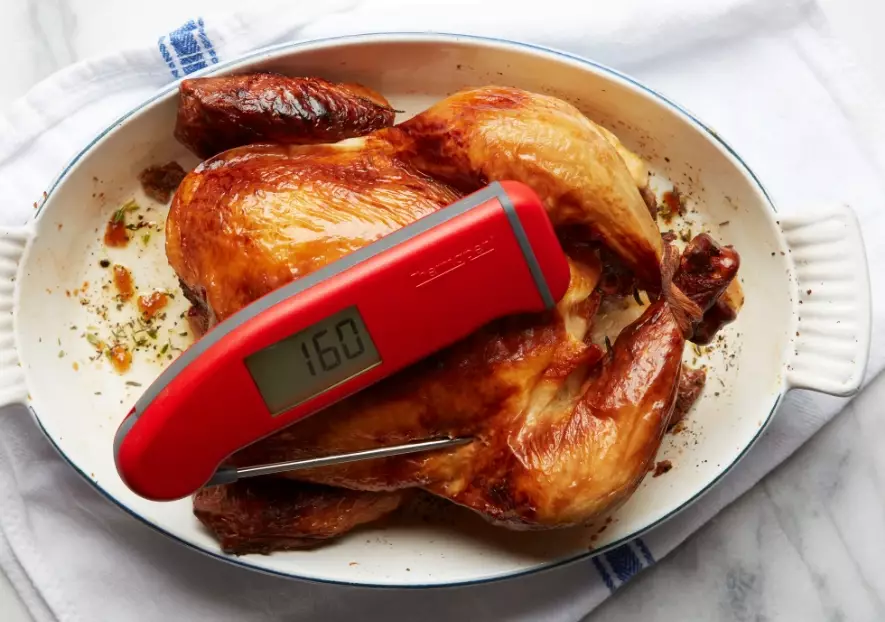
Remember: These times are estimates. A meat thermometer is the only way to know for sure. The chicken is done when the thickest part of the thigh (without touching bone) reads 165°F (74°C), as recommended by the USDA for food safety.
Why 350°F is the Magic Number for Most Ovens?
Let's talk about why this number works so well. At 350°F, the heat is aggressive enough to kick-start the Maillard reaction—that beautiful browning on the skin that equals flavor—but gentle enough to allow heat to penetrate to the center without overcooking the outer layers. The fat under the skin has time to slowly render out, basting the meat naturally and creating that crackling-crisp finish everyone wants. Higher temperatures can cause the skin to brown too fast, leaving you with burnt skin and raw meat underneath, a classic rookie error.
Other Temperature Strategies (High Heat vs. Low & Slow)
Is 350°F the only way? Not at all. Once you master the standard, you can experiment. These methods have specific goals.
High-Heat Blast (425-450°F): Some chefs swear by starting hot to crisp the skin, then lowering the temperature. It can work, but it's riskier. You must watch it like a hawk to prevent burning. I find it better for spatchcocked (butterflied) chickens where the bird is flat and cooks more evenly under high heat. For a whole, trussed bird, high heat alone often leads to disappointment—beautiful bronzed breast, pale flabby thighs.
Low & Slow (275-300°F): This method is fantastic for tenderness, especially with older birds or if you're planning to shred the meat. The collagen breaks down beautifully. The catch? The skin will be rubbery and pale. To fix this, you must finish the chicken under a high broiler for a few minutes. It's a two-step process, not a set-it-and-forget-it one.
My advice? Get confident with 350°F first. It's the most forgiving path to a perfectly cooked whole chicken.
Two Non-Negotiable Steps for Perfect Chicken
Oven temperature is critical, but these two steps are what separate a good chicken from a great one.
1. Dry the Skin Thoroughly. This is the single most overlooked step. Pat the entire chicken, especially the skin, bone-dry with paper towels. Wet skin steams. Dry skin roasts and crisps. Do this even if you brine it. I'm talking 5-7 minutes of dedicated patting. Your reward will be skin that shatters.
2. Let It Rest. Really Rest. When your thermometer hits 165°F in the thigh, pull the chicken out. Then, tent it loosely with foil and let it sit on the counter for 15-20 minutes. This wait is non-negotiable. The juices, which have been driven to the center by the heat, redistribute throughout the meat. If you carve immediately, all those flavorful juices will end up on your cutting board, leaving you with dry meat. The internal temperature will also continue to rise by 5-10 degrees (carryover cooking), ensuring safety and perfect doneness.
Your Burning Questions, Answered
Related Articles