Perfect Oven Baked Whole Chicken: Crispy Skin, Juicy Meat Guide
Quick Navigation
- Why Bother Baking a Whole Chicken?
- The Chicken Itself: Picking Your Bird
- The Pre-Game: Prep Work That Actually Matters
- Flavor Town: Seasonings and Aromatics
- The Main Event: How to Actually Bake It
- Is It Done? How to Tell Without Cutting Into It
- The Critical Step Everyone Skips: Resting
- Carving 101: How to Get the Most Meat Off the Bone
- What to Do With All Those Juices and Leftovers
- Common Problems and How to Fix Them
- Your Oven Baked Whole Chicken Cheat Sheet
- Frequently Asked Questions (The Stuff You Actually Google)
- Wrapping It Up
Let's be honest. The idea of putting a whole chicken in the oven can feel a bit intimidating, right? You picture a dry, bland bird or worse, one that's somehow raw near the bone but burnt on the outside. I've been there. The first time I tried it, I was so nervous about undercooking it that I left it in for what felt like an eternity. What came out was more like a chicken-shaped piece of lumber. Not good.
But here's the thing. Mastering an oven baked whole chicken is one of the most rewarding skills in home cooking. It's cheaper than buying parts, it fills your house with an incredible aroma, and the leftovers? They're pure gold for soups, salads, and sandwiches all week. It's the ultimate comfort food that also happens to be a smart kitchen move.
This guide isn't about fancy, cheffy techniques with a dozen steps. It's about getting a juicy, flavorful bird with crackling-crisp skin on a regular Tuesday night. We're going to walk through every single step, bust some myths, and I'll even tell you where I still mess up sometimes. By the end, you'll have a method that works every single time.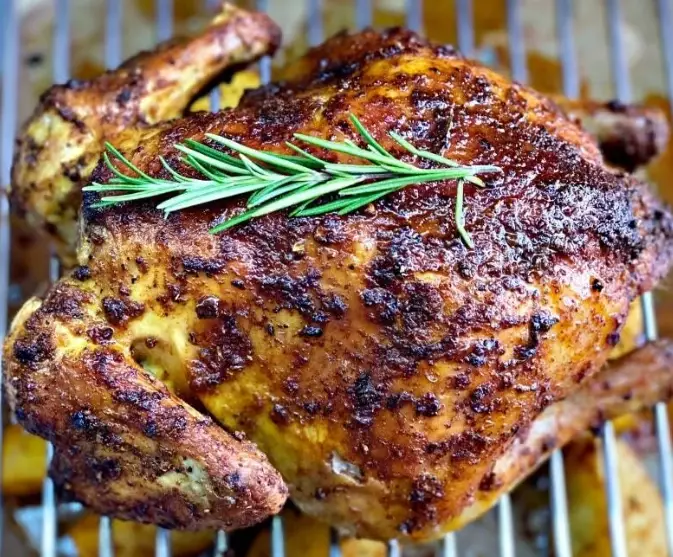
Why Bother Baking a Whole Chicken?
Before we dive into the how, let's talk about the why. Sure, you can grab a rotisserie chicken from the store (and no shame in that on a busy night). But when you make your own oven baked whole chicken, you control everything. The salt level, the herbs, the quality of the bird itself. The flavor is just... deeper. More homey.
Economically, it makes a ton of sense. A whole chicken often costs less per pound than individual packs of breasts or thighs. And you get a bonus: the carcass for making the most incredible, rich chicken stock. That's two, sometimes three meals from one ingredient. That's what I call a kitchen win.
The Chicken Itself: Picking Your Bird
Not all chickens are created equal. Walk into the grocery store and you'll see a wall of labels: conventional, organic, free-range, air-chilled. What does it all mean?
Conventional is your standard bird. It's fine, it'll work. But if you can swing it, I really think air-chilled chickens are worth the few extra dollars. Here's why: most chickens are processed in a way that involves a cold water bath. They absorb some of that water. Air-chilled birds are, you guessed it, chilled with air. This means less retained water, which leads to crisper skin when you roast it. It's a game-changer for texture.
Size matters too. For a standard family meal with leftovers, aim for a bird between 4 to 5 pounds. Much smaller and it can dry out quickly; much larger and you risk uneven cooking. A 4.5-pounder is my sweet spot.
The Pre-Game: Prep Work That Actually Matters
To Rinse or Not to Rinse?
This is a big debate. For years, everyone was told to rinse their chicken. Now, the USDA's Food Safety and Inspection Service strongly advises against it. Why? Rinsing can spray raw chicken juices around your sink and counter, spreading bacteria like Salmonella. The high heat of your oven will kill any bacteria on the surface anyway.
My method? I take the chicken out of its package, pat it *incredibly* dry with a massive wad of paper towels, and then immediately throw those towels away and wash my hands and the cutting board. The goal is desert-level dryness on the skin. Moisture is the enemy of crispiness.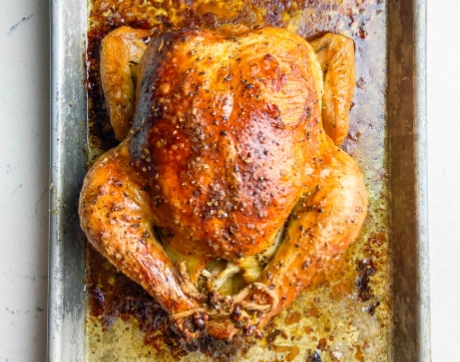
The Dry Brine Secret (You Can Skip the Wet Brine)
Brining—soaking in saltwater—is a famous trick for juicy meat. But it's messy, takes up fridge space, and can sometimes make the meat a bit spongy. Enter the dry brine. It's simpler and, in my opinion, gives better results for an oven baked whole chicken.
The night before (or even just 2-3 hours before), generously salt the entire chicken, inside and out. Don't be shy. Use kosher salt or sea salt—their larger crystals are easier to control. Then, place the chicken on a rack on a plate and leave it uncovered in the fridge. The salt draws out moisture, which then dissolves the salt, and that salty moisture gets re-absorbed deep into the meat, seasoning it from the inside out. The uncovered fridge air also dries the skin even more, which is the golden ticket to crispiness.
Pro Tip: If you're short on time, even 45 minutes of dry brining at room temperature is better than nothing. The key is getting that salt on early.
Flavor Town: Seasonings and Aromatics
After the dry brine, you can add other flavors. This is the fun part. Under the skin is prime real estate. Gently slide your fingers between the skin and the breast meat to loosen it. You can smear a little soft butter or olive oil mixed with herbs in there. It bastes the meat from the inside as it cooks.
For the cavity, don't just throw in a lemon. Think of it as an aroma chamber. My go-to combo is a halved lemon (squeeze the juice inside first), a few smashed garlic cloves, and a bundle of hardy herbs like rosemary, thyme, and sage. This steams from the inside, perfuming the meat subtly. You're not really eating these, they're just there to make the air inside the chicken smell amazing.
For the outside, after patting dry again, rub it all over with a little oil (avocado oil has a high smoke point) or softened butter. This helps the skin brown evenly. Then, more seasoning. Freshly ground black pepper is essential. Paprika adds a nice color and smoky sweetness. Garlic powder, onion powder—go with what you like.
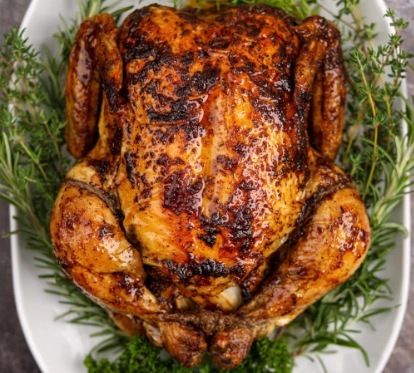 Keep it simple. Salt, pepper, one or two herbs. Let the chicken flavor shine.
The Main Event: How to Actually Bake It
Temperature: The Single Most Important Decision
Here's where most recipes go wrong. They tell you to roast at 350°F (175°C) the whole time. That's a surefire path to dry breast meat by the time the thighs are cooked. The secret? High heat, or a combination of high and low.
Method 1: The High-Heat Blitz. Preheat your oven to 450°F (230°C). Roast the chicken for about 50-60 minutes for a 4.5 lb bird. This method gives you incredibly crisp skin and surprisingly juicy meat if you don't overcook it. You have to watch it closely, though.
Method 2: My Favorite - Start High, Finish Low. This is my weekday jam. Crank the oven to 425°F (220°C). Put the chicken in. After 15 minutes, reduce the heat to 375°F (190°C) and roast until done. The initial blast crisps the skin, and the lower heat gently cooks the interior without shocking it.
Method 3: The Low & Slow with a Crispy Finish. Roast at 325°F (160°C) until the meat is almost done, then crank the heat to 450°F (230°C) for the last 10-15 minutes. This is foolproof for juicy meat but requires more active time.
I find Method 2 is the best balance of hands-off time and guaranteed results for your oven baked whole chicken.
To Truss or Not to Truss?
Trussing—tying the legs and wings close to the body—makes for a beautiful, compact presentation. But it also means the dark meat (legs and thighs) are tucked in, taking longer to cook, while the white meat (breast) is exposed, cooking faster. See the problem?
I rarely truss. I let the legs splay out a bit. This exposes the joint between the thigh and body—the slowest-to-cook part—to more direct heat, helping everything finish at the same time. For presentation, I might just tie the legs together loosely with kitchen twine, but let them be free.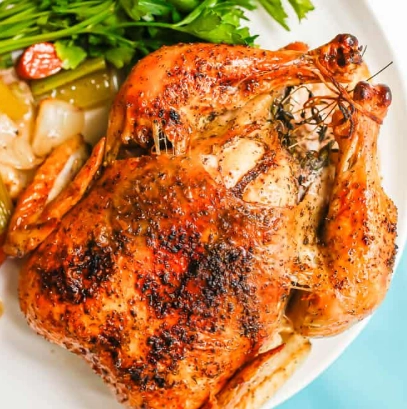
Pan Setup and Basting
Use a roasting pan or a sturdy baking sheet with a low rim. Place the chicken on a rack set inside the pan. This is non-negotiable. The rack allows hot air to circulate all around the bird, cooking it evenly and preventing the bottom from steaming in its own juices. No rack? Create a "rack" with a bed of thickly sliced onions, carrots, or potatoes. They'll flavor the drippings and keep the chicken elevated.
Basting? I used to be a devoted baster, constantly opening the oven to spoon juices over the bird. Then I read some food science. Every time you open the oven, the temperature drops dramatically, extending cooking time and potentially drying out the meat. The steam from the juices can also soften the skin you're trying to crisp. I've mostly stopped basting. The result is a more reliably crispy skin and less fuss. Let the oven do its work.
Is It Done? How to Tell Without Cutting Into It
This is the moment of truth. The biggest fear. Relying on time alone is risky because ovens vary and chicken sizes differ. You need a good instant-read digital thermometer. It's the best $20 you'll spend in the kitchen.
Insert the thermometer into the thickest part of the thigh, avoiding the bone. According to the USDA safe temperature chart, chicken is safe to eat at 165°F (74°C). But for dark meat, pulling it out at 165°F can be a bit dry. I target 170-175°F (77-80°C) for the thigh. For the breast, aim for 155-160°F (68-71°C). Wait, that's below 165°F! Yes, but remember, the temperature will continue to rise 5-10 degrees as it rests (called carryover cooking). Taking the breast out at 160°F lets it coast up to a safe 165°F+ while staying supremely juicy.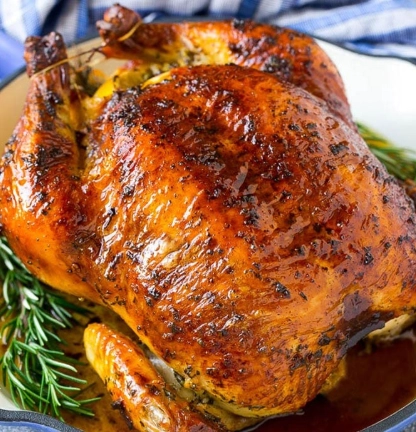
Safety First: Always check both the thigh and the breast with your thermometer. If the juices run clear when you pierce the thigh, that's a good secondary sign, but the thermometer is law.
The Critical Step Everyone Skips: Resting
You pull that beautiful, golden-brown oven baked whole chicken out of the oven. The urge to carve it immediately is overwhelming. Fight it.
Resting is not a suggestion; it's a requirement. When meat cooks, the juices are driven toward the center. If you cut it right away, all those precious juices flood out onto the cutting board, leaving you with dry meat. Letting it rest for 15-20 minutes allows the muscle fibers to relax and re-absorb those juices throughout the entire bird.
Transfer the chicken to a cutting board (not a plate where it'll sit in a puddle) and tent it very loosely with foil. Don't wrap it tight, or you'll trap steam and ruin the crisp skin you worked so hard for.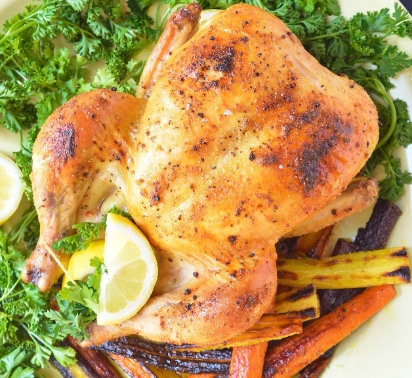
Carving 101: How to Get the Most Meat Off the Bone
Carving seems ceremonial, but it's just practical. A sharp chef's knife is key. A dull knife will shred the meat.
- Remove the Legs: Pull a leg away from the body and slice through the skin connecting them. Find the hip joint with your knife and cut through it. Separate the thigh and drumstick by cutting at the knee joint.
- Remove the Wings: Similar process. Pull the wing out, cut through the skin, and find the joint where it meets the breast.
- Carve the Breast: Make a long, horizontal cut just above the wing joint along the length of the breastbone. Then, slice downward, following the contour of the rib cage, to remove the entire breast half. Slice it crosswise into even pieces on the board.
Don't forget to flip the carcass over and pick off the delicious "oysters"—two small, incredibly tender pieces of dark meat on the back.
What to Do With All Those Juices and Leftovers
The golden liquid in the bottom of your roasting pan is liquid gold. Skim off most of the fat (save it for roasting potatoes!), and you have an incredible jus. You can deglaze the pan with a splash of wine or broth, simmer, and strain it for a simple sauce.
As for leftovers, a properly cooked oven baked whole chicken will stay moist for 3-4 days in the fridge. The possibilities are endless: chicken salad, tacos, pot pie, fried rice, or just eaten cold straight from the container. My personal favorite? A quick soup with the leftover meat, some veggies, and the stock you're about to make from the carcass.
The carcass is not trash! Throw it in a pot with some onion, carrot, celery, a bay leaf, and cover with water. Simmer for a few hours. Strain, and you have homemade chicken stock that puts the boxed stuff to shame. It's the final gift from your roasted chicken.
Common Problems and How to Fix Them
Let's troubleshoot. Even with the best plan, things can happen.
Problem: The skin is pale and rubbery, not brown and crisp.
Solution: The skin wasn't dry enough before cooking. Pat it drier next time. Also, ensure your oven is fully preheated. Starting with a hot oven is crucial. A light coating of oil or butter also promotes browning.
Problem: The breast is dry, but the thighs are perfect.
Solution: The breast overcooked before the dark meat was done. Next time, try the "start high, finish low" method. You can also place a small piece of foil loosely over the breast for the last 15-20 minutes of cooking to shield it.
Problem: The bottom is soggy.
Solution: You didn't use a rack. Always elevate the chicken so air can get underneath.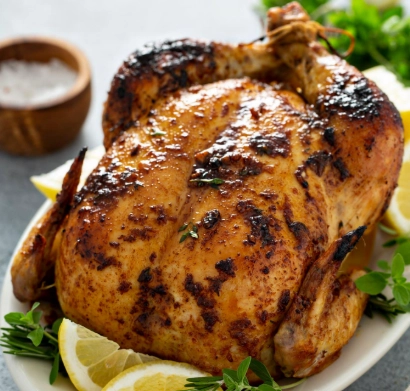
Your Oven Baked Whole Chicken Cheat Sheet
Here’s a quick-reference table to take the guesswork out of timing. These are estimates for an unstuffed bird starting in a fully preheated oven at the high-then-low method (425°F down to 375°F). Always use a thermometer!
| Chicken Weight | Approx. Total Time | Target Temp (Thigh) | Rest Time |
|---|---|---|---|
| 3.5 lbs (1.6 kg) | 60-70 mins | 170-175°F (77-80°C) | 15 mins |
| 4.0 lbs (1.8 kg) | 70-80 mins | 170-175°F (77-80°C) | 15-20 mins |
| 4.5 lbs (2.0 kg) | 80-90 mins | 170-175°F (77-80°C) | 20 mins |
| 5.0 lbs (2.3 kg) | 90-100 mins | 170-175°F (77-80°C) | 20+ mins |
Frequently Asked Questions (The Stuff You Actually Google)
Wrapping It Up
Look, at its core, an oven baked whole chicken is a simple thing. A bird, some heat, and a little patience. The tricks we talked about—dry brining, starting hot, using a thermometer, resting—aren't about being fancy. They're about being smart. They're about stacking the odds in your favor so that on a busy night, you can put this centerpiece on the table without a second thought.
Don't get bogged down in the details on your first try. Pick one thing to focus on. Maybe it's just remembering to pat the skin really dry. Or maybe it's buying that thermometer. Each time you make it, you'll learn something new. You'll find your own favorite herb combination, your preferred oven temp, your perfect carving technique.
The real magic happens when this moves from being a "recipe" you follow to a "thing you just know how to do." That's when you'll open your fridge, see a whole chicken, and smile because you know exactly what to do for a fantastic meal. And honestly, that confidence is the best ingredient of all. Now go preheat that oven.
Related Articles