Roast Whole Chicken in Oven: Crispy Skin & Juicy Meat Every Time
Roasting a whole chicken in the oven feels like a culinary rite of passage. It promises a beautiful centerpiece, leftovers for days, and that unbeatable aroma. But too often, the result is a bird with pale, rubbery skin and a breast as dry as sawdust. It doesn't have to be that way. After years of trial and error (including more than one disappointing dinner), I've nailed down a method that works every single time. Forget the fuss. This is about simple science and a couple of non-negotiable steps.
Quick Navigation
The 10-Minute Prep Work You Can't Skip
Great roast chicken starts long before the oven heats up. Rushing the prep is the first mistake home cooks make.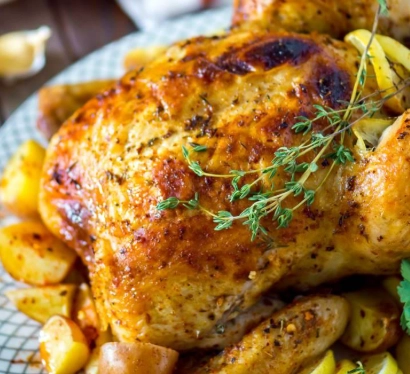
Choosing Your Bird
You don't need a heritage breed, but you should pay attention to size and labeling. A 4 to 5-pound chicken is the sweet spot. It's large enough to feed a family but small enough to cook evenly. Look for "air-chilled" if possible. Unlike water-chilled birds, air-chilled chickens aren't pumped with extra water, which means the skin dries out more effectively for crisping. It's a game-changer.
Pro Tip: Take the chicken out of the fridge at least 30 minutes before roasting. A cold bird straight from the fridge will cook unevenly, leaving the interior underdone or the exterior overdone as you wait for the center to heat up.
The Essential Pat-Down
This is the single most underrated step. Unwrap the chicken, remove any giblets from the cavity, and place it on a cutting board. Use a wad of paper towels to pat the entire surface, inside and out, bone-dry. Moisture is the enemy of crisp skin. Any water on the skin will steam during roasting, leaving you with a soggy, pale finish. Be thorough.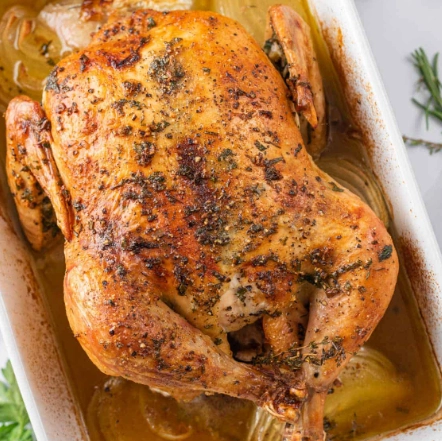
The Seasoning Art: Dry Brine vs. Wet Marinade
Flavoring the bird is where personality comes in. You have two main paths.
The Dry Brine (My Go-To Method)
A dry brine is just salting the chicken in advance. But it's magic. Salt draws out moisture, which then dissolves the salt and gets reabsorbed into the meat, seasoning it deeply and helping it retain juices during cooking. It also further dries the skin.
- How to: Generously season the entire chicken, inside and out, with kosher salt (about 1 tsp per pound). Don't be shy. Place it on a rack over a plate, uncovered, in the fridge for at least 4 hours, ideally up to 24 hours.
- The result: Noticeably juicier meat and skin that crisps like a potato chip.
The Wet Marinade or Herb Butter
For intense, aromatic flavor, a wet marinade or an herb butter under the skin works wonders. The trick with herb butter is to gently loosen the skin over the breast and thighs with your fingers, then smear softened butter mixed with herbs (thyme, rosemary, sage) directly onto the meat. This bastes the chicken from the inside as it cooks.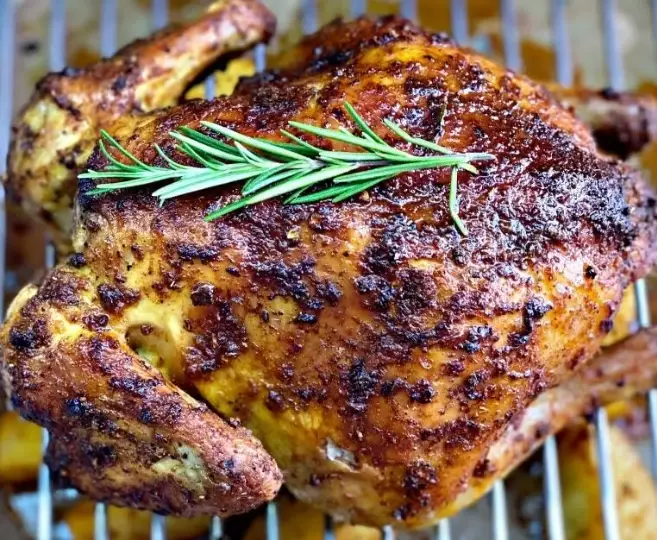
A Common Mistake: Slathering butter or oil on the outside of wet skin. This just creates a greasy barrier. Always ensure the skin is dry first, then apply fat. The fat will then render and fry the skin to crispiness.
The Roasting Process: Temperature is Everything
Here's where most recipes get it wrong with a single, moderate temperature. That often overcooks the breast. My preferred method uses two temperatures.
| Method | Temperature & Time | Best For | Key Outcome |
|---|---|---|---|
| High-Heat Blast | 450°F (230°C) for 20-25 min, then 375°F (190°C) | Ultra-crispy skin lovers | Fast skin rendering, deep color. |
| Steady & Moderate | 375°F (190°C) for 20 min/lb + 20 min | Set-it-and-forget-it ease | Even cooking, less spatter. |
| Low & Slow Finish* | Roast at 325°F (160°C) until 150°F in breast | Perfectionists avoiding dry breast | The most tender, even meat. |
*This is my secret weapon. Start with a high-heat blast for color, then drop the temp low to finish cooking gently.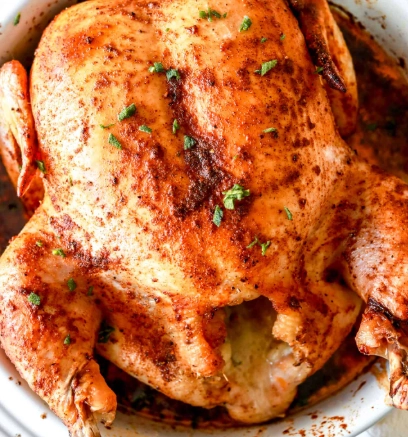
Position and Tools
Use a roasting pan or oven-safe skillet. A V-rack is helpful but not essential. If you don't have one, roughly chop an onion, a carrot, and a celery stalk to make a "rack" in the pan. It lifts the chicken, allows air circulation, and flavors your pan juices for gravy.
Do you truss? I often don't. Trussing (tying the legs) makes a prettier shape, but leaving the legs loose exposes the thigh joint to more heat, helping the dark meat cook through faster. It's a trade-off between looks and function.
The Only Way to Know It's Done: Thermometer
Forget poking and guessing. An instant-read thermometer is your best friend. Insert it into the thickest part of the thigh, avoiding the bone. You're looking for 165°F (74°C). For the breast, aim for 155-160°F (68-71°C). It will carryover cook to 165°F while resting. According to food safety guidelines from sources like the USDA, chicken is safe to eat at 165°F, but pulling it slightly earlier guarantees a juicier breast.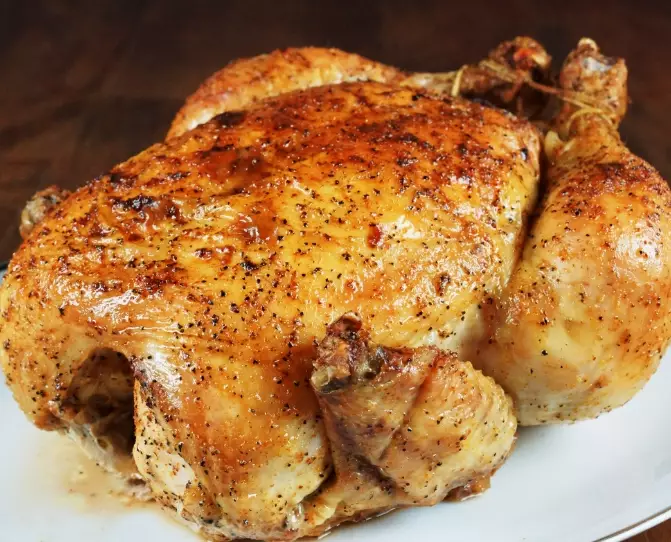
The Most Important Step: Rest & Carve
This is non-negotiable. The moment your chicken hits temperature, take it out of the oven. Transfer it to a clean cutting board and let it rest for 15-20 minutes. Tent it loosely with foil if you like, but don't seal it tight or the skin will soften.
Why rest? The hot juices inside the meat are frantic. If you cut immediately, they'll all rush out onto the board, leaving the meat dry. Resting allows the muscle fibers to relax and reabsorb those juices.
While the chicken rests, you have the perfect window to make a quick pan gravy with the drippings. Add a splash of wine or broth to the hot pan, scrape up the browned bits (the fond), simmer, and finish with a pat of butter.
How to Carve Like a Pro
1. Remove the legs: Pull a leg away from the body, cut through the skin, and slice through the joint connecting it to the backbone. 2. Separate thighs and drumsticks: Find the joint between them and cut through. 3. Remove the wings: Similar to legs, pull and cut through the joint. 4. Carve the breast: Make a long, horizontal cut along the breastbone, then slice downwards to remove each breast half. You can then slice them crosswise into portions.
Serve it up. The skin should crackle, the thigh juice should glisten, and the breast should be moist.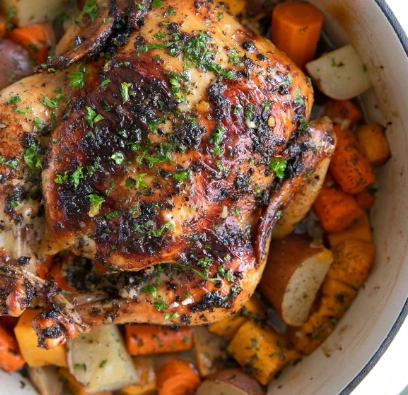
Your Roast Chicken Questions Answered
The breast cooks faster than the legs and thighs. The most effective fix is the 'reverse spatchcock' or 'tented breast' method. About halfway through roasting, loosely tent just the breast area with foil. This slows down its cooking, allowing the dark meat to catch up without overcooking the white meat.
Also, pulling the chicken at 160-165°F (71-74°C) in the breast, not 165°F+, is crucial as it will carryover cook to a safe 165°F while resting. Using the low & slow finish method in the table above is designed specifically to solve this exact problem.
Absolutely, and it gives fantastic crispy skin. The key differences are size and time. You'll need a smaller bird (4 lbs or under) to fit. Cook it breast-side down first for 30-35 minutes at 375°F (190°C) to render back fat and crisp the skin, then flip it breast-side up for another 20-25 minutes.
Always use a meat thermometer; air fryers cook faster and hotter, so total time may be 20-30% less than oven roasting. The hot, concentrated air is brilliant for skin but requires more attention.
While a thermometer is non-negotiable for consistent results, a visual check is piercing the thickest part of the thigh with a knife or skewer. The juices should run completely clear, not pink or red. Also, the leg should wiggle freely in its joint.
However, relying solely on color can be misleading, as fully cooked chicken can sometimes still show a pinkish hue near the bones due to myoglobin. For safety and perfect doneness, invest in a $10 instant-read thermometer. It's the one tool that removes all doubt.
Roasting a chicken on Sunday is the ultimate meal prep hack. After carving, separate the meat by texture: shred the tender thigh and leg meat for tacos, enchiladas, or chicken salad. Keep the breast slices intact for sandwiches or salads.
Immediately simmer the carcass with onion, carrot, and celery for 2-3 hours to make a rich broth for soup. Store meat and broth separately in airtight containers; the meat will stay good for 3-4 days, the broth up to a week (or freeze for months). This one bird becomes the base for multiple meals.
Related Articles