The Perfect Oil Temp for Fried Chicken: Your Ultimate Guide to Crispy Results
What's in This Guide
- The Golden Rule: What Oil Temperature for Frying Chicken Actually Works?
- The Oil Temp for Fried Chicken Fails (And How to Avoid Them)
- Your Tools: From Fancy to "Good Enough"
- Oil Choice: It Matters More Than You Think
- Answering Your Burning Questions (Pun Intended)
- Putting It All Together: A Simple, Foolproof Workflow
Let's talk about the one thing that makes or breaks your fried chicken. It's not just the seasoning, though that's important. It's not even just the batter or the brine. It's something far more fundamental, something that happens in the pot before the chicken even touches it. The oil temperature for fried chicken. Get this wrong, and you're headed for a world of soggy, greasy, or burnt disappointment. Get it right, and you unlock that magical combination of a shatteringly crisp crust and juicy, tender meat that everyone dreams of.
I've messed this up more times than I care to admit. Early on, I'd just guess. I'd wait until the oil looked "shimmery" and drop the chicken in. Sometimes it worked. Often, it didn't. The chicken would soak up oil like a sponge, leaving a heavy, unappetizing grease layer. Other times, the outside would brown way too fast, leaving the inside terrifyingly pink. It was frustrating. The turning point was when I finally started paying serious, obsessive attention to the oil temp for fried chicken. It changed everything.
The Golden Rule: What Oil Temperature for Frying Chicken Actually Works?
After years of testing (and eating a lot of chicken), here's the non-negotiable range you need to live in: 350°F to 375°F (175°C to 190°C). This isn't just a random suggestion; it's the sweet spot dictated by food science.
Think of it this way. When cold, wet chicken hits hot oil, two critical things happen simultaneously. First, the surface moisture instantly vaporizes, creating a burst of steam. This steam actually helps keep the oil from penetrating the food initially. Second, the proteins and starches on the surface begin to cook and set, forming that crust. If your oil temp for fried chicken is too low (say, below 325°F), the steam production is weak. The crust forms slowly, giving the oil all the time in the world to seep in through the porous, uncooked batter. You get greasy chicken.
On the flip side, go too hot.
If you crank it above 380°F, the outside crust browns and sets so rapidly that it can trap steam inside. This might sound good, but it often means the outside is done—or even burning—long before the interior meat has cooked through to a safe temperature. You're left with a dark, bitter crust and undercooked chicken. Not good.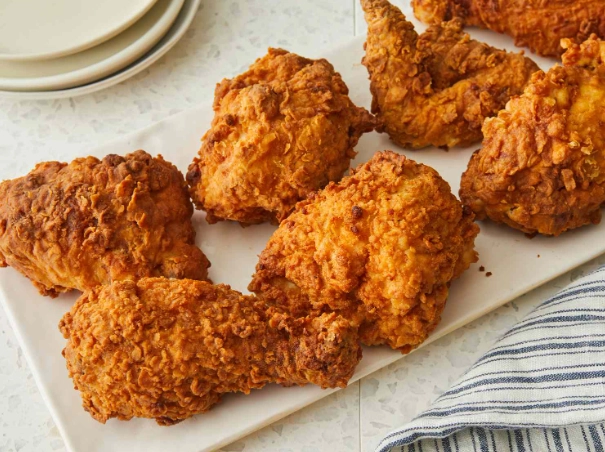
Breaking It Down: Oil Temp for Different Frying Stages
It's not just one static number. The ideal oil temp for fried chicken can shift slightly depending on what you're doing. Here's a quick breakdown.
- The Initial Sizzle (First 2-3 minutes): This is critical. You want that oil hot enough to create an immediate seal. I never go below 350°F for this moment. If it doesn't sizzle vigorously, wait.
- The Main Cook (Middle 8-12 minutes): This is where you maintain. After the initial drop, let the oil settle back into the 335°F to 350°F range. This moderate heat allows the heat to travel inward and cook the chicken through without brutalizing the crust.
- The Final Crisp (Last minute): Some folks, myself included, like to crank the heat up a bit for the final 60 seconds. Bringing the oil back up to 370°F or so right before removing the chicken helps blast off any excess surface oil and ensures an extra-crispy finish. Just watch it closely!
The Oil Temp for Fried Chicken Fails (And How to Avoid Them)
We've all been there. Let's diagnose the common problems tied directly to oil temperature.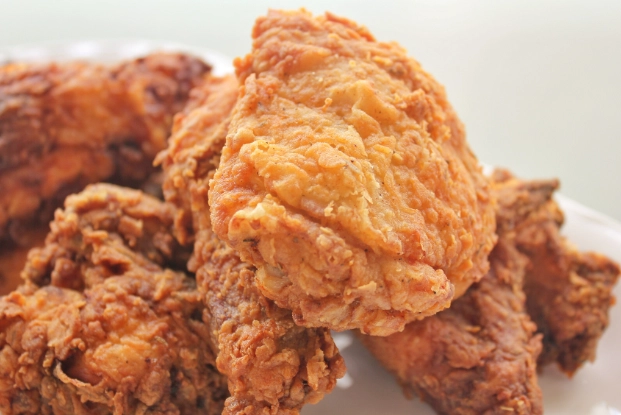
Soggy, Greasy Chicken: The classic sign of oil that's too cold. The batter absorbs the oil instead of repelling it. The crust is pale, soft, and leaves an oily film on your fingers and plate. The fix? Pat your chicken pieces bone-dry before dredging, and for goodness sake, use a thermometer. Don't eyeball it.
Dark Brown/Black Crust with Raw Inside: This is the high-temperature terror. The outside looks done in just a few minutes, but a meat thermometer reveals the truth. The culprit is oil that's way too hot, often because we get impatient. The fix is patience and a thermometer (seeing a theme here?). Let the oil come to the right temp, and don't overcrowd the pot, which can cause the temp to plummet and then spike wildly when you try to correct it.
Uneven Cooking: One piece is perfect, the next is raw, another is burnt. This usually happens from overcrowding. You drop too much cold chicken in at once, the oil temp for fried chicken plummets to 300°F, and it never really recovers evenly. Fry in small, manageable batches. Let the oil come back to temperature fully between each batch.
Your Tools: From Fancy to "Good Enough"
You can't manage what you can't measure. Let's talk thermometers.
The Gold Standard: A Deep-Fry Thermometer. This is the single best investment for frying. It clips to the side of your pot, has a long probe, and gives you a constant, easy-to-read temperature. It removes all guesswork. Brands like Taylor or ThermoPop are reliable.
The Digital Instant-Read Thermometer. This is what I use most often. I check the oil temp before adding chicken, and I also use it to check the internal temperature of the chicken (which should hit 165°F in the thickest part, not touching bone). It's a versatile two-in-one tool. The website Serious Eats, a fantastic resource for cooking science, often recommends this approach for home cooks.
The "No Thermometer" Test (Not Recommended, But...): If you're truly in a bind, the old "wooden spoon" or "bread cube" test can give a rough idea. Stick the dry end of a wooden spoon into the oil. If bubbles form vigorously around it, it's around 350°F. Or drop a 1-inch bread cube in; if it browns in 60 seconds, you're in the ballpark. But honestly, this is inconsistent. Spend the $15 on a thermometer.
Oil Choice: It Matters More Than You Think
The oil you use has a "smoke point"—the temperature at which it starts to break down, smoke, and impart bad flavors. For the high oil temp needed for fried chicken, you need an oil with a high smoke point.
| Oil Type | Smoke Point (Approx.) | Best For | My Personal Take |
|---|---|---|---|
| Peanut Oil | 450°F (230°C) | Classic choice, neutral flavor, great for reuse. | My top pick. It just works perfectly for the oil temp for fried chicken and doesn't leave a taste. |
| Canola or Vegetable Oil | 400°F (205°C) | Widely available, affordable, neutral flavor. | The workhorse. Totally reliable and what I use 80% of the time. |
| Avocado Oil | 520°F (270°C) | Very high smoke point, healthy fats. | Excellent but pricey. Overkill for frying chicken, but you'll never worry about smoke. |
| Shortening (like Crisco) | ~360°F (182°C) | Old-school Southern fried chicken. | Gives a distinct flavor and texture. Smoke point is lower, so you must watch the temp closely. |
| Extra Virgin Olive Oil | ~375°F (190°C) | Salads, not frying! | Do not use. It has a low smoke point and a strong flavor that will ruin your chicken and your kitchen air. |
My go-to? A blend of canola and peanut oil. It's affordable and performs brilliantly at the necessary oil temp for fried chicken.
Answering Your Burning Questions (Pun Intended)
Here are the questions I get asked most often, the ones that keep people up at night worrying about their chicken.
The difference between a good home cook and a great one often comes down to the patience to let the oil come to the right temperature, and the discipline to not overcrowd the pan. It's a simple discipline with delicious rewards.
Putting It All Together: A Simple, Foolproof Workflow
Let's walk through it step-by-step, focusing on temperature.
- Prep Your Station: Chicken is dried, seasoned, and dredged. Your thermometer is ready. You have a wire rack set over a sheet pan for draining (never use paper towels directly—they steam the crust and make it soggy).
- Heat the Oil: Fill your heavy pot or Dutch oven no more than halfway. Attach your thermometer. Heat over medium-high heat. Watch it climb. Don't walk away.
- The Drop: When the oil hits 365°F, you're ready. Gently lower in your first batch (3-4 pieces max for a standard pot). The temp will drop. That's fine. Let it stabilize between 335°F and 350°F.
- Maintain and Monitor: Adjust your burner as needed to keep it in that 335-350°F range. Fry for the recommended time (usually 10-15 mins for bone-in), turning occasionally.
- The Finish: In the last minute, you can increase the heat slightly to crisp. Check internal temp with a separate thermometer—it must read 165°F.
- Drain and Rest: Transfer to the wire rack. Let it rest for 5-10 minutes. This allows the juices to redistribute and the crust to set fully. This resting period is as crucial as the frying temp.
- Repeat: Let the oil come back to 365°F before adding the next batch. Every. Single. Time.
It sounds meticulous, but after a batch or two, it becomes second nature. You start to understand how your stove reacts, how your pot holds heat, how your chicken behaves.
Mastering the oil temp for fried chicken isn't about rigid rules. It's about understanding the reaction between heat, moisture, and food. It's the difference between something that's merely edible and something that's truly memorable. It turns a simple cooking step into the foundation of a perfect meal. So grab that thermometer, be patient with your heat, and get ready for the crispiest, juiciest fried chicken of your life. Trust me, your taste buds will thank you.
And if you mess up? Don't sweat it. We all have. Just figure out if the oil was too hot or too cold, adjust next time, and try again. That's how you really learn.
Related Articles