Chicken Done Right: The Ultimate Guide to Safe Temperature & Doneness
Quick Navigation
- Why Getting It Right Matters: Safety First, Taste a Very Close Second
- The Gold Standard: Your Instant-Read Thermometer
- The Official Safe Temperatures: It's More Than Just 165
- How to Check Without a Thermometer (The Less Reliable Methods)
- Step-by-Step: How to Actually Check the Temperature
- Common Scenarios & Troubleshooting
- Your Top Questions, Answered
- My Personal Takeaways (After Many Dry Chickens)
Let's be honest. Figuring out when is chicken done is the single most stressful part of cooking it. Under cook it, and you're risking a nasty foodborne illness. Overcook it, and you're left with a sad, dry, chewy piece of cardboard that no amount of sauce can save. I've been there. I've served chicken that was suspiciously pink near the bone (cue the panic), and I've definitely murdered more than my fair share of chicken breasts in the name of "safety." It's frustrating.
So, let's cut through the noise and the old wives' tales. This isn't about memorizing a single magic number and calling it a day. It's about understanding the why behind the numbers, learning the tools and techniques that never lie, and finally cooking chicken that's both gloriously juicy and unquestionably safe. Because knowing exactly when your chicken is done shouldn't feel like defusing a bomb.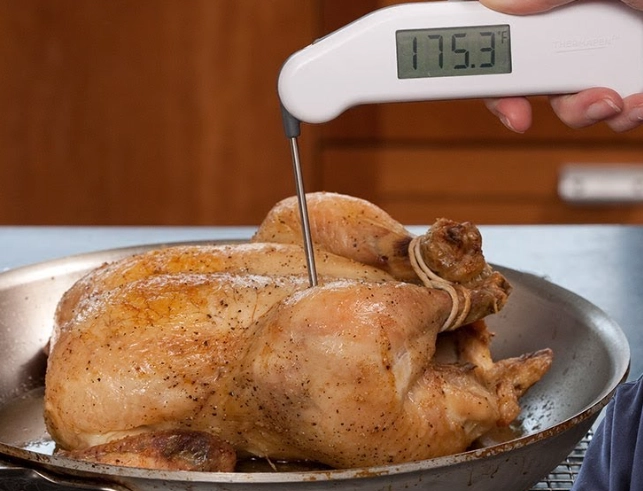
The biggest myth we need to bust right away? The idea that chicken is only safe at 165°F (74°C). While that's a crucial guideline, it's an oversimplification. Safety is a combination of temperature and time. Stick with me, and you'll see what I mean.
Why Getting It Right Matters: Safety First, Taste a Very Close Second
You've probably heard the horror stories about Salmonella and Campylobacter. They're not urban legends. Raw or undercooked poultry is a primary source of these bacteria, which can lead to serious food poisoning. The symptoms are no joke – cramps, fever, diarrhea – and for vulnerable groups like young kids, the elderly, or those with compromised immune systems, it can be dangerous.
That's the safety side. On the culinary side, chicken meat, especially the lean breast, has a tragically narrow window of perfection. The proteins start to coagulate and squeeze out moisture rapidly once you pass the ideal temperature. Miss that window, and the texture changes from tender and succulent to stringy and dry. The goal is to hit the minimum safe temperature without soaring past it. That's the sweet spot.
I guess you've ordered takeout chicken that's sometimes dry as sawdust, right? That's a kitchen that's terrified of undercooking and has no precise method to stop at the right moment. We're not running that kind of kitchen.
The Gold Standard: Your Instant-Read Thermometer
If you take only one thing from this guide, let it be this: Buy a good instant-read digital thermometer. It is, without exaggeration, the most important tool in your kitchen for cooking meat. Visual cues can be misleading. Poking and prodding is unreliable. The color of the juices is a myth (clear juices can still flow from undercooked chicken).
A thermometer gives you an objective, numerical answer to the question "when is chicken done?" It removes all doubt. I resisted getting one for years, thinking it was for "serious" chefs. That was dumb. It's for anyone who wants to eat safe, delicious chicken. I bought my first decent digital one for under ten bucks, and it changed everything.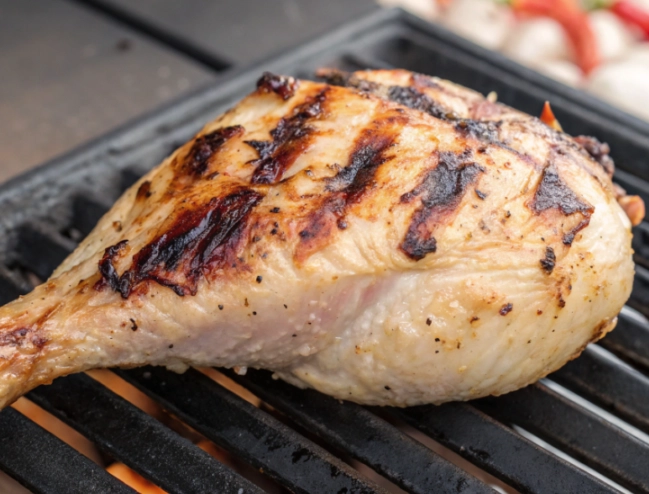
Not all thermometers are created equal, though. Here's a quick rundown:
- The Speed Demons (Thermocouples): These are the fast ones, like the popular Thermapen. They give a reading in 2-3 seconds. Pricier, but if you're checking a lot of pieces or grilling, the speed is amazing.
- The Reliable Workhorses (Thermistors): Most affordable digital thermometers fall here. They take 5-10 seconds to get a stable reading, which is still perfectly fine for home cooking. Brands like Lavatools or Thermoworks have great options.
- The Leave-In Probe Thermometers: These have a probe on a wire that stays in the meat while it cooks, connected to a base outside the oven. Fantastic for roasting a whole chicken or large breasts, as you can monitor the temp without opening the oven door. Oven-safe dial thermometers that sit in the meat are less accurate and slower—I don't recommend them.
Pro Tip: Test your thermometer's accuracy once in a while. Stick the probe in a glass of ice water (it should read 32°F / 0°C) or boiling water (212°F / 100°C at sea level). If it's off by more than a couple degrees, you can often calibrate it or it's time for a new one. Trust the tool.
The Official Safe Temperatures: It's More Than Just 165
Here’s where we get into the meat of the matter (pun intended). The United States Department of Agriculture (USDA) sets the food safety standards, and they are the authority you should listen to. According to their latest guidelines, poultry should be cooked to a minimum safe internal temperature of 165°F (74°C).
But—and this is a critical but—that's the temperature at which bacteria are destroyed instantaneously. Lower temperatures can also be safe if the chicken is held at that temperature for a specific amount of time. This is called "thermal lethality" or "time-temperature pasteurization." It's the same principle used in sous-vide cooking.
This is why you might see chefs or food science resources, like the amazing work over at Serious Eats, pulling chicken at lower temperatures. For example, holding chicken at 150°F (66°C) for just under 3 minutes achieves the same level of bacterial safety as hitting 165°F instantly. This science is backed by data from the USDA Food Safety and Inspection Service itself.
So, what does this mean for you in a practical sense? It means if you're precision cooking (like sous-vide) or monitoring very closely, you have some flexibility for juicier results. However, for 99% of home cooks using conventional methods, aiming for 165°F is the simplest, safest, and most foolproof rule. It's your guaranteed safe harbor.
More importantly, different parts of the chicken are best at different temperatures for texture and juiciness. The all-white-meat breast dries out fastest, while the dark meat (thighs, legs) has more fat and connective tissue that benefits from a higher temperature to break down and become tender.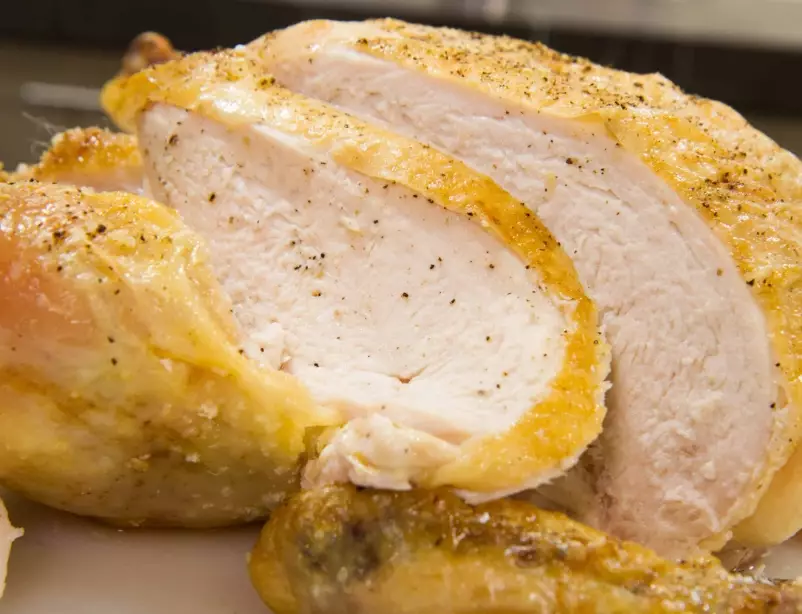
| Chicken Cut | Minimum Safe Temp (USDA) | Recommended Target for Best Texture | Key Notes |
|---|---|---|---|
| Breasts (Boneless or Bone-in) | 165°F (74°C) | 155-160°F (68-71°C) with rest* | Pull it off the heat at 155-160°F. Carryover cooking will raise it 5-10 degrees while it rests. This is the secret to moist breast meat. |
| Thighs & Legs (Dark Meat) | 165°F (74°C) | 170-175°F (77-79°C) | Dark meat has collagen that needs more heat/time to melt into gelatin. Higher temps here mean more tender, juicy meat, not dryness. |
| Whole Chicken | 165°F (74°C) in the innermost thigh & wing, and thickest breast | Breast: ~160°F, Thigh: ~175°F | Cook until the thigh hits at least 165°F. The breast will be slightly lower and perfect. Using a leave-in probe is ideal. |
| Ground Chicken | 165°F (74°C) | 165°F (74°C) | No exceptions. Grinding spreads bacteria throughout, so every bit must hit the instant-kill temp. |
*This relies on precise temperature control and resting. If you're unsure, just go to 165°F.
How to Check Without a Thermometer (The Less Reliable Methods)
Okay, let's say your thermometer battery died, or you're at a friend's house and they don't own one. What then? There are visual and tactile cues, but you have to use them together and be cautious. This is for emergencies only—don't make it your standard practice.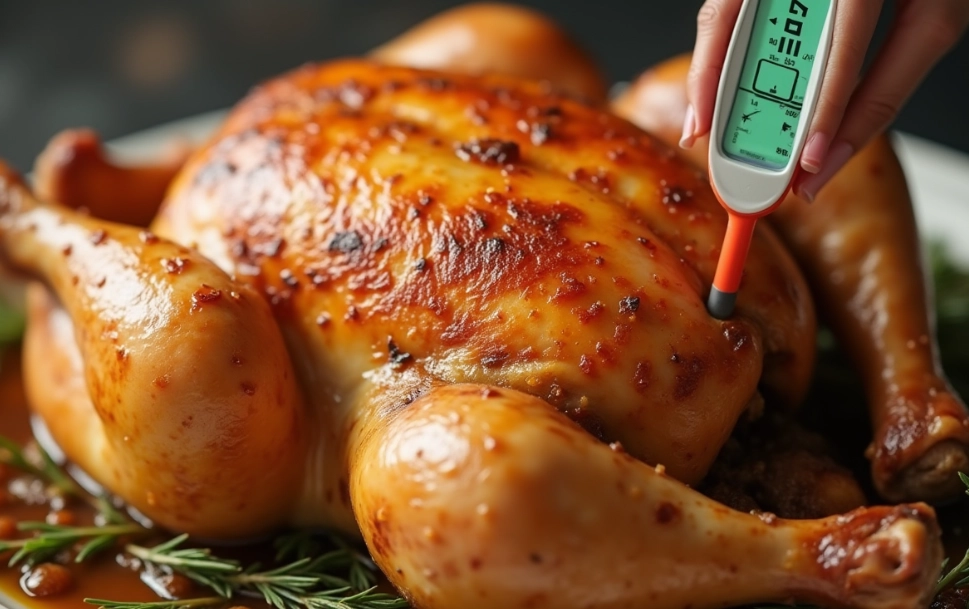
The "Juices Run Clear" Test (And Why It's Flawed)
The old saying goes: "Chicken is done when the juices run clear." I used to swear by this. Then I learned it's not always true. It's possible for undercooked chicken to have clear juices, and occasionally, fully cooked chicken can have a slight pink tinge (especially near bones due to marrow). Relying solely on juice color is a gamble.
The Texture & Bone Test
For a whole chicken or bone-in pieces:
- Leg Wiggle: Grab the end of a drumstick on a whole roasted chicken and wiggle it. If it moves very easily and feels loose in the joint, it's likely done.
- Meat Pulling Away: Look at the ends of the drumsticks. The meat will often start to shrink back and expose the bone a bit when it's fully cooked.
For boneless cuts, press the thickest part with tongs or a finger (don't burn yourself!). Fully cooked chicken will feel firm and spring back slightly, while undercooked will feel soft and mushy with some give. This takes experience to judge.
Big Warning: Never, ever cut into a piece of chicken to check if it's done. All you're doing is releasing precious juices onto the cutting board, guaranteeing a drier result. Plus, you're only checking the very center you cut—the rest could still be under. It's a lose-lose move.
Step-by-Step: How to Actually Check the Temperature
Using a thermometer seems simple, but a few wrong moves can give you a false reading. Here's the right way to answer "when is my chicken done?"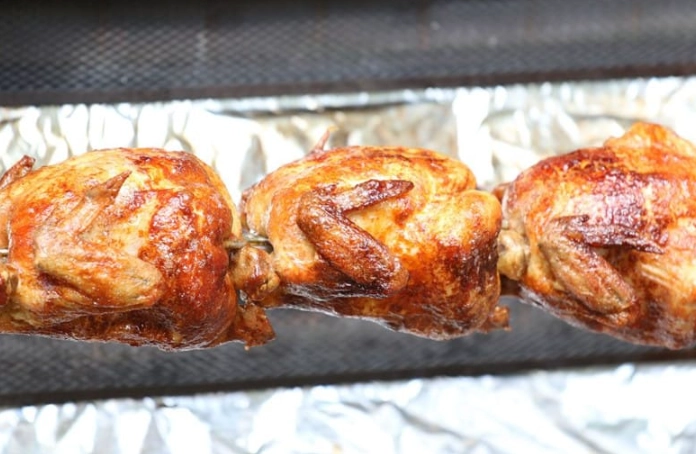
- Find the Thickest Part: This is the coldest spot and the last to cook. Avoid touching bone, fat, or gristle with the probe tip.
- Insert the Probe: For a breast, go in from the side into the center of the thickest part. For a thigh, angle it into the meatiest area, avoiding the bone. For a whole chicken, check both the breast and the innermost part of the thigh/wing joint.
- Wait for the Reading: Hold it steady until the number stops climbing. That's your true internal temperature.
- Check Multiple Pieces: If you're cooking several pieces, check at least two, especially the largest ones.
And then, LET IT REST. For smaller cuts, 5 minutes. For a whole bird, 15-20 minutes. This allows the juices, which have been driven to the center by the heat, to redistribute throughout the meat. If you cut immediately, all those juices flood out. Resting also allows carryover cooking to finish the job gently.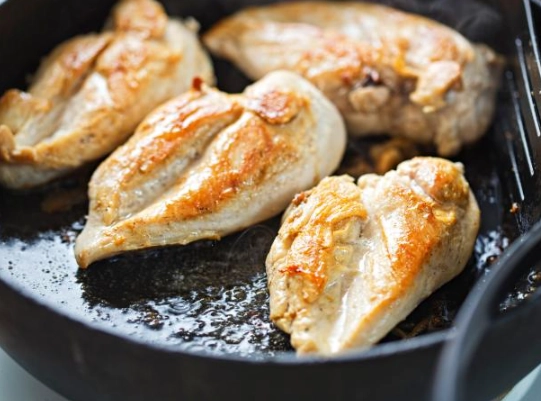
Common Scenarios & Troubleshooting
Real-life cooking is messy. Here’s how to handle specific situations.
My chicken is white inside but still at 155°F. Is it safe?
Color is not a reliable indicator of safety. Temperature is. If it's holding at 155°F for a minute or two (like in a simmering sauce or resting), it's becoming safe through the time-temperature effect. To be absolutely sure without a food science lab, just bring it to 165°F.
Why is my chicken pink near the bone even at 170°F?
This is super common and usually harmless! It's often caused by pigments from the bone marrow leaching into the meat, especially in younger birds. As long as the meat right next to the bone has reached 165°F (check it!), it's safe to eat. This is a classic case where a thermometer saves you from overcooking a perfectly safe piece of chicken.
I'm cooking chicken in a sauce or stew. How do I check?
The rules don't change. Fish out a piece, let the excess sauce drip off, and take its temperature in the thickest part. The sauce might be boiling, but the chicken inside needs to hit the safe temp.
Your Top Questions, Answered
My Personal Takeaways (After Many Dry Chickens)
Look, I learned this the hard way. I used to be terrified of undercooking, so I'd blast chicken breasts until they were 180°F. They were terrible. The single biggest improvement in my cooking came from two things: buying a cheap digital thermometer and learning to trust the pull-and-rest method.
For a standard weeknight pan-seared chicken breast, I season it, cook it over medium-high heat until it's golden, flip it, maybe throw in a pat of butter and some herbs, and then I just... watch the thermometer. The second it hits 157-158°F in the thickest part, I take the pan off the heat, put the chicken on a plate, and tent it loosely with foil. I leave it alone for 7-8 minutes. That's it. The result is consistently moist, flavorful chicken that slices cleanly. It feels like a superpower.
For a whole chicken, I'm team leave-in probe thermometer. I set the alarm for 160°F in the breast, pull the bird, rest it for 20 minutes, and the thighs are always perfectly done at 175°F+. No more guessing, no more cutting into it and watching the juices run out.
Final Reality Check: The 165°F rule is your safety net. It's perfect for ground chicken, when you're feeding a crowd, or if you're just not comfortable with the lower-temp science. There is zero shame in that. A perfectly cooked chicken breast taken to 165°F is still miles better than a dry, overcooked one. The goal is to move away from fear and towards knowledge and control. When you know exactly when is chicken done, you cook with confidence, and that makes all the difference.
So, go grab that thermometer. Check its calibration. And cook some chicken without sweating over it. You've got this.
Related Articles