Chicken Defrosting Guide: Timelines & Safe Methods
You pull a package of chicken from the freezer, ready to make dinner. Then the question hits: how long does it take to defrost this thing? Guess wrong, and you're either staring at a rock-solid block at 6 PM or, worse, risking food poisoning from chicken that's been sitting out too long. I've been there. Early in my cooking days, I'd leave chicken in a bowl of warm water on the counter for hours, thinking I was speeding things up. I was lucky I never got sick. The truth is, defrosting isn't just about time; it's a race against bacterial growth, and knowing the rules changes everything.
What's Inside?
- Defrosting Method Showdown: Times & Safety
- How to Defrost Chicken in the Refrigerator (Safest Method)
- The Cold Water Thaw: A Faster, Safe Alternative
- Using the Microwave: Speed with Strings Attached
- Top 3 Defrosting Mistakes You're Probably Making
- What to Do After Your Chicken is Thawed
- Your Defrosting Questions, Answered
Defrosting Method Showdown: Times & Safety
Let's cut to the chase. The time it takes to thaw chicken isn't a single number. It's a formula: Method + Weight + Cut = Time. A whole chicken is a different beast from thin cutlets. This table breaks down the core timelines you need to plan your meals. Remember, these are estimates for chicken that's properly packaged (like in a store vacuum seal or a tight freezer bag). A loose, frost-covered chunk will take longer.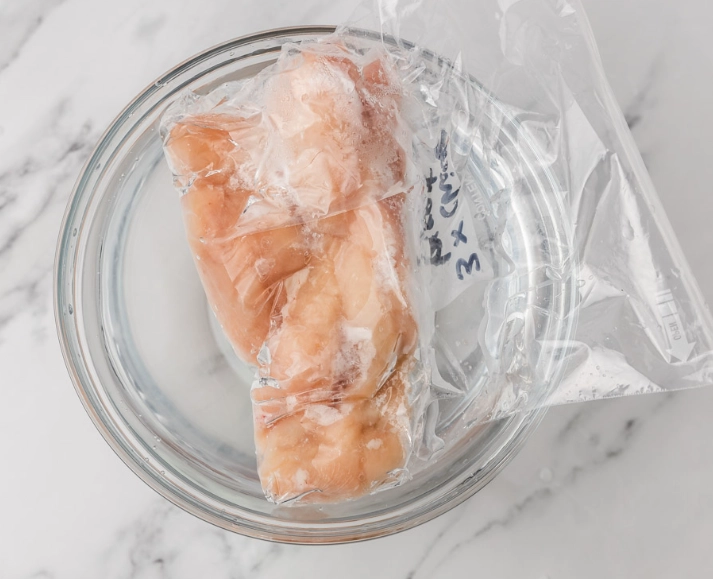
| Method | Estimated Time (per pound) | Best For | Key Safety Rule |
|---|---|---|---|
| Refrigerator (40°F/4°C or below) | 24 hours | Planning ahead, whole birds, bulk packages. | Thawed chicken is safe for 1-2 more days before cooking. |
| Cold Water | 30 mins - 1 hour | Same-day cooking, smaller cuts (breasts, thighs). | Water must be cold and changed every 30 mins. Cook immediately. |
| Microwave (Defrost Setting) | ~3-5 minutes per pound* | True emergencies, small portions. | Cook immediately after. Do not refreeze or re-refrigerate. |
*Microwave times are highly variable. Parts may begin to cook.
See the trade-off? Safety and quality are on one side (refrigerator), speed on the other (microwave). The cold water method is the crucial middle ground most home cooks overlook.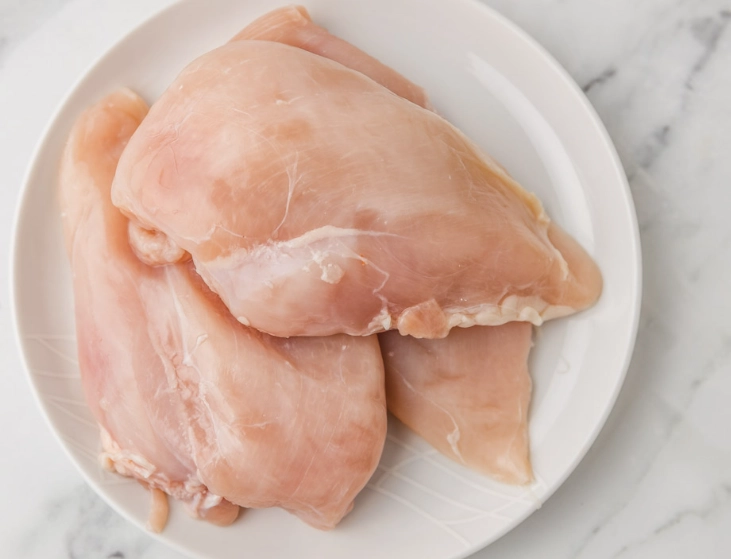
How to Defrost Chicken in the Refrigerator (Safest Method)
This is the gold standard recommended by the USDA. Why? It keeps the chicken at a constant, safe temperature (below 40°F/4°C), slowing bacterial growth to a crawl.
Here’s your action plan:
- Place the packaged chicken on a plate or in a shallow dish. This catches any leaks, preventing cross-contamination in your fridge.
- Put it on the bottom shelf. Never thaw on the top shelf. If it drips, you don't want those juices landing on your ready-to-eat salad greens.
- Let time do its work. A standard pack of two large chicken breasts (about 1 to 1.5 lbs) will take a full day. A whole chicken? Plan for 24 hours for every 4-5 pounds.
Pro Tip Most Guides Miss: Your fridge's temperature matters more than you think. If it's set near 40°F, thawing will be slower. If it's packed full, air can't circulate, also slowing things down. Give your chicken some space. I once had a 3-pound whole chicken take nearly 3 days in a crammed fridge. Now I check the temp with a simple fridge thermometer—it's a game-changer.
The biggest advantage? Flexibility. Once thawed in the fridge, chicken remains safe to cook for another 1 to 2 days. It turns "I need to cook this tonight" into "I have a window."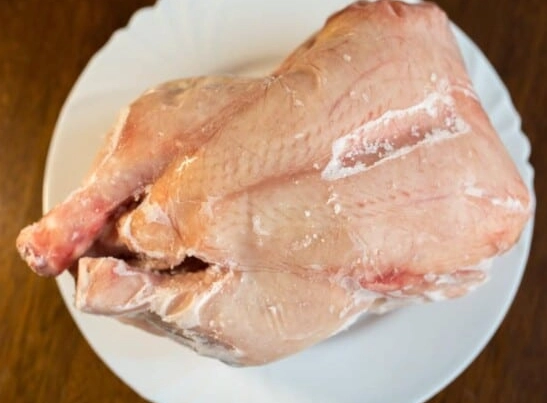
The Cold Water Thaw: A Faster, Safe Alternative
Forgot to take the chicken out last night? This is your savior. The key is cold water, not cool, not lukewarm. Cold water transfers heat from the chicken much faster than air (the fridge), but it must stay cold to keep the meat out of the danger zone (40°F - 140°F).
Step-by-Step Cold Water Thawing
1. Seal it tight. Ensure the chicken is in a leak-proof plastic bag. Squeeze out excess air. If the original packaging is intact and submersible, you can use it, but a zip-top bag is often more secure.
2. Submerge. Place the bag in a large bowl, pot, or clean sink. Fill with cold tap water.
3. Change the water every 30 minutes. This is non-negotiable. The water warms up from the frozen chicken. Changing it keeps the process cold and efficient.
4. Cook immediately. Once thawed, bacteria on the surface can wake up quickly. Don't let it sit. Pat it dry and get cooking.
For a 1-pound package of boneless, skinless breasts, expect about 1 hour. Bone-in pieces or a denser pack might take 1.5 to 2 hours.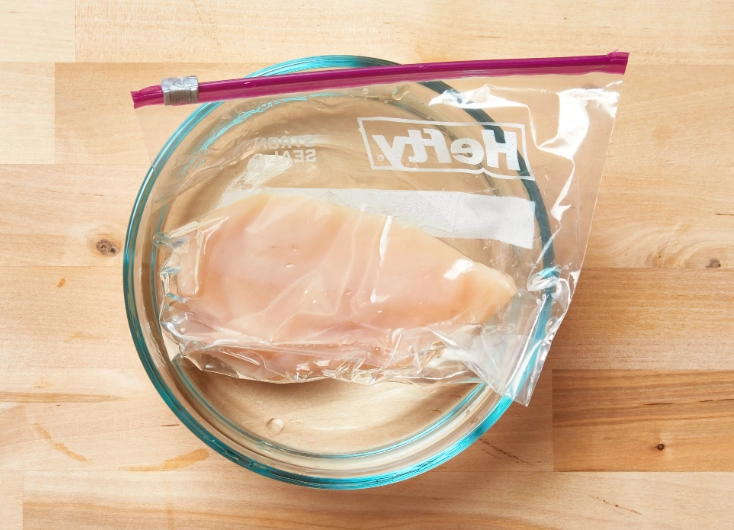
Using the Microwave: Speed with Strings Attached
The microwave is the defrosting equivalent of a "break glass in case of emergency" tool. It works, but it's messy and demands immediate action.
Why the urgency? Microwaves heat unevenly. While the center of your chicken breast might still be icy, the thinner edges and surface can start to cook. These warm, cooked (or partially cooked) areas are prime real estate for bacteria if you then decide to put it back in the fridge.
If you must use the microwave: - Use the defrost or low-power setting. - Remove any non-microwave-safe packaging. - Pause halfway through to separate pieces or flip the chicken. - Cook it immediately and thoroughly after thawing. No delays.
I only use this for single, thin-cut chicken cutlets I'm about to pound and cook for a schnitzel. For anything thicker, the results are too unpredictable.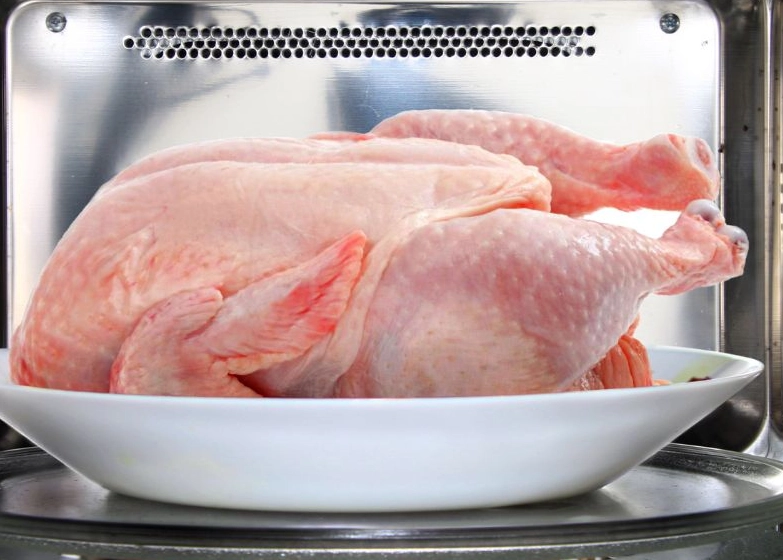
Top 3 Defrosting Mistakes You're Probably Making
After years of teaching home cooks, I see the same errors repeatedly. Avoiding these is more important than shaving 30 minutes off your thaw time.
Mistake #1: Thawing on the Counter at Room Temperature. This is the big one. That frozen chicken block sits in the "danger zone" for hours as the outside thaws first. The USDA is clear: perishable foods should never be thawed at room temperature for more than 2 hours (1 hour if it's above 90°F/32°C). The risk of foodborne illness skyrockets.
Mistake #2: Using Warm or Hot Water to Speed Up the Cold Water Method. This is just a faster, wetter version of Mistake #1. You're literally bathing the outer layer of the chicken in bacteria-promoting temperatures while the inside is still frozen.
Mistake #3: Assuming Thawed Chicken is "Clean." A big misconception: "Once it's thawed, I'll rinse it and that will make it safe." Rinsing raw chicken can actually spray bacteria like Salmonella around your sink and countertops. Thawing doesn't kill bacteria; proper cooking does. Handle thawed chicken with the same care as fresh raw chicken—clean everything it touches.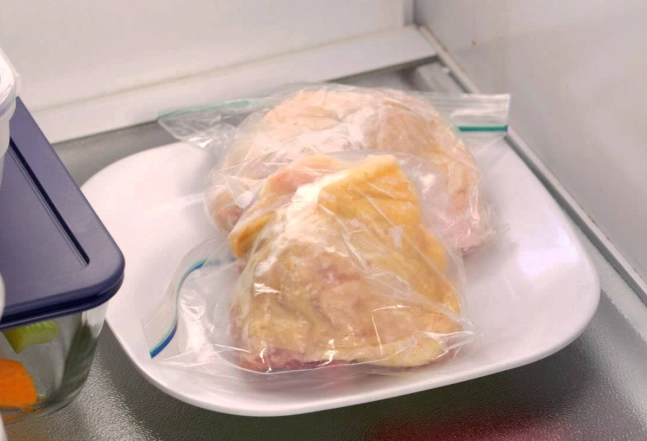
What to Do After Your Chicken is Thawed
You've successfully thawed your chicken. Now what?
- Check for doneness: It should be cold, pliable, with no ice crystals in the center. If it's still firm in the middle, give it more time using the same method.
- Pat it dry: Especially if using the cold water method. Dry surfaces brown better when cooking.
- Cook it promptly: Refer to the table. Fridge-thawed chicken gets a 1-2 day grace period. Cold water or microwave-thawed chicken needs to go straight into the pan, oven, or grill.
- Refreezing? It's a common question. If you thawed it in the fridge and it's still cold, you can refreeze it, but the texture will suffer. The water in the meat forms larger ice crystals the second time around, leading to a drier, mushier result when cooked. I generally advise against it unless absolutely necessary.
Your Defrosting Questions, Answered
The bottom line on thawing chicken? Plan for the refrigerator, use cold water as your quick fix, and treat the microwave as a last resort. Respect the time estimates, but more importantly, respect the temperature rules. Getting this right means safer meals, better texture, and one less thing to worry about when you're getting dinner on the table.
Related Articles