The Ultimate Guide to Baked Whole Chicken: Juicy, Crispy & Foolproof
Quick Navigation
Let's talk about the baked whole chicken. It's one of those things that feels fancy but is secretly simple, or at least it should be. You picture this golden, glorious centerpiece, skin crackling, meat falling off the bone. Then you try it, and sometimes... it's just okay. Maybe the breast is dry. The skin is flabby. The flavor didn't quite make it to the bone. I've been there. I've made chickens that were more suited for soup than for a Sunday dinner showstopper.
But after more tries than I'd like to admit, and learning from some real pros (and a few failures of my own), I've figured it out. It's not magic. It's a series of small, manageable steps that add up to something incredible. This guide is everything I wish I'd known. We're going to walk through it from the moment you pick a chicken at the store to the moment you carve it. No fluff, just the stuff that actually works.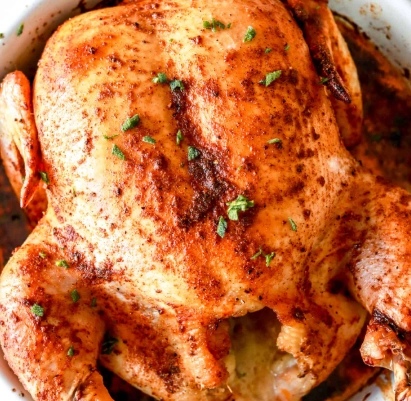
Starting Right: Picking Your Chicken
You can't build a great house on a shaky foundation, right? Same goes for your baked whole chicken. The bird itself matters more than you think. Walk into the grocery store, and you're bombarded with choices: organic, free-range, air-chilled, basted, enhanced. What's the real difference?
Here’s the breakdown that helped me stop staring blankly at the cooler.
| Type of Chicken | What It Means | My Take for Baking |
|---|---|---|
| Standard (Conventional) | The most common. Often processed with water-chilling, which can add water weight. | It works. Can be less flavorful, and you're paying for water. Pat it VERY dry. |
| Air-Chilled | Chilled with cold air instead of water. Doesn't absorb extra water. | My go-to. Less water = crispier skin, more concentrated flavor. Worth the few extra cents. |
| Free-Range / Organic | Specific living and feeding standards. Often older, with more developed flavor. | Great for flavor, but can be less tender if not cooked carefully. Ideal for slower roasts. |
| Enhanced or "Basted" | Injected with a saltwater or broth solution. Labels say "up to X% retained." | Avoid for roasting. They're already salted inside, making it hard to control seasoning. Texture can be weird. |
Size matters too. A 4 to 5-pound bird is the sweet spot for a home oven. It cooks evenly, feeds a family with leftovers, and isn't so huge that the legs are done while the breast is still raw. I made the mistake of getting a 7-pounder once for a small group. Never again—the outside was leather before the inside was safe.
The Non-Negotiable Prep: Dry It & Season It
This is where the game is won or lost, honestly. Most people rush this part. Don't.
Step 1: The Dry Brine (Or At Least a Pat-Down)
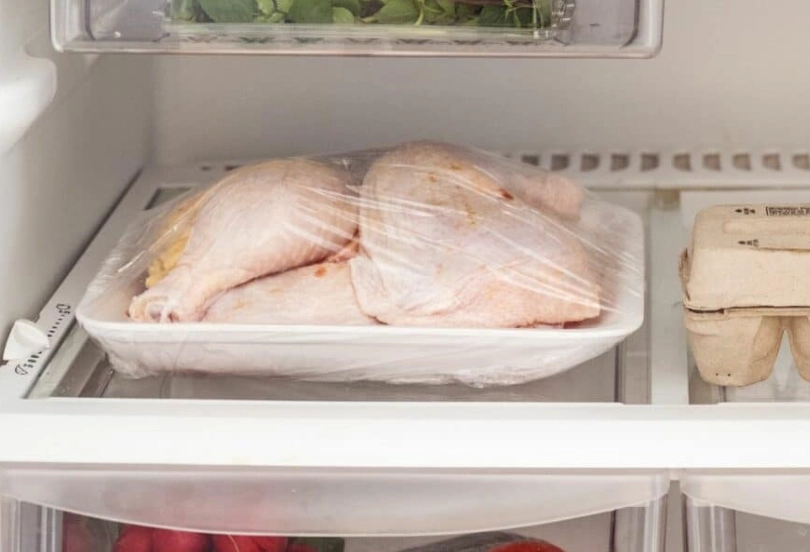
Take the chicken out of its package. Remove any giblets (usually in a bag in the cavity). Now, dry it. I mean, really dry it. Paper towels are your friend. Get the outside, the cavity, under the wings, everywhere. Moisture is the enemy of crispy skin. A wet chicken steams. A dry chicken roasts. See the difference?
For the next-level move, do a dry brine. The day before, after drying, generously salt the entire chicken—inside and out—with kosher salt. Don't be shy. Place it on a rack over a plate, uncovered, in the fridge overnight. The salt draws out moisture, then re-absorbs it, seasoning the meat deeply and helping the skin dry out even more. The result? Unbelievably seasoned, juicy meat and skin that crackles like glass. It's a commitment, but it transforms your baked whole chicken.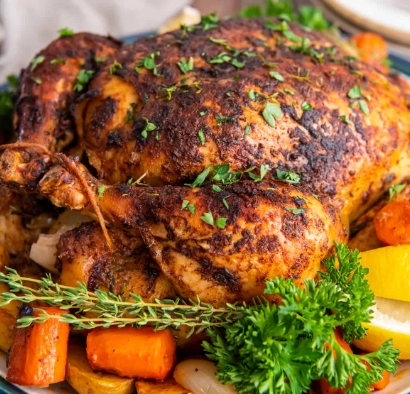
Step 2: To Truss or Not to Truss?
Trussing—tying the legs and wings close to the body—makes for a pretty, compact package. But it also means the dark meat (thighs) are tucked under, taking longer to cook, while the white meat (breast) is exposed, cooking faster. That's a recipe for dry breast meat.
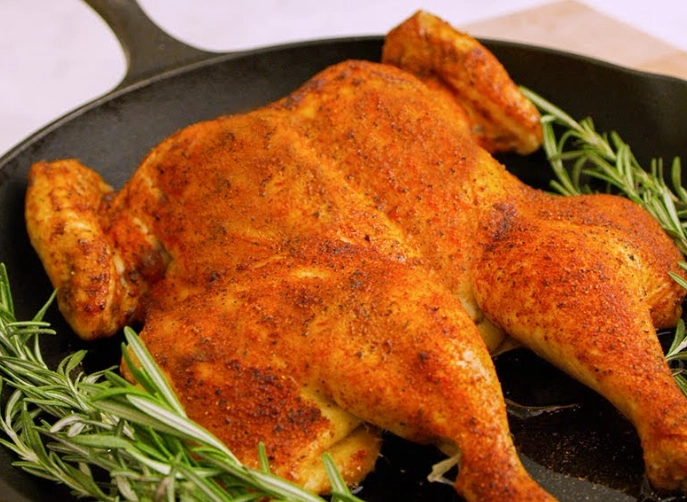
My preferred method? Spatchcocking. Sounds funny, works wonders. Using kitchen shears, cut out the backbone and press the chicken flat. It looks like a butterfly. This creates an even thickness so everything cooks at the same rate. Crispy skin everywhere. It's easier to carve. It cooks faster. The only downside is it's not the classic "whole chicken" shape. If you want the classic look, just tie the legs together loosely with kitchen twine and tuck the wingtips under. Leave some space for heat to circulate.
Step 3: Seasoning Beyond Salt
Salt is the most important flavor. After that, it's your playground. You can go simple: black pepper, maybe some garlic powder and smoked paprika rubbed all over with a little oil (oil helps the skin crisp and the spices stick).
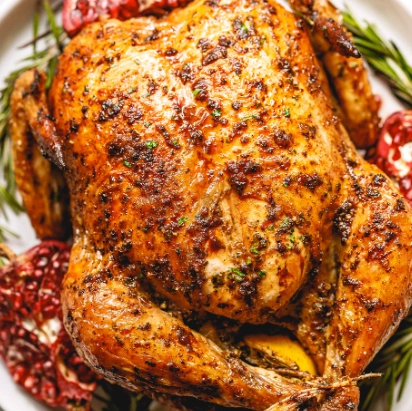
Or get creative under the skin. Gently slide your fingers between the skin and the breast meat to loosen it. You can slide herb butter, compound butter with lemon zest, or even just sprigs of fresh herbs like rosemary and thyme in there. The fat and flavor baste the meat from the inside as it cooks. For the cavity, a halved lemon, a head of garlic cut in half, and some herbs add beautiful aromatic steam.
The key is to get seasoning on the meat itself, not just sitting on the skin.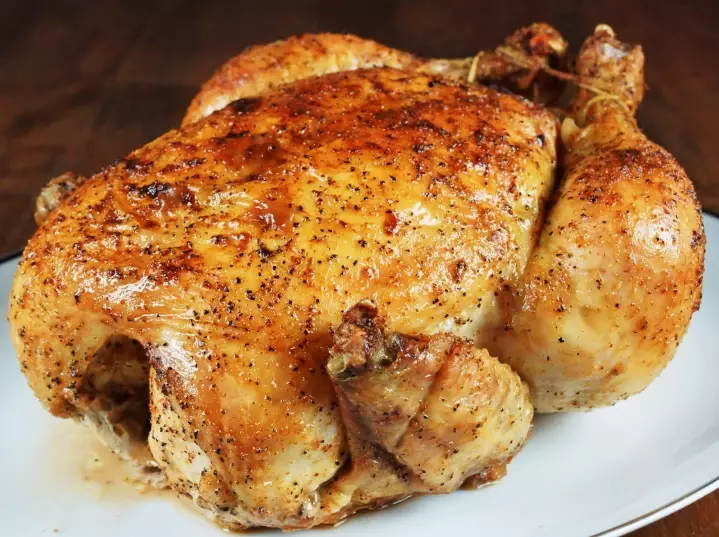
The Baking Process: Time, Temp, and Tools
Here's where people get nervous. How long? What temperature? Do I need a fancy thermometer? (Spoiler: yes, you do).
The Temperature Debate: Low & Slow vs. Hot & Fast
You'll see a million recipes with different temps. They mostly fall into two camps:
- High Heat (400°F - 450°F / 200°C - 230°C): Gets you incredible, fast-crisped skin. The downside? The high heat can cause the breast meat to tighten up and dry out before the thighs are fully cooked if you're not careful. Best for spatchcocked chickens where everything is even.
- Moderate Heat (350°F - 375°F / 175°C - 190°C): The classic, reliable method. More even cooking, gentler on the meat, but the skin can be less crispy unless you help it along at the end.
My favorite hybrid method, and the one I find most foolproof for a juicy baked whole chicken with perfect skin, is this:
- Start hot to set the skin: 425°F (220°C) for the first 20-25 minutes.
- Reduce the heat to finish gently: Drop to 375°F (190°C) for the remaining cooking time.
This gives you the initial blast for browning, then a gentler finish to cook the interior without overcooking the outside.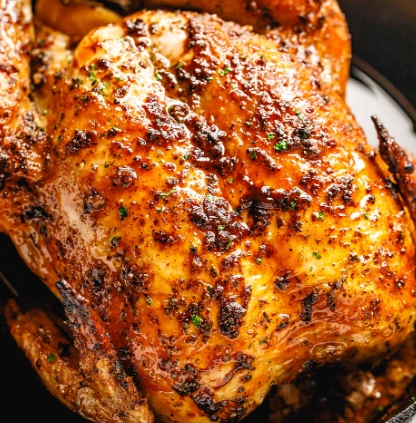
Your Most Important Tool: The Thermometer
Forget poking it and hoping for clear juices. Forget fixed timings like "20 minutes per pound." Ovens vary. Chickens vary. The only way to know for sure is to use an instant-read digital meat thermometer. It's the single best investment for your kitchen confidence.
Don't have one? Go get one. Seriously, it's that important. I resisted for years, thinking I could guess. I was wrong a lot.
According to the USDA Food Safety Guidelines, poultry is safe to eat at 165°F (74°C). However, for optimal juiciness, you can pull it earlier as the temperature will continue to rise (carryover cooking).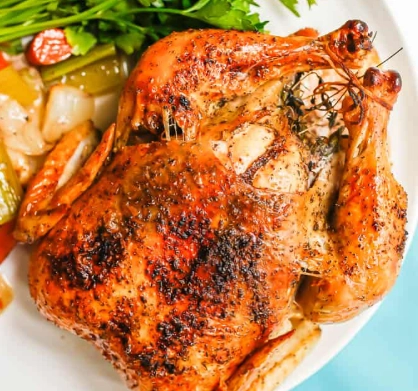
What to Bake It In & On
A heavy-duty roasting pan or even a large cast-iron skillet is ideal. Avoid glass dishes if you're starting with high heat. You want something that holds and distributes heat well. Place the chicken on a rack inside the pan if you have one. This lifts it out of its juices, allowing hot air to circulate all around for even browning. No rack? Roughly chop some onions, carrots, and celery and put the chicken on top of them. They become a flavorful vegetable trivet and keep it out of the fat.
The Critical Rest & The Art of Carving
You've hit the right temperature. The chicken looks amazing. The biggest mistake now? Cutting into it immediately.
When you take your baked whole chicken out of the oven, the juices are frantic, racing around inside the muscle fibers. If you cut it, all those flavorful juices will just run out onto the cutting board, leaving the meat dry. You need to let it rest, tented loosely with foil, for at least 15-20 minutes for a 4-5 lb bird. This allows the fibers to relax and re-absorb the juices. The temperature will also even out. Trust me, it's worth the wait.
Now, carving. Don't just hack at it. There's a logical way that gives you clean pieces.
- Let it rest. (Yes, again. It's that important.)
- Remove any twine. Transfer to a stable cutting board.
- Start with the legs: Pull a leg/thigh away from the body and cut through the joint connecting it. You can separate the thigh from the drumstick by cutting through the knee joint if you like.
- For the wings: Pull them out and cut through the joint where they meet the breast.
- For the breasts: Make a long, deep cut along the center breastbone. Then, sliding your knife horizontally along the rib cage, remove each breast half in one large piece. You can then slice them crosswise against the grain for serving.
It's easier than it sounds, and once you do it once, you'll never go back to haphazard carving.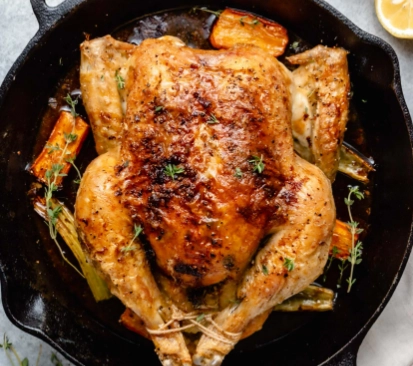
Troubleshooting Your Baked Whole Chicken
Things don't always go perfectly. Here's how to diagnose and fix (or prevent) common issues.
Cause & Fix: The skin was too wet when it went in. Or the oven temp was too low. Solution for next time: Dry the skin obsessively. Start with a higher initial oven temp (425°F+). You can also brush the skin lightly with a neutral oil or melted butter before seasoning to promote browning.
Cause & Fix: The breast cooked too fast. It's the leanest part and overcooks easily. Solution for next time: Spatchcock the bird for even cooking. Or, try roasting breast-side down for the first half to let the fat from the back baste the breast, then flip it for the last half to crisp the skin. A meat thermometer is crucial to avoid guessing.
Cause & Fix: Oven temperature was way too high, searing the outside before heat penetrated. Or you didn't thaw a frozen chicken completely. Solution: Always use a moderate or hybrid temperature method. Ensure the chicken is fully thawed in the fridge. Use that thermometer to check the deepest part of the thigh and breast.
Answers to Questions You Might Be Too Embarrassed to Ask
At the end of the day, a perfect baked whole chicken isn't about one secret trick. It's about paying attention to a series of small details—drying, seasoning, temperature, resting. Each one builds on the last. Skip one, and the final result is just a little less than it could be. Follow them all, and you'll have a roast chicken that's not just dinner, but a genuine accomplishment. It’s a skill that feeds you, impresses others, and honestly, just feels good to get right. So go grab a chicken, take your time, and give it a shot. You’ve got this.
Related Articles