Calories in Chicken Thighs: Boneless & Skinless Nutrition Facts
So you're staring at a package of boneless, skinless chicken thighs at the grocery store, or you're about to meal prep for the week, and the question pops into your head: how many calories am I actually looking at here? It's a smart question. Whether you're counting macros, managing your weight, or just trying to eat a bit cleaner, knowing what's on your plate matters. The short, direct answer is that a typical 4-ounce (113-gram) cooked serving of boneless, skinless chicken thigh contains about 180 to 210 calories. But if you stop there, you're missing the whole story. That number is a snapshot, and it changes based on a bunch of factors nobody really talks about—like the exact cut, the breed of chicken, and, most importantly, how you cook it. I've been tracking nutrition for my own fitness and helping others do the same for over a decade, and the biggest mistake I see is people taking a single calorie number from Google as gospel. Let's dig into the real details.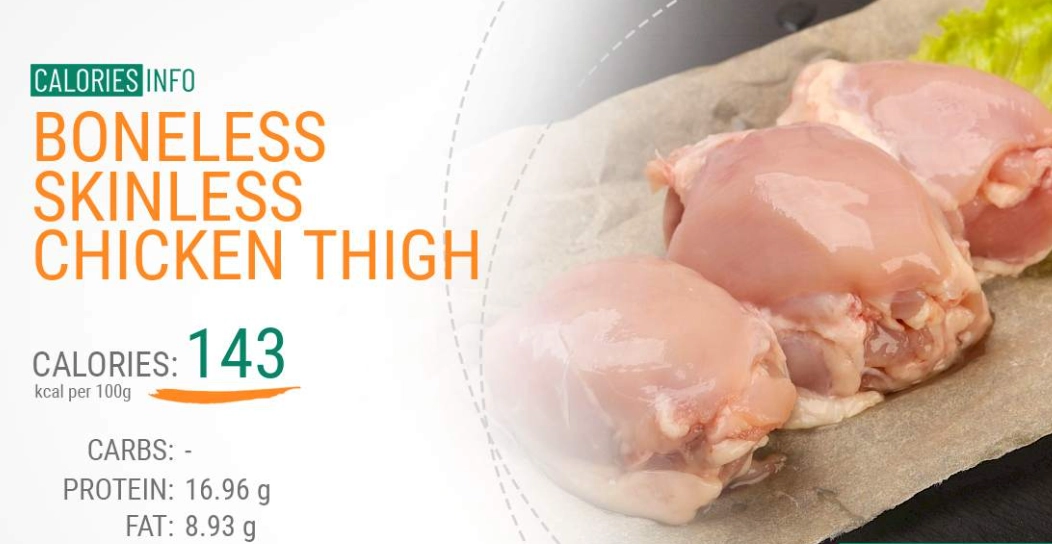
What's Inside?
The Exact Numbers: Calories and Full Nutrition Profile
Let's get specific. The gold standard for food composition data in the U.S. is the USDA FoodData Central. According to their latest entries, here’s the breakdown for a 4-ounce (113g) serving of roasted boneless, skinless chicken thigh.
| Nutrient | Amount | % Daily Value (DV)* |
|---|---|---|
| Calories | 209 | ~10% |
| Total Fat | 10.9g | 14% |
| Saturated Fat | 3.0g | 15% |
| Protein | 26.4g | 53% |
| Cholesterol | 135mg | 45% |
| Sodium | 103mg | 4% |
| Iron | 1.1mg | 6% |
| Potassium | 298mg | 6% |
*Based on a 2,000-calorie diet. Percentages are rough estimates.
Now, here's the first nuance. That's for a roasted thigh. If you boil or poach it, the final weight and calorie count can be slightly different because more water is retained. The protein and fat amounts are the key takeaway. You're getting a hefty 26 grams of high-quality protein and about 11 grams of fat. That fat is what gives the thigh its flavor and juiciness compared to breast meat, and it's not all bad—it includes monounsaturated fats.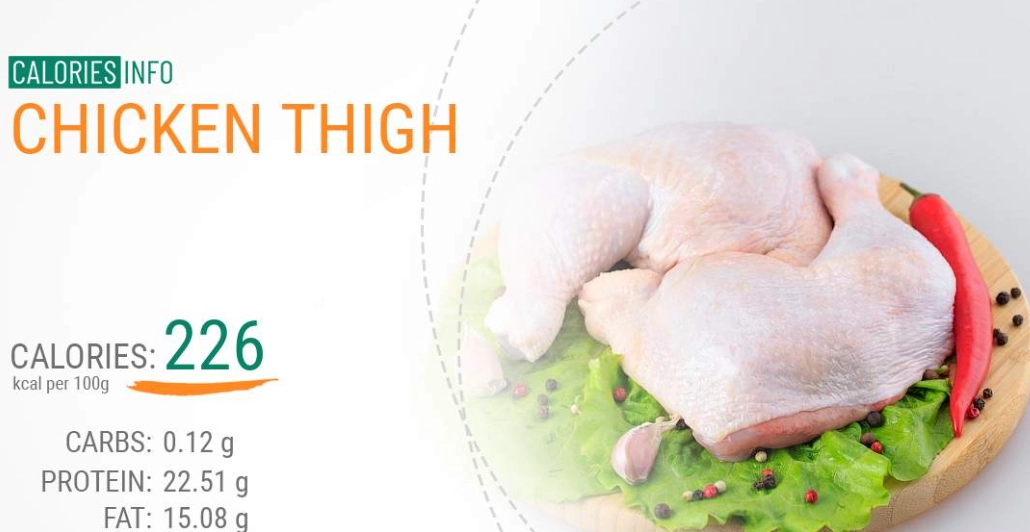
Pro Tip: Don't just fixate on the 209 calories. Look at the protein-to-calorie ratio. For 209 calories, you get 26g of protein. That's an excellent return on investment for muscle building or satiety. A boneless, skinless breast might give you slightly more protein for fewer calories, but the difference in taste and moisture is massive.
Why "Cooked" Calories Are a Moving Target
This is where most generic articles fail. They throw out a number like "210 calories" and call it a day. But ask yourself: is that for grilled, pan-fried with oil, air-fried, or baked? The cooking method is the single biggest variable in your final calorie count.
Think about pan-frying. You need oil to prevent sticking and add flavor. A single tablespoon of olive oil adds about 120 calories. If you use two tablespoons for four chicken thighs, that's an extra 240 calories divided among them, adding 60 calories per thigh. Suddenly, your 210-calorie thigh is now a 270-calorie thigh. That's a 30% increase!
Here’s a quick comparison of how methods stack up for one 4-oz thigh:
- Grilled or Baked (Dry Heat): ~200-210 calories. Minimal added fat.
- Air-Fried: ~200-220 calories. A light spray of oil might add 20-30 calories.
- Pan-Fried (with 1/2 tbsp oil shared): ~235-250 calories. This is the common home cook scenario.
- Braised or Stewed (in liquid): ~200-210 calories, but watch for high-calorie sauces.
I learned this the hard way early in my meal prep journey. I'd bake ten thighs, log them as 200 calories each, and wonder why my progress stalled. I was blindly using the "raw" weight entry in my app, which doesn't account for moisture loss. A raw 4-oz thigh weighs less after cooking because water cooks out. Always weigh your meat after cooking for the most accurate tracking, or use a reliable "cooked" database entry.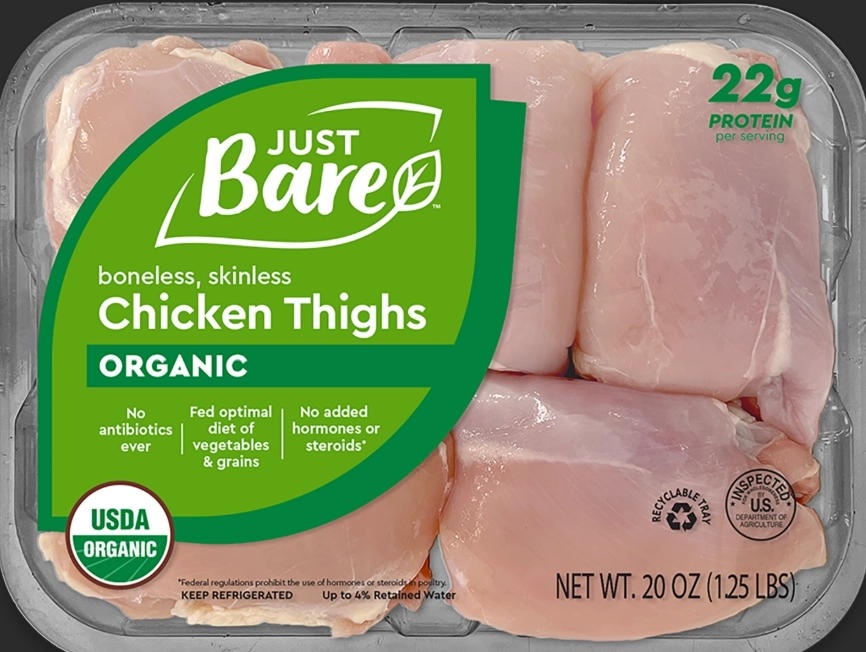
Chicken Thigh vs. Breast vs. Wing: The Calorie Showdown
Everyone wants to know how thighs compare. It's not just about calories; it's about taste, texture, and nutrition. Let's put 4-ounce cooked servings side-by-side (all boneless/skinless where applicable).
| Cut (4 oz cooked) | Calories | Protein | Total Fat | The Vibe |
|---|---|---|---|---|
| Boneless, Skinless Thigh | ~209 | 26g | 11g | Flavorful, juicy, forgiving to cook. The all-rounder. |
| Boneless, Skinless Breast | ~165 | 31g | 3.6g | Lean, high-protein, can dry out easily if overcooked. |
| Bone-in, Skin-on Thigh | ~290 | 22g | 21g | Maximum flavor and crispiness, much higher in fat. |
| Boneless, Skinless Drumstick (approx.) | ~190 | 28g | 8g | Similar to thigh, slightly leaner, distinct shape. |
The thigh isn't the lowest-calorie option, but it's a fantastic middle ground. You sacrifice a handful of calories and a few grams of protein compared to breast, but you gain so much in satisfaction. For most people trying to stick to a healthy diet long-term, that trade-off is worth it. A dry, bland chicken breast that you have to choke down is a recipe for giving up.
Real-World Calorie Scenarios: From Meal Prep to Restaurants
Let's apply this to real life. You're not just eating a plain piece of chicken on a scale.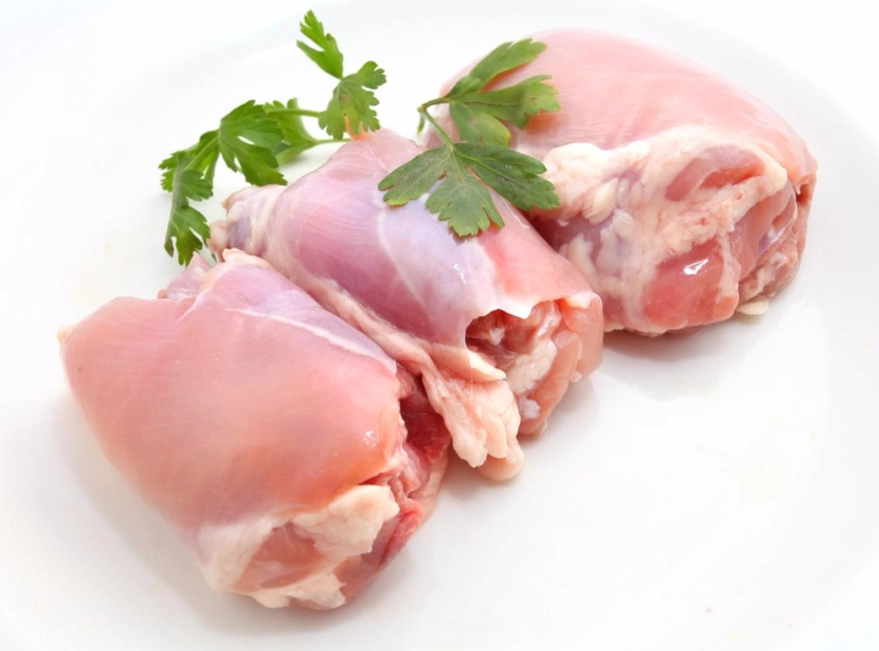
Scenario 1: Your Weekly Meal Prep
You buy a 2-pound pack of boneless, skinless thighs (that's 32 oz). You marinate them in lemon, garlic, and herbs, then bake them. After cooking, you have about 24 ounces of meat (water loss). You divide it into 6 containers.
Each container: ~4 oz cooked chicken = ~210 calories from the chicken itself. Add 150 calories for ¾ cup of brown rice and 50 calories for steamed broccoli. Your total meal is around 410 calories, packed with protein and fiber.
Scenario 2: Ordering at a Casual Restaurant
You order "Grilled Chicken Thighs" from a bistro menu. It likely comes with two decent-sized thighs. Even if they're boneless and skinless, restaurants almost always use oil or butter. A conservative estimate for two restaurant-sized thighs (6-7 oz total cooked weight) with light oil is 350-400 calories just for the chicken. The mashed potatoes and seasonal veggies next to it? That's another story entirely.
Scenario 3: The Supermarket Prepared Foods Section
Those lemon-herb roasted chicken thighs look healthy. Check the label. Often, they add sugar to the brine or glaze and use more oil than you would at home. A single prepared thigh from the counter can easily hit 250-300 calories. Always ask for nutrition info if available.
Your Burning Questions Answered (FAQ)
Does the cooking method really change the calorie count that much?
Absolutely, and it's the most overlooked factor. Baking or grilling adds almost no calories. Pan-frying can add 50-100+ calories per serving depending on oil absorption. For accurate tracking, assume any pan-fried item has absorbed about a teaspoon (4g, ~35 calories) of oil per 4-ounce piece, even if the oil doesn't all stick. Air frying is a great low-oil alternative that gives a similar texture to frying.
Are boneless, skinless chicken thighs good for weight loss?
They can be an excellent part of a weight loss diet. Their higher fat content compared to breast means they keep you fuller for longer, which can prevent overeating later. The key is portion control and cooking method. Stick to a 4-6 ounce cooked portion and use dry-heat methods like baking, grilling, or air-frying. The protein helps preserve muscle mass while in a calorie deficit.
 How do I accurately log chicken thighs in MyFitnessPal or another tracker?
Don't use the first entry you see. Search for "USDA chicken thigh, boneless skinless, roasted" or similar. Always choose an entry that specifies "cooked." The best practice is to weigh your chicken after cooking and use that weight with the "cooked" database entry. If you must log raw, know that 4 oz raw boneless skinless thigh yields about 3 oz cooked, but this varies.
Is the fat in chicken thighs unhealthy?
Not necessarily. About 40% of the fat is monounsaturated (the same heart-healthy fat in olive oil), and only about a third is saturated. While it's wise to limit saturated fat, the overall nutrient package of the thigh—high protein, vitamins, minerals—makes it a healthy choice for most people. If you have specific cholesterol concerns, consult with a dietitian, but for the general population, it fits into a balanced diet.
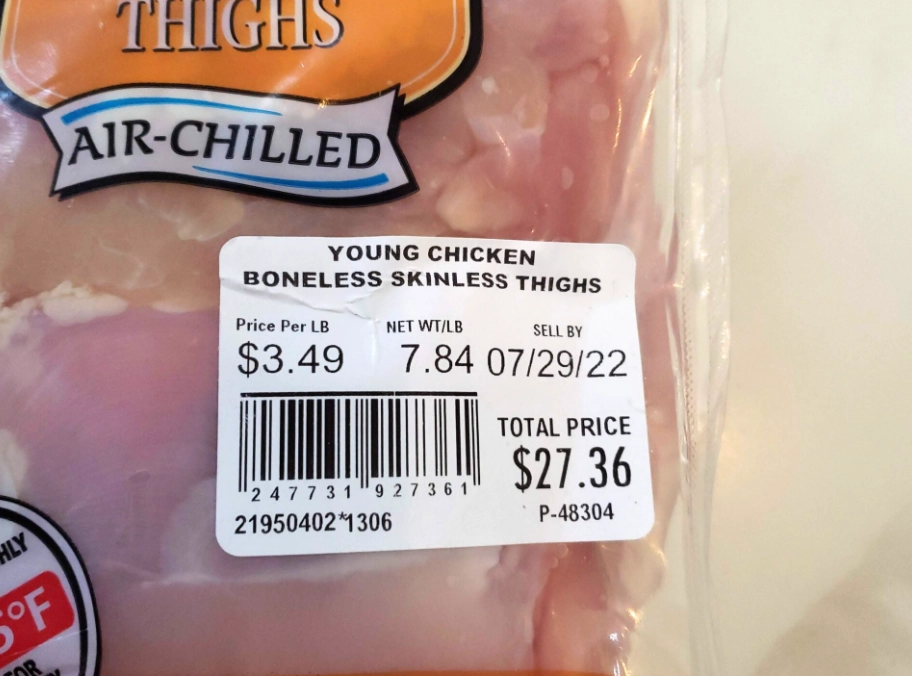
Why does my package of raw thighs show a different calorie count on the label?
USDA data is an average. The actual fat content of chicken can vary based on the bird's diet and breed. The label on your package is based on the producer's own analysis. The difference is usually minor (maybe 10-20 calories per serving). Use the label if available, otherwise, the USDA numbers are your most reliable benchmark.
So, there you have it. A 4-ounce serving of boneless, skinless chicken thigh sits around 210 calories, delivering a powerful punch of protein and flavor. But remember, that number is a starting point. Your cooking oil, your portion size, and what you pair it with turn that number into the real story on your plate. Don't fear the thigh—embrace it as a versatile, satisfying, and nutritious protein source that can absolutely fit your health goals.
Related Articles