Do Chicken Tenders Have Gluten? The Definitive Guide for Safe Eating
You're craving crispy, juicy chicken tenders, but you need to avoid gluten. Maybe you have celiac disease, a non-celiac sensitivity, or you're just trying a gluten-free diet. So you ask the big question: do chicken tenders have gluten? Here's the short, frustrating answer: most traditional chicken tenders do contain gluten, but safe, gluten-free options absolutely exist if you know where to look and what to ask. The real problem isn't the chicken—it's everything that touches it. This guide will cut through the confusion. We'll show you exactly where gluten hides, how to navigate restaurants and grocery stores like a pro, and even how to make foolproof gluten-free tenders at home.
What You'll Find in This Guide
The Gluten Culprit: It's Usually the Coating, But Not Always
Let's break down a typical restaurant or frozen chicken tender. Gluten can be a sneaky guest in several places.
The Breading or Batter
This is the main offender. The crispy coating that makes tenders so good is often made from wheat flour. Sometimes it's a simple flour dredge, other times it's a batter with wheat flour as the base. Even "lightly dusted" tenders might use wheat flour. Panko breadcrumbs? Almost always wheat-based.
A key insight most guides miss: Some places use a mixture of wheat flour and other starches (like cornstarch) for a lighter texture. This is still not safe for celiacs. Don't be fooled by a description that says "crispy corn coating"—always verify the full ingredient list or ask the kitchen.
Marinades and Seasonings
Less obvious, but just as risky. Some pre-marinated or pre-seasoned chicken tenderloins use soy sauce (which contains wheat) or hydrolyzed wheat protein as a flavor enhancer or binder. Malt vinegar powder is another hidden source. If the chicken itself is labeled "pre-seasoned," your gluten radar should beep.
The Frying Oil (Cross-Contact)
This is the silent killer for gluten-free dining. Even if a restaurant offers a gluten-free breading option, if they drop it into the same fryer used for onion rings, mozzarella sticks, and regular battered chicken, it's contaminated. That shared fryer oil makes the "gluten-free" tender unsafe for anyone with celiac disease. This is called cross-contact, and it's a real, daily hazard.
I've seen people get sick because they only asked about ingredients and forgot to ask about the fryer. It's the single most common mistake. Always, always ask: "Do you have a dedicated fryer for gluten-free items?" If the answer is no, your safest bet is a grilled chicken option.
How to Order Gluten-Free Chicken Tenders at Restaurants
Eating out requires a strategy. You can't just hope for the best. Here’s a practical, step-by-step approach.
1. Do Your Homework Before You Go. Check the restaurant's website. Look for an "Allergen Menu" or "Nutrition Guide." These PDFs often list gluten-containing items. Chains are more likely to have this than local spots.
2. Ask Specific, Unambiguous Questions. When you order, be clear and direct. Don't say "Is this gluten-free?" That's too vague. Say: "I have a serious gluten allergy. Do your chicken tenders contain any wheat flour or gluten in the breading? And are they cooked in a separate, dedicated fryer away from other breaded foods?" Using the word "allergy" (even if it's a sensitivity) often gets more careful attention from staff.
3. Know Your Chain Restaurant Options. Some national chains have clear protocols. For example:
- Chick-fil-A: Their Grilled Chicken Nuggets are gluten-free (per their allergen menu), but their classic breaded tenders are not. They have detailed preparation guides available.
- Red Robin: They offer a gluten-free bun and have a dedicated fryer for their fries, but always confirm their current gluten-free tenders status, as menus change.
Remember, policies and kitchen setups vary by location. Always verify with the specific restaurant you're visiting.
Finding Safe Gluten-Free Chicken Tenders at the Supermarket
The frozen food aisle is a battleground of labels. Here’s how to win.
The Gold Standard: The "Certified Gluten-Free" Label. This is a regulated term. In the US, for a product to carry this label, it must contain less than 20 parts per million (ppm) of gluten, as per FDA rules. This is your safest bet. Look for the seal from organizations like the Gluten-Free Certification Organization (GFCO).
Reading the Ingredient List is Non-Negotiable. Even without a certification, you must scan. Look for: Wheat, barley, rye, malt, brewer's yeast, and sometimes oats (unless specified gluten-free oats). Watch for "modified food starch" if it doesn't specify a source like corn.
Here’s a quick look at some popular brands and what to watch for:
| Brand / Product Name | Gluten-Free Status (Always Verify) | Key Notes & Considerations |
|---|---|---|
| Perdue Simply Smart Organics | Some varieties are labeled Gluten-Free | Check the box front and back. Their gluten-free versions use rice flour and cornstarch. |
| Bell & Evans Gluten Free Breaded Chicken Breast Tenders | Certified Gluten-Free | A premium, reliable option. Often found in the natural foods freezer section. |
| Tyson Any'tizers | Most are NOT gluten-free | Classic varieties use wheat flour. They may have newer gluten-free lines—read carefully. |
| Applegate Naturals | Some products are Gluten-Free | Look for the specific "Gluten-Free" banner on the package. They are transparent about ingredients. |
| Store Brands (e.g., Whole Foods 365, Kroger Simple Truth) | Often have dedicated GF lines | Surprisingly good and affordable options. The "Free From" frozen sections are your friend. |
A personal tip: I keep a photo on my phone of the ingredient list of a brand I know is safe. When I'm in a new store, I can quickly compare the new product's list to my trusted one. It saves a ton of time.
The Ultimate DIY Gluten-Free Chicken Tenders Recipe
Honestly, making your own is the cheapest, healthiest, and most guaranteed-safe method. You control everything. This recipe is foolproof and gives you that classic crunch without the worry.
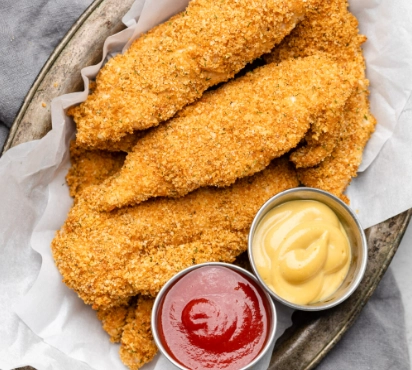
Crunchy, No-Fail Gluten-Free Chicken Tenders
Prep Time: 15 mins | Cook Time: 18-20 mins | Serves: 4
Ingredients:
- 1.5 lbs chicken breast tenderloins (or breasts cut into strips)
- 1 cup fine gluten-free cornmeal (or certified GF panko for a different texture)
- 1/2 cup almond flour (adds flavor and helps browning)
- 1/4 cup tapioca starch or cornstarch
- 1.5 tsp paprika, 1 tsp garlic powder, 1 tsp onion powder, 1/2 tsp salt, 1/4 tsp black pepper
- 2 large eggs
- 1 tbsp milk (any kind) or water
- Avocado oil or high-heat oil for baking/frying
Steps:
- Prep Station: Set up three shallow bowls. Bowl 1: Tapioca starch. Bowl 2: Eggs beaten with milk. Bowl 3: Mix cornmeal, almond flour, and all spices.
- Dredge: Pat chicken dry. Coat each piece in starch, dip in egg, then press firmly into the cornmeal mixture. Make sure it's fully coated. Place on a plate.
- Cook (Oven Method): Preheat oven to 425°F (220°C). Line a baking sheet with parchment, drizzle with oil. Place breaded tenders on sheet, drizzle tops lightly with more oil. Bake 18-20 mins, flipping halfway, until golden and internal temp is 165°F.
- Cook (Air Fryer Method - My Favorite): Preheat air fryer to 400°F (200°C). Lightly spray basket with oil. Cook tenders in a single layer for 10-12 mins, flipping halfway. No need to pre-oil the tenders.
Why this works: The combo of cornmeal and almond flour creates a deep, satisfying crunch that doesn't get soggy. The tapioca starch first layer helps the egg stick, locking in the final coating. Baking or air frying avoids cross-contact with a shared fryer entirely.
Your Top Gluten & Chicken Tenders Questions Answered
Related Articles