White Meat vs. Dark Meat on a Chicken: The Ultimate Guide
Quick Navigation
- Why Are Some Parts White and Others Dark?
- The Complete Breakdown: Every Part of the Chicken
- Nutrition Face-Off: White Meat vs. Dark Meat
- Cooking Them Right: You Can't Treat Them the Same
- Which One Should You Buy?
- Your Questions, Answered (The Real Stuff People Google)
- Final Thoughts: It's Not a Competition
So you're standing in the grocery store, looking at the chicken section, and you start wondering... what part of a chicken is white meat, anyway? Is it just the breast? What about the wings? And why does it even matter?
I've been there. I used to just grab whatever was on sale without really thinking about it. Then I'd get home and wonder why my chicken thighs stayed juicy while my breasts turned into cardboard. It took me a while (and quite a few dry dinners) to really understand the difference.
Let's break it down in plain English, without any fancy culinary jargon that makes you want to close the tab.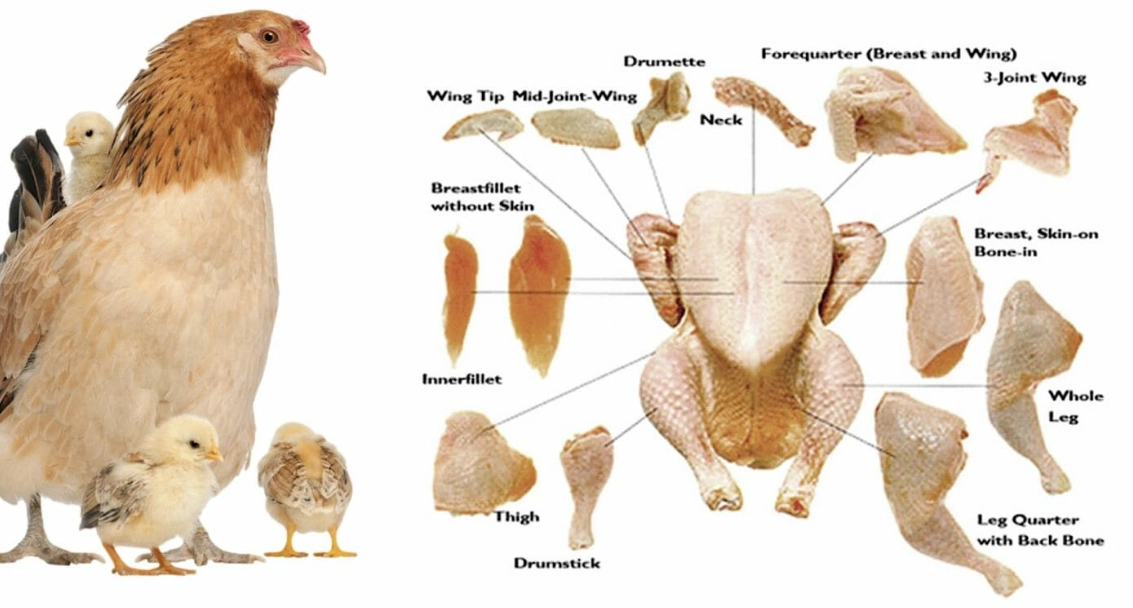
The Quick Answer: When people ask "what part of a chicken is white meat," they're usually talking about the breast and the wings. The dark meat is found in the thighs and drumsticks. But there's a whole science behind why they're different, and it changes everything about how you should cook them.
Why Are Some Parts White and Others Dark?
It all comes down to what the muscle does. Chickens don't do CrossFit, but they do use different muscles for different activities.
White meat muscles are built for short, explosive bursts of activity. Think about when a chicken flaps its wings to get up to a perch or away from something. That breast and wing muscle is the chicken's version of a sprinter – it uses quick energy sources and doesn't need a constant oxygen supply. These muscles have fewer blood vessels and less of a protein called myoglobin, which is what gives dark meat its color and taste.
Dark meat muscles are the marathon runners. A chicken spends most of its life walking around. Those legs are working constantly. They need a steady supply of oxygen, which means more blood vessels and way more myoglobin. Myoglobin stores oxygen in muscle cells, and it has a deep red color that doesn't go away when cooked.
That's the basic biology. But here's where it gets interesting for your kitchen.
The Complete Breakdown: Every Part of the Chicken
Let's go piece by piece. When you're trying to figure out what part of a chicken is white meat, it helps to look at the whole bird.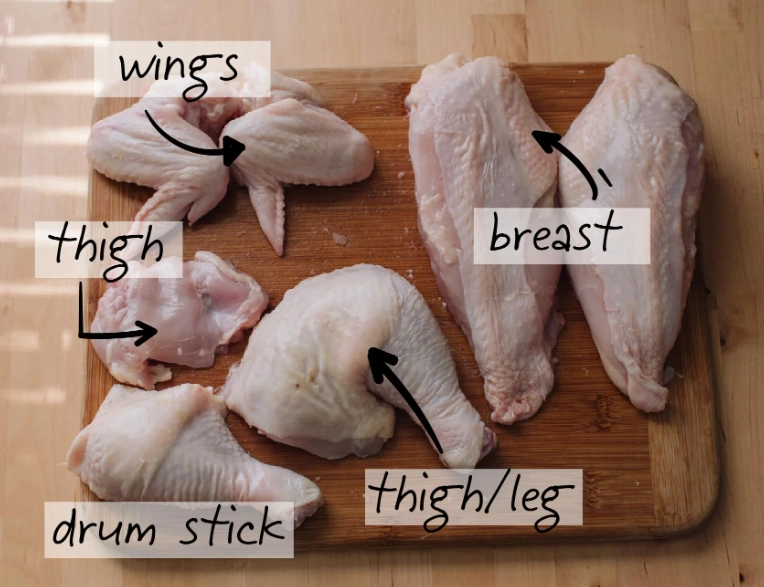
The Clear-Cut White Meat
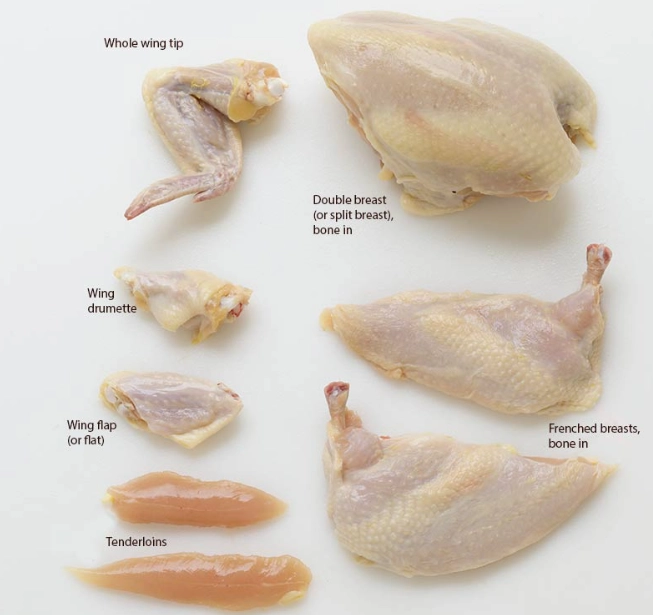
Breast: This is the poster child for white meat. It's lean, mild in flavor, and cooks fast. A whole chicken breast (which is actually two halves) is huge compared to other parts. It's also where you get those perfect, uniform slices for sandwiches or salads. The downside? It has almost no fat, which means it has zero margin for error in cooking. Overcook it by a few minutes, and you're chewing on sadness.
Wings: This is where people get confused. The meat on chicken wings is technically white meat. The wing is actually divided into three parts – the drumette (that looks like a mini drumstick), the flat or wingette (the middle part with two bones), and the tip (usually discarded). The meat on all these sections is white meat. But wings have more skin and connective tissue than breast, which is why they're so good for frying or baking until crispy. They're like the fun, forgiving cousin of the chicken breast.
The Definite Dark Meat
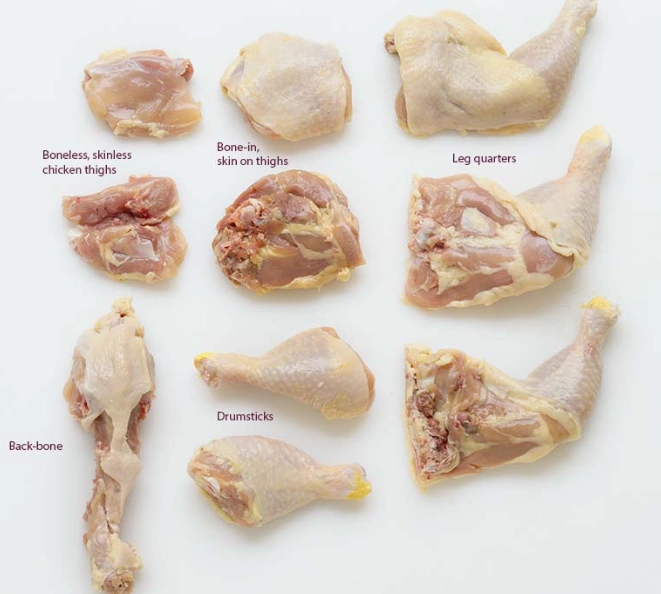
Thighs: My personal favorite. Thighs are where the flavor lives. They're darker, richer, and stay moist through almost any cooking method. You can bake them, grill them, braise them – they're hard to ruin. They have more fat, both between the muscle fibers and under the skin. That fat melts as it cooks, basting the meat from the inside. If you're nervous about cooking chicken, start with thighs.
Drumsticks: The classic "chicken leg" that kids love to hold. It's all dark meat, with a slightly different texture from the thigh because of how the muscles are arranged around the bone. They're fantastic for grilling or baking because the bone helps conduct heat evenly and adds flavor.
The In-Between Parts
Tenders: These are just strips of the breast meat, so they're white meat. They're cut from a specific part of the breast that's especially tender (hence the name).
Back: Not much meat here, mostly used for stock. The meat that is there is a mix, but it's usually considered part of the dark meat category because of its proximity to the legs and its richer flavor.
Oysters: These are two small, round, incredibly tender pieces of dark meat on the back of the chicken, near the thigh. They're a chef's secret. If you're carving a chicken, these are the prize.
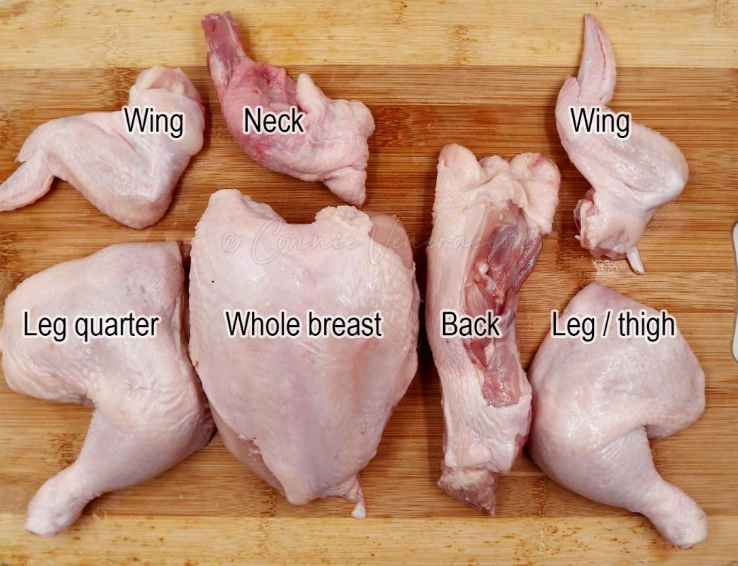 So, to directly answer the question "what part of a chicken is white meat" – it's primarily the breast and wings. But knowing that is just the beginning.
Nutrition Face-Off: White Meat vs. Dark Meat
This is where everyone gets opinionated. Is white meat healthier? Well, it depends on what you mean by "healthy."
I used to be a breast-only person because of the whole "low fat" thing we all heard for years. But nutrition science has evolved. Let's look at the data from the USDA FoodData Central, which is the gold standard for this kind of information. Here's a comparison per 100 grams of cooked, skinless meat:
| Nutrient | Chicken Breast (White Meat) | Chicken Thigh (Dark Meat) |
|---|---|---|
| Calories | 165 | 209 |
| Protein | 31g | 26g |
| Total Fat | 3.6g | 10.9g |
| Saturated Fat | 1.0g | 3.0g |
| Iron | 0.9mg | 1.3mg |
| Zinc | 1.0mg | 2.4mg |
| Vitamin B12 | 0.3μg | 0.4μg |
See what I mean? It's not a simple "one is better" story.
White Meat Wins On: Pure protein density and lower calories/fat. If your main goal is maximizing protein while minimizing calories and fat (say, for a specific body composition goal), skinless chicken breast is hard to beat. It's basically pure, lean muscle.
Dark Meat Wins On: Flavor, juiciness, and certain nutrients. It has more than double the iron and zinc, which are crucial for your immune system and energy levels. The extra fat also means it's more satisfying and can keep you full longer. As the Harvard T.H. Chan School of Public Health points out, the type of fat in poultry is mostly unsaturated, which is considered a healthier fat.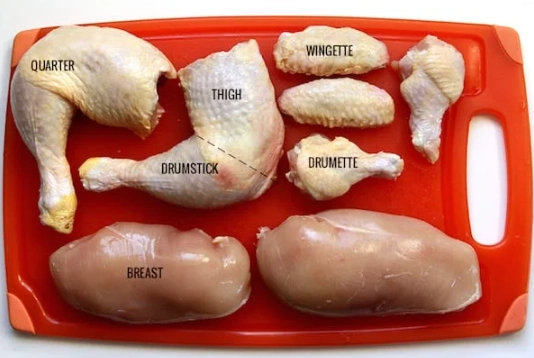
The Skinny on Skin: We've been talking skinless here. The skin is where a massive amount of the fat and calories live, on both white and dark meat. A chicken breast with the skin has nearly double the fat. But hey, crispy chicken skin is one of life's great pleasures. My rule? Eat it when you want to enjoy it, remove it when you're just focused on the meat. No need to be extreme.
So when someone asks "what part of a chicken is white meat and is it healthier?", you can say the breast is leaner, but the thigh brings other nutrients to the table. Variety is probably the smartest approach.
Cooking Them Right: You Can't Treat Them the Same
This is the most practical takeaway. Knowing what part of a chicken is white meat is useless if you cook it wrong.
Cooking White Meat (Breast & Wings): The enemy is dryness. Since it has no fat to self-baste, you need to be careful.
- Temperature is Everything: Use a meat thermometer. Seriously. Pull white meat off the heat at 155-160°F (68-71°C). It will carry over to a safe 165°F (74°C) while resting. Cooking it to 165°F in the pan means it'll be over 170°F by the time you eat it, and that's the dry zone.
- Brine or Marinade: Soaking breasts in a simple saltwater brine (even for 30 minutes) makes a world of difference. It helps the meat retain moisture.
- Pound it: Pounding a breast to an even thickness means it cooks evenly. No more a dry, overcooked thin end and a raw, thick center.
- Best Methods: Quick pan-searing, grilling over medium heat, or baking at a high temperature for a short time.
Cooking Dark Meat (Thighs & Drumsticks): The enemy here is under-rendered fat and rubbery skin.
- Embrace Higher Heat: You can cook dark meat to a higher internal temperature – 170-175°F (77-79°C). This helps render the fat and break down connective tissue, making it fall-off-the-bone tender.
- Skin-On is King: If you're using skin-on thighs, start them skin-side down in a cold pan. Render the fat slowly to get that skin crackling crisp.
- Time is Your Friend: Dark meat shines in slower, wet cooking methods. Braising, stewing, or slow-cooking in a sauce transforms thighs into something magical.
- Best Methods: Braising, slow-roasting, grilling (with care to avoid flare-ups from dripping fat), or confit.
Pro Tip I Learned the Hard Way: Don't crowd the pan, especially with skin-on chicken. If you put too many pieces in, they'll steam instead of sear. You'll get pale, soggy skin. Give them space. It's worth washing an extra pan.
Which One Should You Buy?
It depends on what you're making! This isn't a loyalty test.
Choose White Meat (Breast) When: You need clean, lean slices (for salads, sandwiches, stir-fries). You're serving people who are squeamish about dark meat or only eat "white meat." You're following a very specific low-fat, high-protein diet. You're making something where a mild chicken flavor is desired, like a creamy pasta or a delicate soup.
Choose Dark Meat (Thighs) When: You want guaranteed juiciness without much fuss (great for weeknights). You're cooking a dish with big, bold flavors (curries, stews, casseroles) where the chicken can stand up to and absorb the sauce. You're grilling for a crowd and don't want to babysit every piece. You're on a budget – thighs are often cheaper than breasts. You just want more flavor.
Wings are in their own category – you buy them when you want wings. Usually for appetizers, game day, or when you have a serious craving for Buffalo sauce.
Your Questions, Answered (The Real Stuff People Google)
Final Thoughts: It's Not a Competition
Look, after all this, I hope the next time you or someone else wonders "what part of a chicken is white meat," you see it as more than just a trivia question. It's the key to cooking better chicken.
White meat isn't "better" than dark meat. They're different tools. The breast is your precision instrument – great when handled with care. The thigh is your reliable workhorse – hard to break and full of flavor.
The best home cooks I know don't pledge allegiance to one. They use breasts for their chicken piccata and thighs for their coq au vin. They understand that knowing what part of a chicken is white meat and what part is dark is the first step to respecting the ingredient.
So next time you're at the store, maybe grab both. Experiment. See which one you like for which recipe. Your dinners will thank you.
And remember, even if you overcook a breast into oblivion (we've all done it), there's always sauce. Lots of sauce.
Related Articles