Your Ultimate Guide to Frozen Chicken Breast: Selection, Storage & Cooking
Let's be honest. Frozen chicken breast has a reputation. People think it's the inferior, dry, flavorless cousin of fresh chicken. I used to think that too, until I realized I was doing everything wrong. The truth is, a high-quality frozen chicken breast, handled correctly, can be just as juicy, tender, and versatile as fresh—often at half the price and with ten times the convenience. This isn't about settling; it's about mastering a kitchen staple that saves money, reduces waste, and makes healthy eating effortless. Forget everything you've heard. Here's the real guide to making frozen chicken breast work brilliantly for you.
What's Inside?
- Why Choose Frozen Chicken Breast?
- How to Select High-Quality Frozen Chicken Breast
- The Right Way to Store Frozen Chicken Breast
- Thawing Frozen Chicken Breast: Methods Compared
- How to Cook Frozen Chicken Breast Perfectly
- Frozen Chicken Breast: Nutrition and Cost Analysis
- Common Mistakes and How to Avoid Them
- Frozen Chicken Breast FAQ: Your Questions Answered
Why Choose Frozen Chicken Breast?
It's not just about being cheap. The flash-freezing process used for quality frozen chicken locks in nutrients and freshness at peak condition. Think about it: that "fresh" chicken in the supermarket case? It might have been processed days ago. Frozen chicken is often processed and frozen within hours. The real win is in predictability and planning. You buy a large bag, use what you need, and don't panic about spoilage. For meal prep, it's a game-changer. I can buy a 10-pound bag on sale and know I have lean protein for the month. The consistency in size and weight also makes recipe planning and portion control a breeze.
How to Select High-Quality Frozen Chicken Breast
Not all frozen chicken is created equal. The supermarket freezer aisle is a minefield of poor choices. Here’s what to look for, moving beyond the basic price-per-pound calculation.
Read the Ingredients List. This is the single most important step. The bag should say: Chicken Breast. Full stop. If you see a paragraph listing "chicken breast, water, salt, sodium phosphates," you're buying added water and solution. These "enhanced" or "marinated" breasts pump up the weight with water (you're paying chicken prices for water) and often result in a weird, spongy texture when cooked. I avoid them.
Check the Packaging. Look for bags that are solidly frozen with no signs of freezer burn (those white, icy patches). The pieces should be individually frozen (IQF - Individually Quick Frozen), not a giant frozen block. Trust me, prying apart a rock-solid chicken breast glacier is a terrible way to start dinner.
Consider the Source. Brands that specify "no antibiotics ever" or "raised without hormones" (note: U.S. regulations prohibit hormones in poultry, so any brand can say that—look for the antibiotic claim) often have better farming practices. It's a personal choice that affects price, but for a staple item, I find the mid-tier brands that are antibiotic-free offer the best balance.
The Right Way to Store Frozen Chicken Breast
You get it home. Now what? Tossing the bag in the freezer isn't enough if you want optimal quality.
First, if you bought a large bag but only use a few pieces at a time, repackage immediately. Take out what you'll use in the next week or two, and vacuum-seal or double-wrap the rest in heavy-duty freezer bags, squeezing out all the air. This is your defense against freezer burn, which is just dehydration caused by air exposure. It won't make you sick, but it ruins texture and flavor.
Your freezer should be at 0°F (-18°C) or below. Use a freezer thermometer. It's shocking how many home freezers run too warm. At proper temps, frozen chicken maintains best quality for about 9-12 months, though it's safe indefinitely. For best flavor and texture, try to use it within 6 months.
Thawing Frozen Chicken Breast: Methods Compared
This is where most people fail. Rushed, uneven thawing leads to dry edges and a cold, unsafe center. The USDA outlines safe methods, but each has trade-offs.
| Method | Time Required | Best For | Key Consideration |
|---|---|---|---|
| Refrigerator Thaw | 12-24 hours | Planning ahead, best texture/safety | Place on a plate to catch drips. The only method I use for whole breasts I plan to grill or pan-sear. |
| Cold Water Thaw | 1-2 hours | Faster than fridge, good texture | Must be in a leak-proof bag, water changed every 30 mins. Keeps it cold enough for safety. |
| Microwave Thaw | 5-10 mins | Absolute urgency | Often starts cooking edges. Cook immediately after. Texture suffers the most. |
| Cook From Frozen | 0 mins thaw time | Convenience, specific recipes | Requires adjusted cooking method (see below). Not suitable for all techniques. |
The refrigerator method is the gold standard. It gives you a perfectly thawed, cold, safe-to-handle piece of chicken ready for any cooking method. Plan your meals a day ahead, and this becomes effortless.
The Cold Water Thaw (The Speed Champion)
When I forget to pull chicken out the night before, this is my go-to. Submerge the sealed bag in a large bowl of cold tap water. It thaws a couple of breasts in about 90 minutes. The critical trick nobody mentions: if the bag floats, weigh it down with a plate. Ensuring full water contact speeds up the process dramatically.
How to Cook Frozen Chicken Breast Perfectly
Yes, you can cook it straight from the freezer. No, you shouldn't just toss a frozen brick into a hot pan. The key is low and slow initial heat to allow the inside to thaw and cook through before the outside turns to leather.
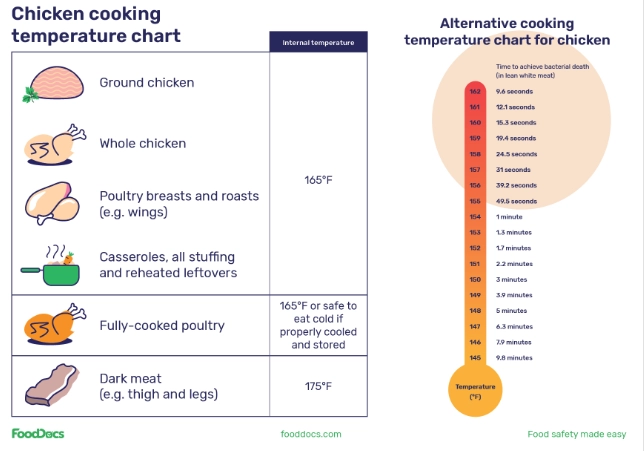
For Baking/Sheet Pan Cooking: This is the most forgiving method. Preheat oven to 375°F (190°C). Place frozen breasts on a lined sheet pan. Drizzle with oil, season generously. Bake for 40-50 minutes, depending on size, until internal temperature reaches 165°F (74°C) at the thickest part. Let rest 5-10 minutes. The longer time at moderate heat works wonders.
For Slow Cooking/Instant Pot: Ideal for shredding. For a slow cooker, add frozen breasts with your sauce or broth. Cook on LOW for 6-8 hours. For an Instant Pot, use the "Pressure Cook" function for 12-15 minutes with natural pressure release. The moist heat environment prevents dryness completely.
For Sautéing/Pan-Searing: This is trickier. I don't recommend starting a truly frozen breast in a hot pan. If you must, add a 1/4 cup of water or broth to the pan with the frozen chicken, cover, and steam on medium-low for 10-15 minutes to thaw it partially. Then, uncover, let the liquid evaporate, add oil, and sear as usual. Honestly, I'd rather use the cold-water thaw for 90 minutes for this method.
The best tool you can own is a good digital meat thermometer. Guessing is the enemy of juicy chicken.
Frozen Chicken Breast: Nutrition and Cost Analysis
Let's talk numbers. Flash-freezing does not significantly degrade protein, vitamin B content, or minerals. The nutritional profile remains virtually identical to fresh chicken. The main variable is whether you buy plain or "enhanced" breasts. Plain frozen chicken breast (about 4oz cooked): ~130 calories, 26g protein, 2g fat. The enhanced kind can have added sodium (sometimes 300-400mg per serving) and slightly lower protein density due to added water.
On cost, the savings are real. A typical price for fresh, boneless skinless chicken breast might be $4.50-$5.99 per pound. A large bag of quality frozen, plain chicken breast regularly goes on sale for $2.99-$3.49 per pound. For a family that eats chicken twice a week, that's a substantial annual savings. You're paying for pure protein, not the water weight or the butchery labor built into fresh tray prices.
Common Mistakes and How to Avoid Them
I've made these so you don't have to.
Mistake 1: Thawing on the counter. Never. The outer layer enters the "danger zone" (40°F-140°F) where bacteria multiply rapidly long before the inside is thawed. It's a food safety gamble.
Mistake 2: Overcooking because you're scared. Cooking from frozen requires longer times, but the target is still 165°F internally, not 180°F. That thermometer is non-negotiable. Carryover cooking during resting will add another 5 degrees or so.
Mistake 3: Skipping the brine or dry brine. Even with frozen-then-thawed chicken, a quick 30-minute soak in saltwater (1 tbsp salt per cup of water) or a sprinkle of salt left on the surface in the fridge does wonders for moisture retention and seasoning penetration.
Mistake 4: Expecting it to act exactly like fresh for all techniques. It won't. For a super-quick stir-fry where you need thin, uniform strips, fresh is better. For 90% of applications—baking, slow-cooking, soups, casseroles, shredding—properly handled frozen is indistinguishable.
Frozen Chicken Breast FAQ: Your Questions Answered
Related Articles