The Ultimate Guide to Frying Chicken: Oil Temperature Secrets
Let's cut to the chase. You followed a recipe, you battered your chicken, you heated up oil. It sizzled when you dropped a bit of flour in. But 15 minutes later, you're staring at a plate of disappointment. The crust is either pale and soggy, or it's a dark, bitter shell hiding undercooked meat. I've been there. After years in kitchens and teaching home cooks, I can tell you with certainty: 90% of fried chicken failures boil down to one thing—not understanding or controlling the oil temperature for frying chicken.
It's not just about "hot oil." It's a specific, narrow window of heat that creates a chemical ballet between moisture, starch, and fat. Get it right, and you achieve that mythical combination of a shatteringly crisp, golden-brown crust and juicy, tender meat. Get it wrong, and you're just greasy chicken.
What You'll Find in This Guide
Why Oil Temperature is Non-Negotiable
Think of oil temperature as the conductor of your frying orchestra. It controls everything.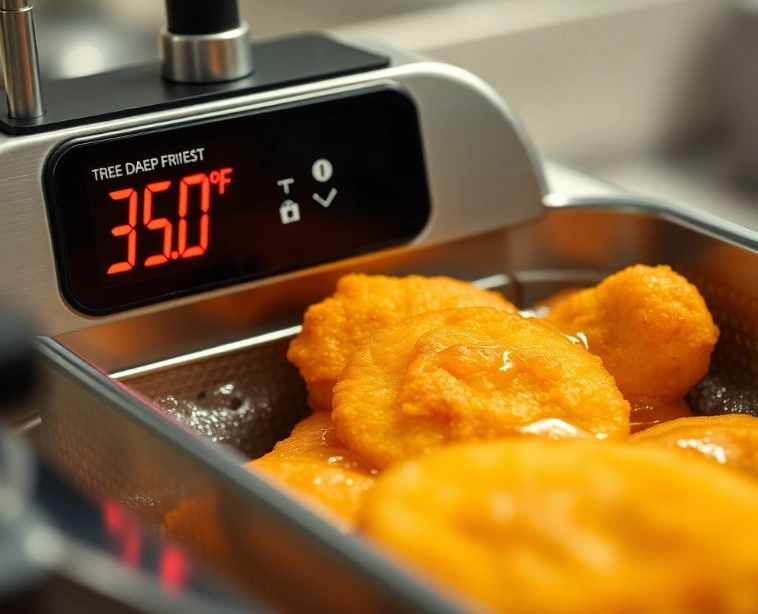
At the perfect temperature (we'll get to the numbers in a second), something magical happens the moment the chicken hits the oil. The surface moisture instantly vaporizes, creating a barrier of steam that temporarily keeps the oil out. In that brief window, the starches in your flour or coating begin to gelatinize and then dehydrate, forming a hard, porous structure—your crust. The proteins on the surface of the chicken set quickly, sealing in juices.
Now, what happens if the oil is too cold? Say, below 325°F.
The chicken just... sits there. It doesn't get that initial explosive steam blast. The oil soaks into the coating before it can set, resulting in a greasy, leaden crust. The chicken takes forever to cook, drying out the interior. It's a tragedy of patience.
Flip it. Oil that's too hot, above 385°F.
The outside burns in minutes. The crust sets so fast it becomes an impenetrable shell, locking the heat out. You end up with a beautiful, dark brown piece of chicken that's raw or bloody in the middle. I see this more than any other mistake. People are scared of undercooking, so they crank the heat, guaranteeing the worst of both worlds.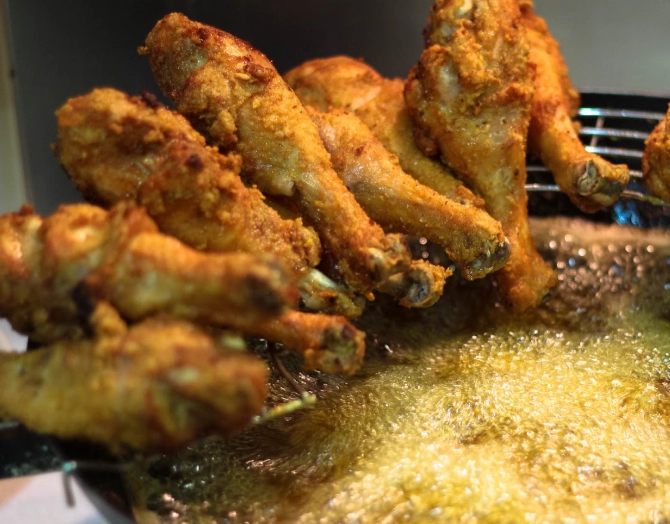
Pro Insight: The most overlooked factor is temperature recovery. When you add cold chicken to hot oil, the temperature plummets. A good, heavy pot (like cast iron or a Dutch oven) and not overcrowding the pan are just as critical as the starting temperature. If you dump four pieces in a small pot, you might drop from 365°F to 290°F, and you're now in the "greasy zone." Fry in batches.
The Golden Rule: 350°F to 375°F
This is your target range. Memorize it. 350°F to 375°F (175°C to 190°C). This isn't a random guess; it's the sweet spot where the Maillard reaction (browning) and proper cooking happen in harmony.
- 350°F (175°C): Your starting point for larger, bone-in pieces like thighs and drumsticks. The slightly lower end gives the heat more time to penetrate to the bone without over-browning the exterior.
- 365°F-375°F (185°C-190°C): The ideal zone for smaller pieces like wings, tenders, or boneless breasts. You get fast, aggressive browning for maximum crispiness on items that cook through quickly.
I always aim for 365°F as my "drop" temperature, knowing it will fall a bit when I add the chicken, and then I adjust the burner to keep it hovering in that golden range.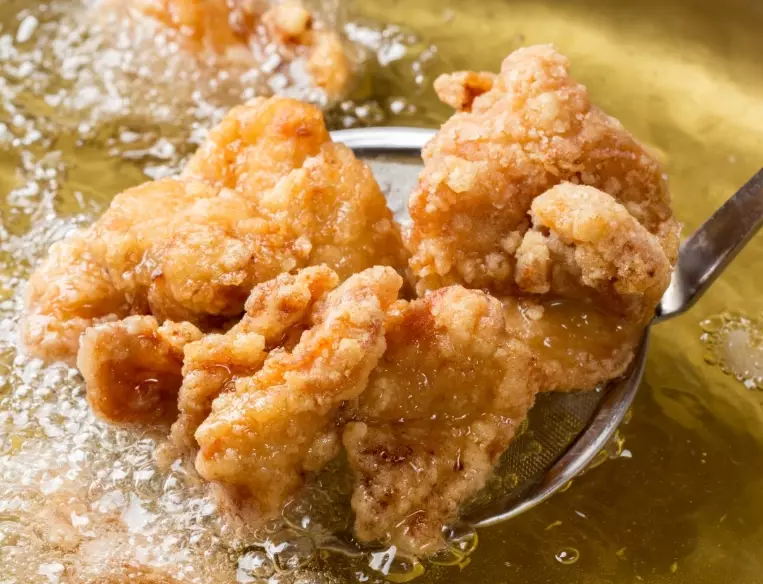
Picking Your Fighter: The Best Oil for the Job
Not all oils are created equal for frying chicken. The key metric is smoke point—the temperature at which an oil starts to break down, smoke, and impart off-flavors. You need an oil with a smoke point well above 375°F.
Here’s the breakdown of your top contenders:
| Oil Type | Smoke Point | Flavor Profile | Best For |
|---|---|---|---|
| Peanut Oil | 450°F (232°C) | Neutral to slightly nutty | The classic choice for Southern fried chicken. High stability, excellent reuse potential. |
| Canola or Vegetable Oil | 400-450°F (204-232°C) | Neutral | The budget-friendly, all-purpose champion. Won't impart any flavor of its own. |
| Sunflower Oil (High-Oleic) | 440°F (227°C) | Very neutral | A great neutral option, often used in commercial frying. |
| Avocado Oil (Refined) | 520°F (271°C) | Buttery, mild | Premium choice. Incredibly high smoke point, but expensive for deep-frying. |
What NOT to use: Extra virgin olive oil (low smoke point, strong flavor), butter (burns instantly), unrefined sesame oil (low smoke point, overpowering flavor).
My personal go-to is peanut oil for special occasions and pure vegetable oil for everyday frying. The flavor difference is subtle, but peanut oil gives a certain authenticity I love.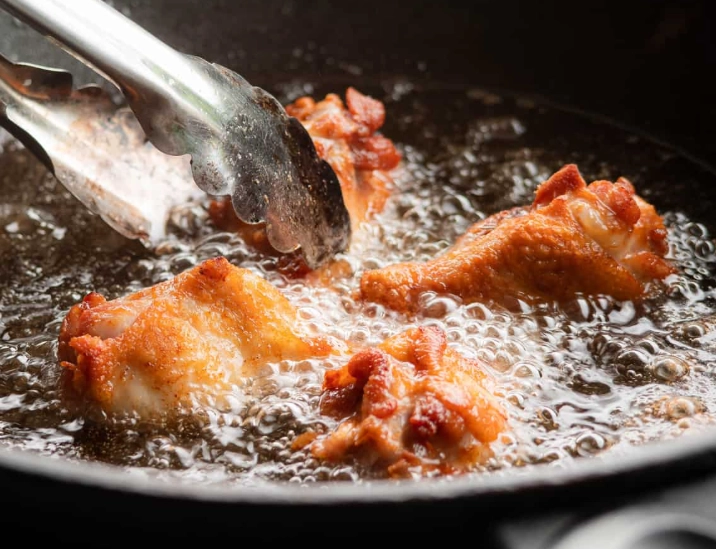
No Thermometer? No Problem. Two Foolproof Tests
I recommend a clip-on deep-fry thermometer. They're cheap and foolproof. But if you don't have one, don't panic. Our grandmothers didn't either.
The Wooden Chopstick or Spoon Test
This is my favorite low-tech method. Stick the end of a wooden chopstick or the handle of a wooden spoon into the oil. If small, steady bubbles immediately form around the wood and float to the surface, your oil is in the 350°F-375°F range. If the bubbles are frantic and violent, it's too hot. Few lazy bubbles? Too cold.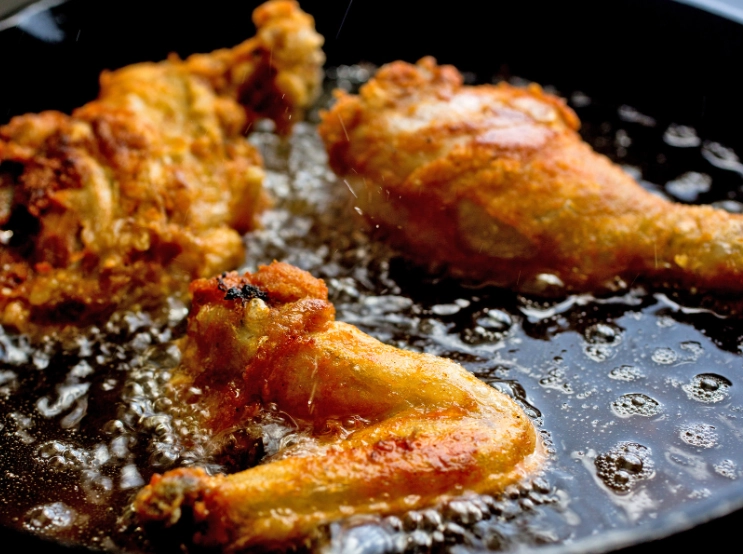
The Bread Cube Test (The 60-Second Rule)
Drop a 1-inch cube of white bread into the oil.
- Too Cold ( Takes more than 75 seconds to turn golden brown. Sits, soaks up oil.
- Perfect (350°F-375°F): Turns a perfect golden brown in 50 to 60 seconds. This is your signal.
- Too Hot (>375°F): Brownes in under 45 seconds, may even start to darken too quickly.
Safety First: Always dry your chicken pieces thoroughly with paper towels before breading. Water causes violent oil splatters. Gently lower the chicken into the oil away from you, using tongs. Never drop it.
The Three Biggest Oil Temperature Mistakes (And How to Fix Them)
Let's diagnose the common failures.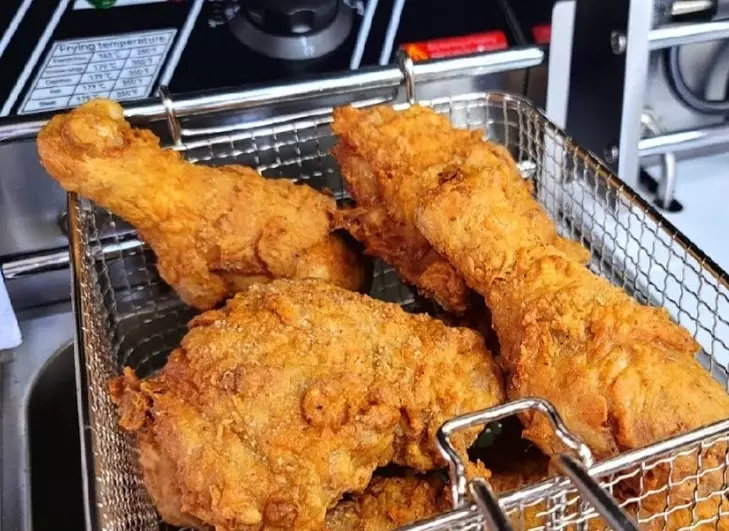
Mistake 1: The Single Temperature Reading. You check the oil once, it's 365°F, you add chicken and walk away. The temperature plummets and never recovers because your burner is too low. Fix: Monitor the temperature throughout the fry, especially after adding food. Be ready to nudge the burner up or down.
Mistake 2: Overcrowding the Pot. This is the #1 cause of soggy chicken. Adding too much chicken at once is a heat sink. Fix: Fry in small batches. The oil should bubble vigorously but not be completely obscured by chicken. Give each piece room to swim.
Mistake 3: Frying Straight from the Fridge. Ice-cold chicken is a bigger temperature shock than room-temp chicken. Fix: Let your breaded chicken sit on a rack at room temperature for 15-20 minutes before frying. This takes the chill off and helps the coating adhere better.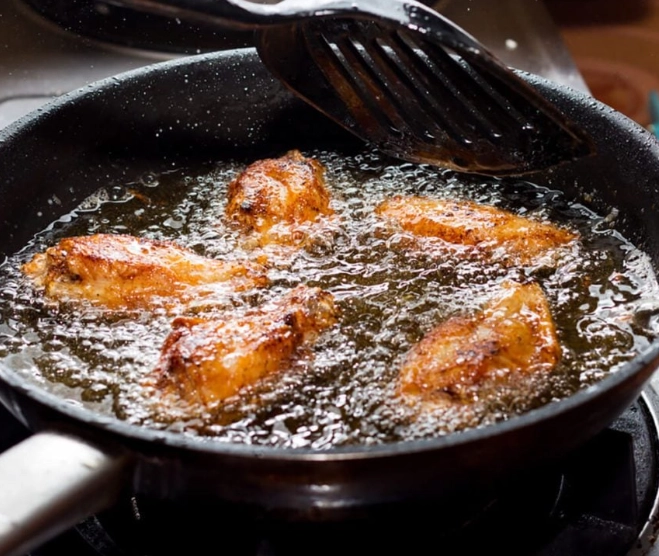
Your Fried Chicken Questions, Answered
Mastering the oil temperature for frying chicken isn't about rigid rules; it's about understanding the reaction you're trying to create. It's the difference between a chore and a triumph. Start with 365°F, respect the recovery time, and don't crowd the pot. Your next batch of fried chicken won't just be good—it'll be the reason people ask for your recipe.
Related Articles