How Long to Bake a Whole Chicken: The Ultimate Time & Temp Guide
Quick Navigation
- The One Rule That Beats All the Timetables
- The Core Formula: How Long to Bake a Whole Chicken at Different Temps
- Your Chicken's Weight: The Biggest Time Dictator
- The Step-by-Step, Can't-Mess-It-Up Method
- Pro Moves & Common Pitfalls
- Your Questions, Answered (The FAQ)
- Final Thoughts: It's Easier Than You Think
Let's be real. You've got this whole chicken staring at you from the fridge, and the big question pops into your head: how long do I actually bake this thing? You type it into Google, and suddenly you're drowning in a sea of numbers – 20 minutes per pound, 350 degrees, 375, 400... it's enough to make you just order pizza instead.
I've been there. I've pulled out dry, sad chicken. I've also undercooked it (don't ask about that dinner party). But after years of trial and error, more error than I'd like to admit, I've finally cracked the code. Baking a whole chicken isn't about memorizing one magic number. It's about understanding a few simple principles. Think of this guide as your kitchen buddy, walking you through it step-by-step, without the confusing chef jargon.
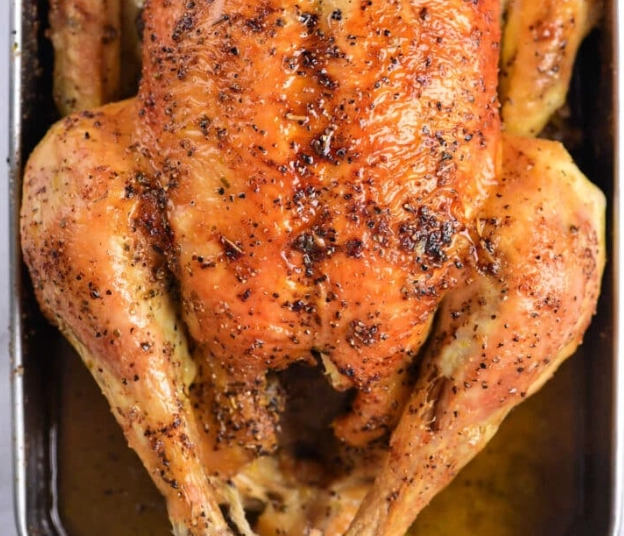
The One Rule That Beats All the Timetables
Before we dive into charts and temps, let's get this out of the way. The single most important thing you need isn't a better timer; it's a good meat thermometer. Trusting time alone is how disasters happen. Ovens lie. Chicken sizes vary. That thermometer is your truth-teller.
Stop Guessing: The USDA states that poultry is safe to eat when it reaches an internal temperature of 165°F (74°C). This isn't a suggestion—it's the food safety line. You can check their official guidelines for safe minimum cooking temperatures anytime. The best part? If you pull the chicken out of the oven at around 155-160°F, the carryover cooking will bring it up to 165°F perfectly while it rests, keeping it juicier than if you cooked it all the way in the oven.
I learned this the hard way. I used to poke the chicken and hope clear juices ran out. Sometimes they did, sometimes they were pink, and I'd panic and throw it back in, overcooking the breast. A simple digital thermometer, like the ones recommended by cooking resources such as ThermoWorks for their accuracy, changed everything. Now I just slide it into the thickest part of the thigh (without touching the bone) and know for sure.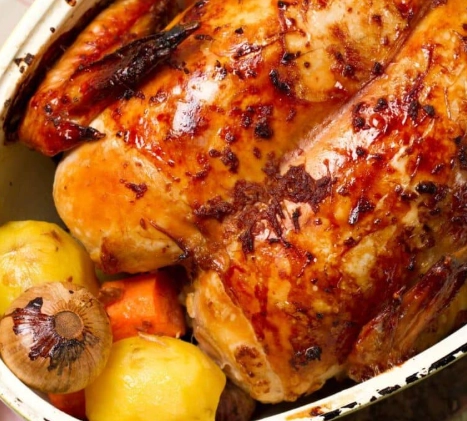
The Core Formula: How Long to Bake a Whole Chicken at Different Temps
Okay, you need a starting point. Here's the basic, no-frills answer to how long to bake a whole chicken. These times are for an unstuffed bird, roasted breast-side up, starting from fridge-cold. Remember, the thermometer has the final say!
| Oven Temperature | Approximate Time per Pound | Best For... | My Honest Take |
|---|---|---|---|
| 350°F (175°C) | 20-25 minutes | Classic, even cooking. The most forgiving method. | My go-to for a stress-free Sunday roast. It's slow and steady, giving fat time to render and skin to crisp up nicely without burning. |
| 375°F (190°C) | 18-22 minutes | A faster roast with good browning. | A great middle ground. You shave off some time and get slightly crispier skin. Less margin for error than 350°F, though. |
| 400°F (205°C) / 425°F (220°C) | 15-18 minutes | Maximum crispy skin in less time. | This is the "high-risk, high-reward" method. The skin gets incredibly crackly, but you have to watch it like a hawk. I've burnt the herbs and garlic underneath doing this. |
See? It's not one number. A 4-pound chicken at 350°F will take roughly 80-100 minutes. That same bird at 400°F might be done in 60-70 minutes. The size of your chicken is the biggest variable.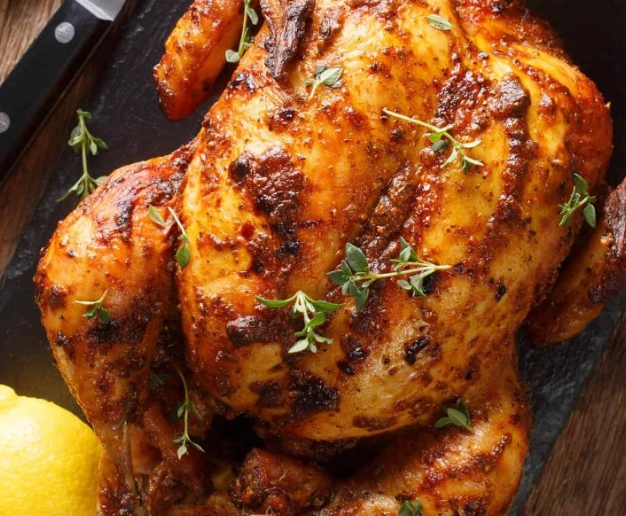
Quick Math: Grab your chicken's weight from the package. Multiply it by the "minutes per pound" from the table above. That's your estimated total bake time. Start checking the temperature about 15-20 minutes before that time is up. Why? Because no two chickens or ovens are identical.
Your Chicken's Weight: The Biggest Time Dictator
Grocery store chickens usually range from 3 to 6 pounds. A petite roaster and a hefty bird need very different plans. Here’s a more specific breakdown for the most common sizes at 350°F and 400°F. This should give you a solid visual for planning your meal.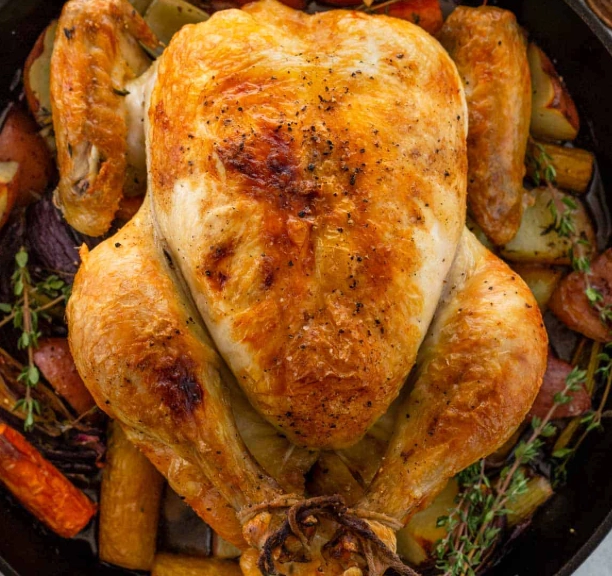
| Chicken Weight | At 350°F (175°C) | At 400°F (205°C) | Visual Cue (Besides Temp) |
|---|---|---|---|
| 3 lbs | 60 - 75 min | 45 - 55 min | Legs wiggle freely in joints, juices run mostly clear. |
| 4 lbs | 80 - 100 min | 60 - 70 min | Skin is golden brown, meat pulls easily from bone. |
| 5 lbs | 100 - 125 min | 75 - 85 min | Very browned, cavity juices are clear. |
| 6 lbs | 120 - 150 min | 90 - 105 min | Heavily browned, drumsticks may separate slightly. |
That 6-pounder at 350°F is a two-hour commitment. You need to know that before you start at 6 PM on a Tuesday. Personally, I find 4-5 pound chickens to be the sweet spot. Big enough to feed a family with leftovers, small enough not to take all evening.
What About a Stuffed Chicken?
If you pack the cavity with bread stuffing or aromatics like lemons and onions, you must add time. The stuffing insulates the inside, slowing down the heat. I'd add a solid 15-30 minutes to the total time, and it's absolutely critical to check that the stuffing itself has also reached 165°F. Honestly? I rarely stuff the bird anymore. I prefer to cook dressing separately in a dish. It gets crisper, and I don't have to worry about the chicken being done while the stuffing is still cold in the middle.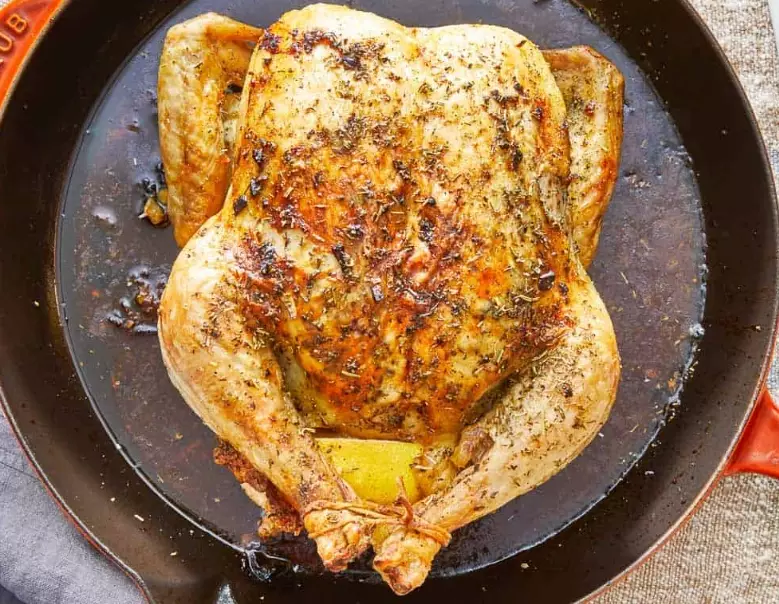
The Step-by-Step, Can't-Mess-It-Up Method
Let's walk through the actual process. This is my personal routine, developed after many, many chickens.
Step 1: Prep is Everything (Don't Skip This)
Take the chicken out of the fridge about 30 minutes before cooking. A cold chicken straight into the hot oven cooks unevenly. Pat it incredibly dry with paper towels, inside and out. This is the #1 secret to crispy skin. Wet skin steams; dry skin roasts. Season liberally with salt and pepper, everywhere. Don't be shy. I also like to rub a little oil or softened butter under the skin on the breasts and all over the outside.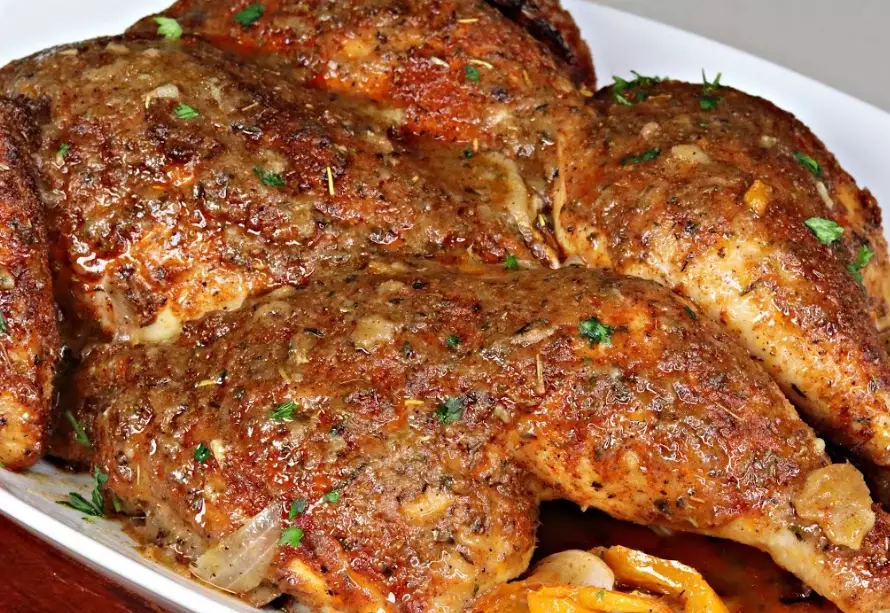
My Little Ritual: I always stuff the cavity with a halved lemon, a whole head of garlic cut in half crosswise, and a few sprigs of rosemary or thyme. You don't eat these, but they perfume the meat from the inside out in the most amazing way. It makes the whole kitchen smell like a professional restaurant.
Step 2: To Truss or Not to Truss?
Trussing (tying the legs together) gives a pretty, compact shape. But it also means the thick thigh meat is tucked close to the body, taking longer to cook. I often just tie the legs together loosely with kitchen twine or even skip it altogether. Letting the legs splay out a bit exposes the thighs to more direct heat, helping them cook at the same rate as the breasts.
Step 3: The Roast and The Rest
Place the chicken breast-side up on a rack in a roasting pan. The rack is key—it allows hot air to circulate all around. Pop it in your preheated oven. Now, here's a trick: about halfway through the estimated bake time for your whole chicken, I often rotate the pan 180 degrees. Most ovens have hot spots, and this ensures even browning.
When your thermometer reads 160-165°F in the thigh, take it out! Transfer the chicken to a cutting board and let it rest for at least 15-20 minutes. I cover it loosely with foil. This is non-negotiable. The juices, which are all rushed to the surface during cooking, need time to redistribute back throughout the meat. If you cut it immediately, all those precious juices will flood your board, leaving you with dry meat. Waiting is hard, but it makes all the difference.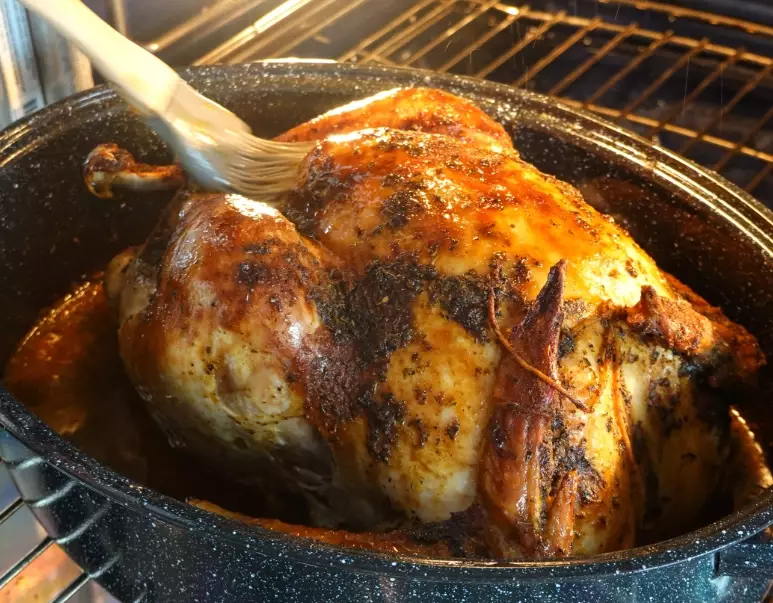
Pro Moves & Common Pitfalls
Now, let's troubleshoot. What usually goes wrong?
- Dry Breast, Undercooked Thighs: This is the classic problem. The breast is done at about 160°F, but thighs need 165°F+. The solution? Start the chicken breast-side down for the first 30-40 minutes. This protects the delicate white meat from the fiercest heat. Then, carefully flip it breast-side up for the remainder of the cooking time to crisp the skin. It's a bit of a hassle, but it works wonders.
- Pale, Rubbery Skin: You didn't dry it enough. Or you basted it too much. Basting with pan juices can actually prevent the skin from crisping by adding moisture back onto it. Try leaving it alone.
- Burnt Herbs/Seasoning: If you put fresh herbs directly on the pan under the chicken, they'll incinerate at high heat. Tuck them inside the cavity or under the skin instead.
Your Questions, Answered (The FAQ)
Final Thoughts: It's Easier Than You Think
Figuring out how long to bake a whole chicken feels like a big mystery, but it boils down to a simple formula: (Weight x Time per Pound) + Thermometer Check + Resting Time.
Start with a 4-pound bird at 350°F. Get it dry, get it seasoned, and pop it in. In about an hour and a half, you'll have the most satisfying, home-cooked meal that feels fancy but is fundamentally simple. The leftovers make incredible sandwiches, salads, and soups. Once you do it successfully once, the fear disappears. You'll realize it's one of the most reliable, economical, and impressive things you can make in your oven.
So go on, grab that chicken. Your answer to how long to bake a whole chicken is right here. Now you just have to decide what to make with the leftovers.
Related Articles