How Long to Defrost Chicken Safely: Complete Time Guide & Tips
Quick Navigation
- Why "How Long" Matters More Than You Think
- The Three Safe Ways to Thaw Chicken (And Their Real Timelines)
- Defrosting Chicken Time Chart: Your Quick-Reference Guide
- How to Actually Tell If Your Chicken Is Fully Thawed
- What NOT to Do: Common Thawing Mistakes
- Your Thawing Chicken Questions, Answered
- Putting It All Together: A Simple Thawing Strategy
Let's be honest. We've all been there. You pull a rock-solid pack of chicken breasts from the freezer at 5 PM, dinner is supposed to be at 6:30, and panic starts to set in. You type "how long does it take to defrost chicken" into your phone, hoping for a magic number. What you usually get is a vague range that leaves you more confused. Is it 2 hours? 24 hours? Why does everyone say something different?
I've ruined my fair share of chicken trying to rush the process. Once, I tried to microwave a whole chicken breast on high for 10 minutes. The outside was cooked into a rubbery, sad layer while the inside was still a frozen iceberg. It was inedible. A complete waste. That experience taught me that answering "how long does it take to defrost chicken" properly is less about a single timer and more about understanding the why behind the time.
The truth is, the time it takes to thaw chicken depends on a bunch of things you might not think about: the method you choose, the cut and thickness of the meat, and even how your fridge is set up. More importantly, getting it wrong isn't just about texture—it's a real food safety gamble. No one wants a side of food poisoning with their dinner.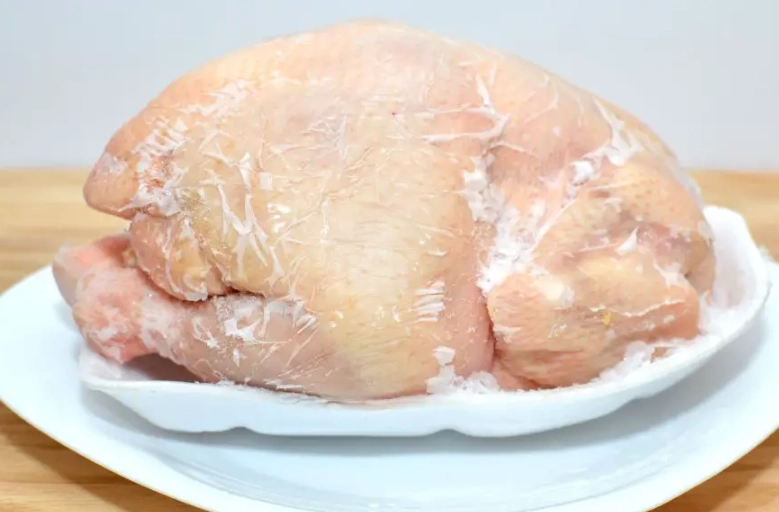
So, let's ditch the guesswork. This guide won't just throw a number at you. We'll break down the three safe methods (yes, only three!), give you realistic timeframes for everything from wings to a whole bird, and explain the science behind keeping your chicken safe to eat. By the end, you'll know exactly how to plan your thawing, every single time.
Food Safety First: This isn't just about convenience. Thawing chicken at room temperature on the counter is a major no-go. The USDA is very clear on this. The outer layers of the chicken can enter the "Danger Zone" (temperatures between 40°F and 140°F) where bacteria like Salmonella and Campylobacter multiply rapidly, long before the inside is thawed. Always use one of the three safe methods outlined here. You can read the USDA's official guidance on safe thawing here.
Why "How Long" Matters More Than You Think
Before we get to the timetables, let's talk about why we're even doing this. Freezing is fantastic for preservation, but it turns the water inside the chicken's cells into ice crystals. If you thaw too quickly (like my microwave disaster), those crystals damage the cell walls. When you cook it, all the moisture and flavor leaks out, leaving you with dry, tough, stringy meat. It's the main reason people think they "don't like" chicken breast—they've just never had one properly thawed and cooked.
Thawing it the right way, slowly and evenly, minimizes that cell damage. It helps the chicken reabsorb its own juices. The result? Chicken that's actually juicy and flavorful when cooked.
But flavor and texture are only part of the story. The real MVP here is safety. Pathogenic bacteria are the uninvited guests at your dinner party. While freezing puts them to sleep, it doesn't kill them. They wake up hungry during thawing. Keeping the chicken at a safe temperature (below 40°F for fridge thawing, or under continuously cold running water) until it's ready to cook is the only way to keep their numbers in check.
So, when you're figuring out how long does it take to defrost chicken, you're really answering two questions: "How do I get the best texture?" and "How do I keep my family safe?" The timelines that follow are designed to do both.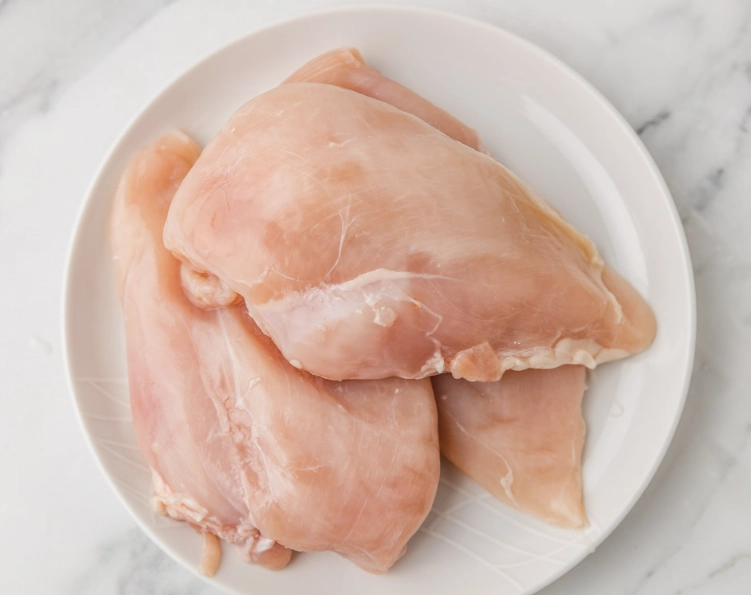
The Three Safe Ways to Thaw Chicken (And Their Real Timelines)
Alright, here are your options. Each has its own pros, cons, and, of course, a different answer to our big question. I'll give you the general rule first, then we'll get super specific with a table.
This is the method recommended by every food safety expert, including the FDA and the USDA. It's the slowest but by far the safest and best for quality. The chicken stays at a consistent, safe temperature (your fridge should be at or below 40°F/4°C).
How it works: Simply place the packaged chicken (still in its store wrap or a sealed bag) on a plate or in a container to catch any drips. Put it on the bottom shelf of your fridge. This prevents any potential drips from contaminating other foods below.
How long does it take to defrost chicken in the fridge? This is where planning comes in. As a general rule:
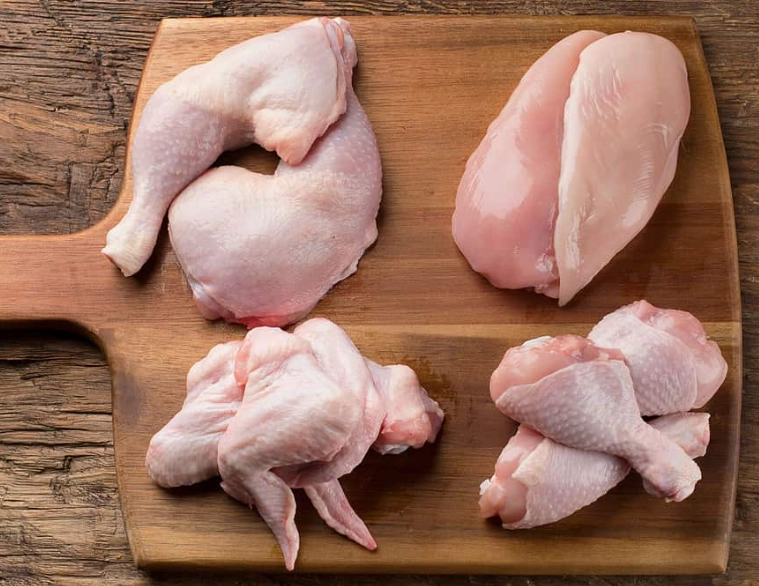
- Small cuts (boneless breasts, thighs, tenders): 12 to 24 hours.
- Larger cuts (bone-in pieces, a pack of 4-6 breasts): A full 24 hours.
- A whole chicken: Plan for 24 hours for every 4-5 pounds of weight. A standard 4-pound bird needs a full day. A bigger 8-pounder? That's 2 full days in the fridge.
See? It's not instant.
My personal trick? I make a habit of moving anything I want for dinner tomorrow from the freezer to the fridge right before I go to bed. It's become automatic. The beauty of this method is the flexibility. Once fully thawed in the fridge, chicken can safely stay there for an additional 1-2 days before cooking. It gives you a buffer if your plans change.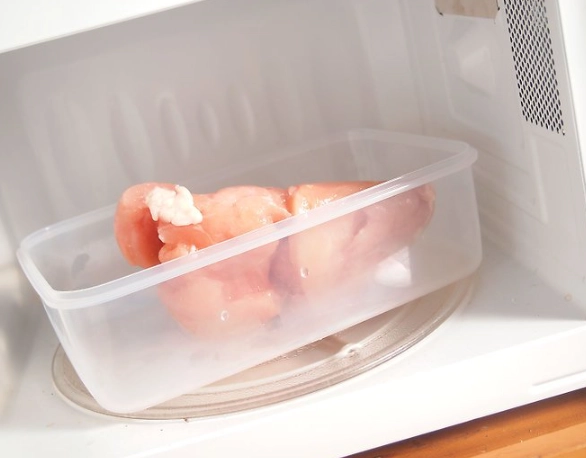
Pro Tip: Is your fridge packed full or set super cold? That can add time. Air needs to circulate around the package for even thawing. If you can, move it to a less crowded spot. And if you know you're a planner, consider labeling your freezer bags with the contents and date. A "mystery package" is harder to plan for!
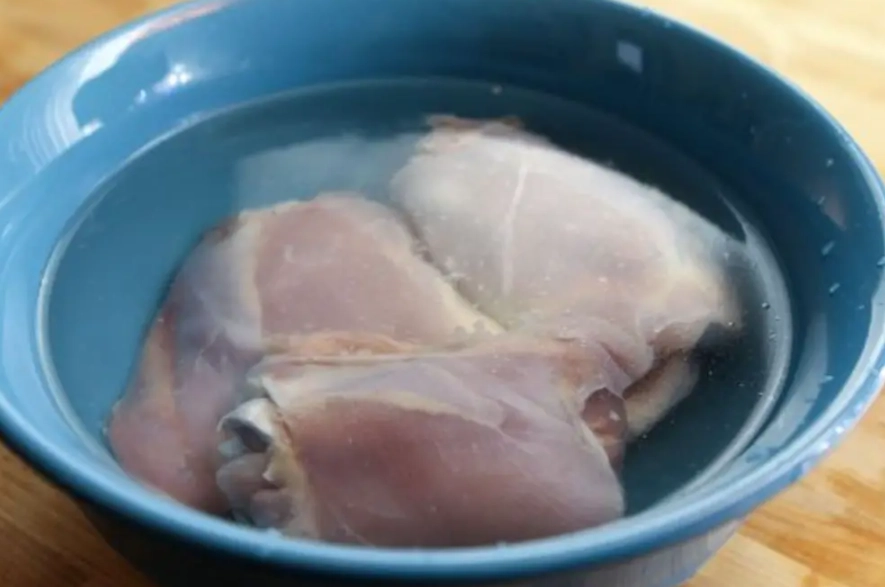
This is my go-to when I forget to plan ahead (it happens to the best of us). It's significantly faster than the fridge but requires a bit more attention. The key words are cold and running—or changing the water very frequently.
How it works: Keep the chicken in its original leak-proof packaging or seal it in a sturdy ziplock bag (push out as much air as possible). Submerge it in a large bowl, pot, or clean sink full of cold tap water. Never use warm or hot water—it's an invitation to the bacterial danger zone.
If you can, place the bowl under a very slow trickle of cold running water. The constant movement speeds up thawing. If that's not practical (water waste is a concern), you must change the cold water completely every 30 minutes. This keeps the water cold enough to be safe.
How long does it take to defrost chicken in cold water? Much faster, but still not microwave-fast.
- Small packages (1-2 lbs of breasts or thighs): About 1 to 2 hours.
- Larger packages or a whole chicken: Allow roughly 30 minutes per pound. So a 3-pound package takes about 1.5 hours, and a 4-pound whole chicken will take around 2 hours.
You have to cook chicken thawed this way immediately after it's fully thawed. Don't put it back in the fridge for later. The outer layers have spent time in a warmer environment, so cooking it right away is the safe next step.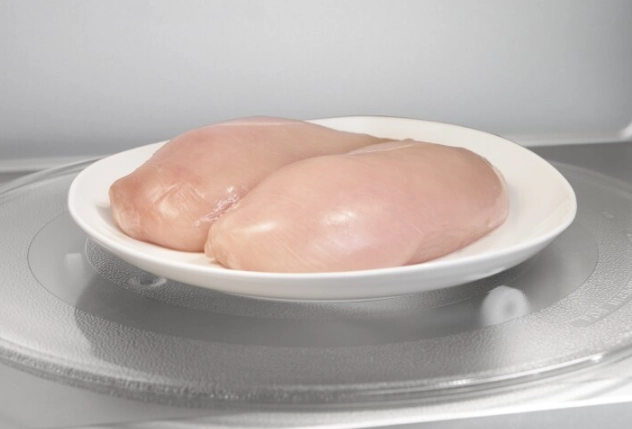
Use this only if you must, and you're planning to cook the chicken immediately after. Microwaves thaw very unevenly, often starting to cook parts of the meat. It's terrible for texture and requires immediate action.
How it works: Use your microwave's "defrost" or low-power setting (usually 30-50% power). Remove any non-microwave-safe packaging (like styrofoam trays). Place the chicken on a microwave-safe plate. You'll need to pause, flip, and separate pieces frequently to promote even thawing.
How long does it take to defrost chicken in the microwave? This varies wildly by microwave wattage and the amount of chicken. Check your manual for guidance. As a rough estimate:
- A single chicken breast: 3-5 minutes on defrost, then check, flip, and continue in 1-minute bursts.
- A pound of chicken pieces: 5-8 minutes, with frequent stops to separate.
Seriously, watch it like a hawk.
As soon as it's pliable but still icy-cold (you don't want any part to feel warm), stop the microwave. Any parts that have begun to cook will become tough and rubbery during the final cooking. And remember—cook it immediately. No delays.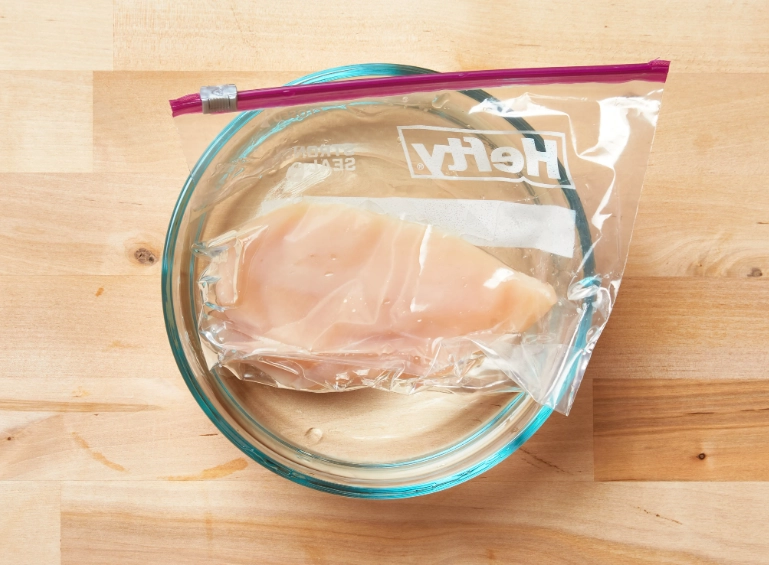
Defrosting Chicken Time Chart: Your Quick-Reference Guide
Here’s a breakdown to save you the mental math. These times are estimates for fully thawed, ready-to-cook chicken. A whole chicken thawing in the fridge will take longer than a few wings in water—it just makes sense.
| Chicken Type & Approx. Weight | In the Refrigerator (<40°F) | In Cold Water (Changed every 30 min) | In Microwave (Defrost Setting)* |
|---|---|---|---|
| Boneless, Skinless Breast (1 breast, ~6-8 oz) | 8-12 hours | 1-1.5 hours | 3-5 minutes |
| Package of Boneless Breasts (4 breasts, ~1.5 lbs) | 24 hours | 1.5-2 hours | 6-9 minutes |
| Bone-in Chicken Thighs (4 thighs, ~1.5 lbs) | 24 hours | 1.5-2 hours | Not recommended (uneven) |
| Whole Chicken (4-5 lbs) | 24 hours (per 4-5 lbs) | ~2-3 hours (30 min/lb) | Not recommended |
| Chicken Wings (2 lbs) | 12-18 hours | 1-1.5 hours | 4-6 minutes |
| Ground Chicken (1 lb package) | 24 hours | 1-1.5 hours | 4-6 minutes |
*Microwave times are highly variable. Always check early and often. Cooking must follow immediately.
How to Actually Tell If Your Chicken Is Fully Thawed
The clock is a guide, but your senses are the final judge. Here’s what you’re looking for:
- The Touch Test: The chicken should feel cool to the touch but have no hard, icy spots left, especially in the center or near bones. Press gently—it should be uniformly pliable, not rock-solid in the middle.
- The Visual Check: There should be no visible ice crystals on the surface or between pieces. The flesh should look consistent in color throughout, not darker or translucent in some spots (signs of remaining ice).
- The Probe Test (for whole birds): The best way to check a whole chicken or a large roast is to gently separate the body cavity. If you see any ice or frozen juices in the cavity or between the leg and body, it's not done. You can also use an instant-read thermometer; it should slide easily into the thickest part (like the thigh) without hitting a frozen core.
If you find a slightly icy center but the outside is fully thawed, you have two safe options: 1) Continue thawing using the cold water method until it's gone, or 2) Cook it immediately, but be prepared to extend the cooking time significantly to ensure the center reaches a safe 165°F. The second option risks uneven cooking, so I usually opt to finish thawing it.
What NOT to Do: Common Thawing Mistakes
We've covered the right ways. Let's quickly highlight the wrong ones, because they're surprisingly common.
- On the Counter at Room Temperature: I mentioned it, but it bears repeating. This is the biggest food safety sin. Even if the center is frozen, the outside can be in the bacterial danger zone for hours. Just don't.
- In Hot Water: It seems like it would speed things up, but it's just as dangerous as the counter. It starts cooking the outside and breeds bacteria.
- Leaving it in the Sink (Dry): Same principle as the counter. Your sink isn't a safe holding zone.
- Refreezing Raw Chicken (Usually): There's a lot of confusion here. If you thawed it in the fridge and it's still cold (below 40°F), you can technically refreeze it, but you'll take another major hit on texture and quality. If you used cold water or microwave methods, do not refreeze it raw—you must cook it first. The USDA has a good page on freezing and food safety that touches on this.
Your Thawing Chicken Questions, Answered
Putting It All Together: A Simple Thawing Strategy
So, what's the takeaway from all this? How do you actually make this work in a busy life?
Here’s my simple, no-stress system:
- Plan Ahead When You Can: Make the refrigerator your default. When you're making your weekly meal plan, note which meals need thawed chicken and move it from freezer to fridge the night before. This solves 80% of problems.
- Embrace the Cold Water Bath for Emergencies: Forgot to plan? No shame. The cold water method is your reliable, fast, and safe backup. Just set a timer to change the water and be ready to cook right after.
- Respect the Microwave as a Tool, Not a Solution: Only use it if you are literally standing in the kitchen, preheating the oven or heating the pan, ready to cook the second the microwave beeps.
- Always Verify: Don't just trust the clock. Do the touch and visual check for icy spots before you start cooking.
- When Unsure, Cook From Frozen: If timing is tight and you're worried about safety, just cook it frozen. It's the safest option of all and guarantees you won't be in the danger zone.
Figuring out how long does it take to defrost chicken is really about choosing the right tool for your schedule and respecting the food. It might seem like a small step, but doing it right makes a world of difference in your meal. You get safer food, better texture, and way more peace of mind. No more 5 PM freezer panic. Just good, juicy chicken, ready for whatever recipe you have in mind.
Related Articles